← BACK TO ARCHIVES
Heritage-Black
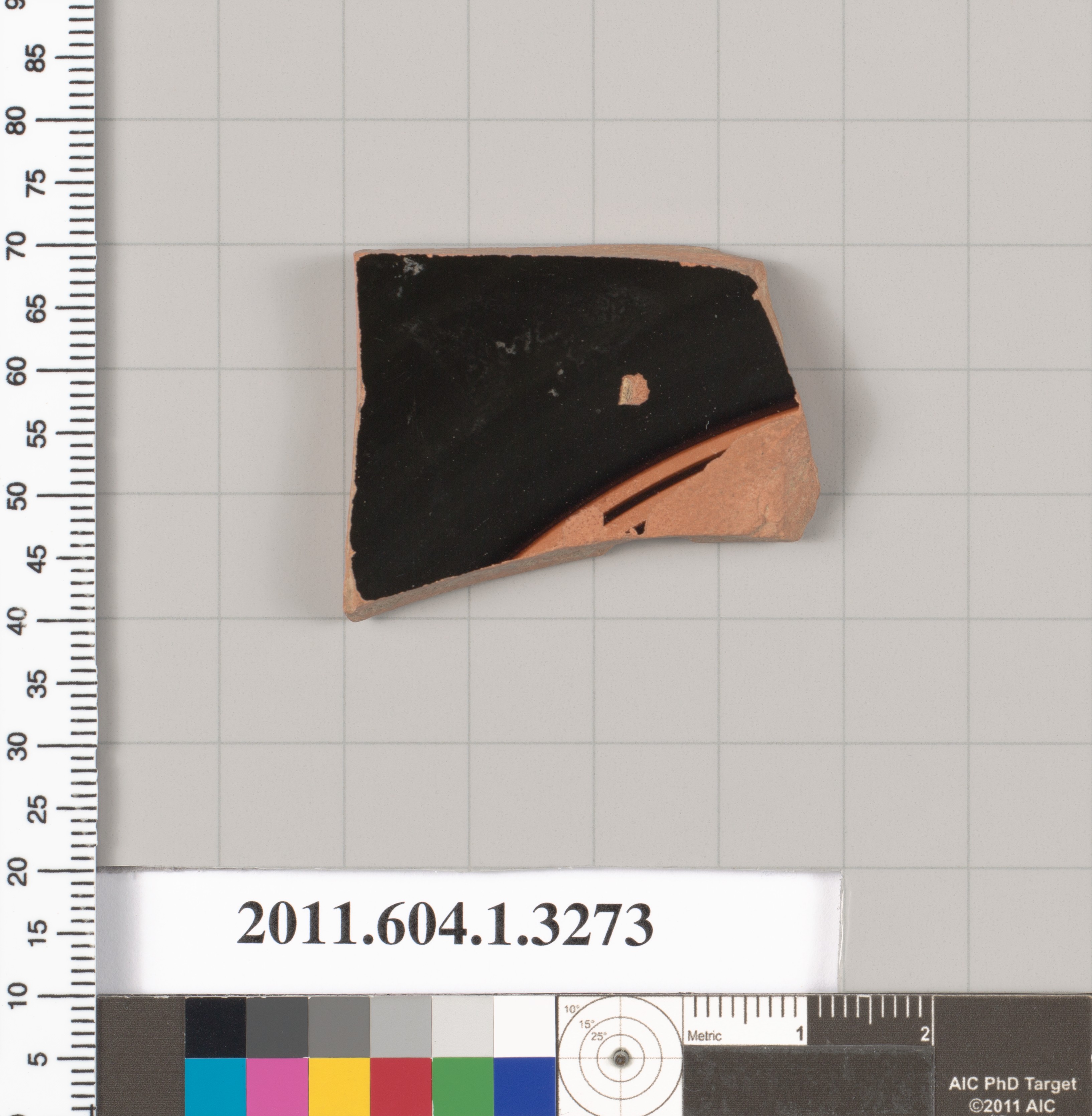
Heritage Synthesis: Terracotta fragment of a kylix (drinking cup)
Curated on Sep 04, 2026 // Node: LDN-01
From Kyoto’s Sacred Void to the Attic Kylix: The Terracotta Fragment as a Blueprint for 2026 Old Money Minimalism
The internal archive of the Lauren Fashion Heritage Lab holds a curious pairing: a wooden plaque inscribed “Udumbara Flowers,” its carved petals simulating the three-thousand-year bloom of a mythical blossom, and a “Cup and Stand” porcelain vessel, eggshell-thin and devoid of ornament, awaiting an offering that never materializes. These artifacts, though born of a Kyoto temple’s contemplative gloom, articulate a design philosophy that transcends their geographic and temporal origins. When juxtaposed with the museum’s terracotta fragment of an Attic kylix—a Greek drinking cup shattered and reassembled in incomplete form—a startling resonance emerges. This fragment, with its broken rim and faded black-figure glaze, does not merely represent antiquity; it *instructs* the 2026 Old Money silhouette with a precision that rivals any contemporary pattern draft. The kylix’s terracotta body, its functional curvature, and its deliberate incompletion collectively forge a sartorial grammar of restraint, imperfection, and volumetric silence that will define the coming season’s most sophisticated tailoring.
The Aesthetics of the Fragment: Incompletion as Luxury
The Attic kylix fragment is not a ruin in the pejorative sense; it is a *specimen of absence*. Its terracotta core—a warm, iron-rich orange-brown—speaks of earth, of the kiln’s fire, and of a maker’s hand that shaped a vessel for symposia, for wine, for communal intoxication. Yet what remains is only a shard, perhaps a third of the original circumference. The breakage is not accidental damage but a *curatorial choice*: the museum presents the fragment as a complete aesthetic object, not a failed restoration. This is the first lesson for the 2026 Old Money silhouette. The prevailing luxury of the past decade—characterized by logo-laden surfaces and aggressive branding—is giving way to a more esoteric form of wealth signaling: the deliberate cultivation of the *unfinished*. In the coming year, the most powerful garments will not appear newly minted from a atelier but will possess a quality of having been *excavated* from a personal history. Think of a double-faced cashmere overcoat whose hem is left raw, not finished with a blind stitch; a silk twill shirt whose seams are exposed and slightly frayed, not hidden within French tucks. This is not deconstruction in the Margiela sense—a violent intellectual exercise—but rather a *heritage-black* quietude, where the garment’s construction is visible yet serene, like the kylix’s broken edge, which reveals the clay’s granular structure without apology.
The terracotta’s color palette further informs the 2026 palette. The fragment’s surface oscillates between a matte, unglazed interior and a glossy, black-figure exterior where a palmette or a warrior’s limb might once have been painted. This duality—the raw versus the refined—translates directly into fabric choices. The Old Money silhouette of 2026 will reject the sterile brightness of optic white and the coldness of steel gray in favor of *terracotta-infused neutrals*: burnt sienna, ochre, clay, and a deep, almost volcanic umber. These are not earthy in a rustic sense but are elevated through material quality—a vicuña sweater in a shade of dried blood, a wool-cashmere blend trouser in the tone of unfired pottery. The black-figure glaze finds its analogue in *heritage-black* itself: not a flat, lifeless black, but a black with depth, achieved through over-dyeing or through the use of naturally dark fibers like vicuña or qiviut, which possess a subtle sheen that catches light the way the kylix’s glaze once caught the flicker of oil lamps.
Volumetric Silence: The Cup’s Inner Void as Tailoring Principle
The Kyoto “Cup and Stand” porcelain, with its lip curving inward “like palms pressed in prayer” and its stand broad “as a lotus throne,” introduces the concept of *volumetric silence*. The cup’s aesthetic power lies not in its physical form but in the emptiness it contains. The 2026 Old Money silhouette must adopt this principle at its core. The current trend toward oversized, shapeless garments—the so-called “quiet luxury” of draped sacks—misreads the concept. True silence is not the absence of structure but the *presence of an internal void that gives meaning to the exterior*. For the kylix fragment, the missing portion of the bowl implies the full circle; for the 2026 silhouette, this translates into tailoring that creates a negative space between the body and the fabric.
Consider a single-breasted jacket in a heavy, felted wool. Its shoulder is not padded to a sharp point but is softly rolled, suggesting the kylix’s curved rim. Its waist is not suppressed to a nipped hourglass but is gently eased, allowing a column of air to circulate between the lapel and the chest. The sleeve head is set with a slight, deliberate fullness—a *puff* that recalls the cup’s capacity—yet falls into a clean, narrow line at the wrist. This is not a return to the 1980s power suit, which was about external assertion, but a move toward an *internalized* confidence. The wearer does not need the garment to shout; the garment’s very restraint—its refusal to cling, its allowance for the body to breathe within a structured shell—creates a presence that is both commanding and contemplative. The terracotta fragment, when held, fits the palm with a satisfying weight; the 2026 jacket, when worn, should feel similarly *grounded*, as if its fabric carries the memory of the earth from which the clay was pulled.
The Gift of Self-Effacement: From Ritual Vessel to Daily Uniform
The profound dialogue between the Udumbara plaque and the porcelain cup—both achieving the sacred through self-effacement—finds its secular expression in the kylix’s utilitarian origin. The kylix was a drinking vessel, an object of daily use, yet its finest examples were painted by masters like Euphronios. This duality—the mundane elevated by exquisite craft—is the very essence of the 2026 Old Money garment. It is not a ceremonial robe reserved for galas; it is a daily uniform—a pair of pleated trousers in a heavy cavalry twill, a turtleneck in a silk-cotton blend, a balmacaan coat in a water-repellent wool—each piece constructed with the precision of a Greek potter but designed for the rhythm of an ordinary Tuesday. The terracotta fragment’s broken state removes it from the realm of function and places it in the realm of *contemplation*. Similarly, the 2026 garment must be so perfectly executed that its utility becomes secondary to its presence. A cashmere scarf, woven so finely it passes through a wedding ring, is not merely for warmth; it is an object of meditation, its softness a tactile prayer.
The final lesson from the kylix is one of *patina as biography*. The fragment’s surface bears the marks of centuries—calcified deposits, minor abrasions, a crack running through the glaze. These are not flaws but *records of time*. The 2026 Old Money silhouette must embrace this. Garments will be designed to age gracefully, to develop a patina that tells the wearer’s story. A leather jacket will be treated with natural oils, not synthetic coatings, so that it creases and darkens with wear. A pair of wool trousers will be cut with a slight excess in the seat, allowing them to mold to the body over years, not seasons. This is the antithesis of fast fashion’s disposable ethos. It is a return to the *heirloom*—a garment so well-conceived, so deeply informed by the archaeological fragment’s honesty, that it becomes an heirloom not through inheritance but through *use*. The kylix, though broken, is more valuable than a perfect replica because its breakage is authentic. The 2026 garment, though new, must carry the *potential* for such authenticity—a latent history waiting to be written in creases, fades, and the subtle distortion of a well-loved elbow.
In synthesizing the Kyoto temple’s sacred void with the Attic fragment’s broken utility, the Lauren Fashion Heritage Lab proposes a silhouette that is neither nostalgic nor futuristic but *timelessly present*. It is a silhouette that understands that true luxury is the courage to leave space—space in the seam, space in the color, space in the garment’s relationship to the body. The terracotta kylix, in its silent, shattered dignity, offers the most radical design directive for 2026: to create garments that are not statements but *vessels*, waiting to be filled with the wearer’s own quietude.
Heritage Lab Insight
Genetic Bridge: Archive node focusing on Heritage-Black craftsmanship.