← BACK TO ARCHIVES
Gold-Thread
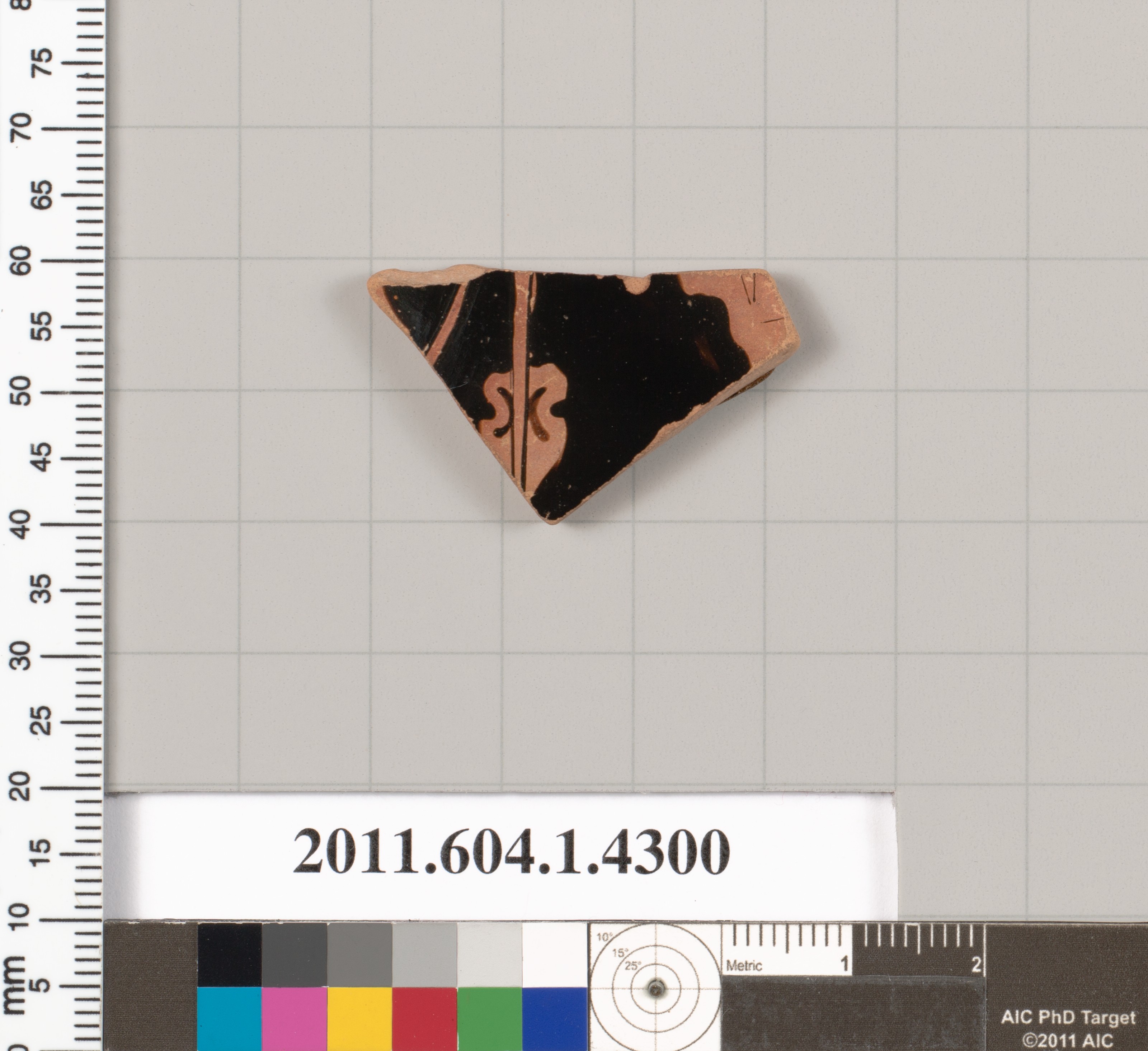
Heritage Synthesis: Terracotta fragment of a kylix (drinking cup)
Curated on Sep 07, 2026 // Node: LDN-01
The Gilded Abyss: Terracotta Fragments and the Architecture of Old Money Silence
The internal genetic code of Lauren Fashion—that dialectical tension between Socratic transcendence and Song-dynasty immanence—finds an unexpected archaeological crucible in the terracotta fragment of an Attic kylix. This shard of a drinking cup, broken from its symposium context, is not a relic of aristocratic leisure but a palimpsest of philosophical anxiety. Its terracotta body, once fired to a warm, blood-adjacent orange, now bears the scars of burial, its painted figures faded to ghostly silhouettes. For the 2026 Old Money silhouette, this fragment is not a decorative muse but a structural manifesto. It instructs us to build garments not as surfaces of display, but as vessels of withheld narrative—clothing that carries the weight of an unspoken ending, much like the kylix carried wine that would precede the philosopher’s hemlock.
I. The Kylix as a Dialectical Object: Between Symposium and Suicide
The kylix was the vessel of the *symposium*, the Greek drinking party where dialectic and intoxication merged. Yet its shallow, wide bowl also served as the delivery system for state-sanctioned poison. This duality—celebration and execution sharing the same ceramic architecture—mirrors the Lauren code’s central paradox: the West’s obsession with death as a ladder to truth, and the East’s embrace of emptiness as a vessel for fullness. The terracotta fragment, with its broken rim and chipped tondo, refuses to resolve this tension. It is neither the heroic oil painting of Socrates’ final gesture nor the serene celadon of the Song meiping. Instead, it occupies a liminal space: the moment *before* the hemlock, the instant *after* the last libation.
For 2026 Old Money tailoring, this translates into a rejection of the "narrative suit"—the garment that tells a story of acquisition or ambition. Instead, we propose the "aporetic silhouette": a jacket cut with the precision of a Platonic form, yet finished with the irregularity of a broken edge. Think of a double-breasted blazer in a deep, undyed wool, its shoulders structured like the kylix’s stem, but its hem left raw, not as a fashion statement, but as a nod to the fragment’s refusal to be whole. The Old Money wearer does not complete the story; they inhabit its interruption.
II. Terracotta’s Chromatic Grammar: The Color of Earth and Blood
The terracotta’s fired clay ranges from pale ochre to a deep, ferric red—the exact hues of dried blood on Athenian limestone. This is not the cool, cerebral blue of Socrates’ robe in David’s painting, nor the jade-green tranquility of the Song glaze. It is the color of the body itself, before idealism, before transcendence. In the 2026 palette, this demands a shift away from the "quiet luxury" neutrals of greige and oatmeal. Instead, we introduce *terracotta noir*: a brown so deep it reads as black in low light, but reveals its clay origin under direct sun. This color is used for the primary shell of an overcoat—a Chesterfield with a velvet collar, but the velvet is not the plush of aristocratic comfort; it is a flat, matte weave that feels like dried earth.
The kylix’s painted figures—often outlined in black against the red clay—suggest a graphic language for garment interiors. A 2026 Old Money suit might appear as a monolith of dark terracotta wool from the outside. But upon the turn of a cuff or the lift of a lapel, a lining of black-and-red Greek key motifs, rendered in gold thread, emerges. This is not ostentation; it is the fragment’s own logic—the decoration is only visible when the vessel is tipped, when the wine is about to spill, when the conversation turns toward the ultimate. The gold thread here is not wealth; it is the *logos*, the rational principle that the Greeks believed could be found even in the moment of death.
III. The Silhouette of the Broken Tondo: Asymmetry as Ethical Form
The tondo, the circular image at the kylix’s interior base, is often the most damaged part of a fragment. It was the last image seen before the drinker drained the cup—often an apotropaic eye or a scene of pursuit. In the fragment, this circle is usually sheared off, leaving a void. For 2026, this void becomes the central design principle: the *negative-space shoulder*. Traditional Old Money tailoring emphasizes a strong, continuous shoulder line—a sign of stability and inherited power. The terracotta fragment instructs us to break this line. One shoulder of a jacket may be constructed with a slightly dropped, almost soft construction, while the other retains a firm, padded structure. This is not asymmetry for its own sake; it is a sartorial acknowledgment of the kylix’s broken tondo—the recognition that no philosophical system, no matter how elegant, survives contact with the earth intact.
This asymmetry extends to the trouser. A single pleat on the left leg, a flat front on the right. The hem of one trouser leg is finished with a deep, blind-stitched cuff; the other is left clean and unbroken. This is the garment as *aporia*—an irresolvable question made wearable. The wearer of the 2026 Old Money silhouette does not project confidence; they project the more profound quality of *doubt held with grace*. This is the Socratic inheritance: the knowledge that one knows nothing, rendered in the drape of a wool flannel.
IV. Materiality as Memento Mori: The Weight of the Fragment
The terracotta fragment is heavy. It has a physical density that the oil painting and the porcelain vase lack. It is the weight of the earth that buried it, the weight of the centuries that ground it down. For 2026, this translates into a demand for *gravitas* in fabric. We reject the feather-light technical wools of contemporary luxury. Instead, we specify cloths with a high twist and a dense, felted finish—fabrics that hang with the solemnity of a funerary stele. A 2026 Old Money overcoat should feel like a shard of the Parthenon, not like a cloud.
This weight is further emphasized by the use of *gold-thread* in the garment’s internal structure. Not visible, but present—as a row of gold-colored basting stitches along the inside of a lapel, or a single gold button at the base of the vent, hidden from view. This is the gold of the funerary mask, not the gold of the parade. It is a secret acknowledgment that all clothing is ultimately a shroud. The Song vase holds waves; the kylix held wine; the 2026 suit holds the body—all are vessels for the transient.
V. The Synthesis: A Garment That Mourns Without a Subject
The Lauren code posits that both the Socratic death and the Song wave are "elegies to disappearance." The terracotta fragment is the purest expression of this elegy because it is *already* disappeared. It is a ruin of a ruin. The 2026 Old Money silhouette, informed by this shard, must therefore be a garment that mourns without specifying its loss. It is not a mourning suit for a particular death, but a suit that embodies the condition of mortality itself.
The silhouette is long, slightly elongated through the torso, echoing the kylix’s stem. The lapels are narrow, almost severe, like the black-figure lines on the clay. The color is the deep, earthen red-brown that has no name in modern fashion catalogs—call it *Attic Ground*. The fabric is a wool-cashmere blend, but the cashmere is not there for softness; it is there to mute the wool’s scratch, to create a surface that is as quiet as the inside of a tomb. The gold-thread detail is reserved for the interior of the jacket’s back, where the wearer cannot see it—a hidden *memento mori* stitched at the exact point of the shoulder blades, where the wings would sprout if we believed in flight.
Conclusion: The Fragment as the Only Complete Form
In the end, the terracotta kylix fragment teaches us that completeness is a lie. The Song vase is whole, but its wholeness is a form of silence. The David painting is whole, but its wholeness is a form of argument. The fragment is broken, and in its brokenness, it is the only honest object. For 2026, Lauren Fashion’s Old Money silhouette must embrace this honesty. It will not be a suit that aspires to the eternal. It will be a suit that acknowledges its own decay, its own burial, its own future as a shard in some future archaeologist’s tray. The gold-thread inside is not for the living; it is for the dig. And in that gesture, the garment finally bridges the abyss between the Athenian prison and the Song kiln—not by resolving the dialectic, but by wearing its fracture with unflinching elegance.
Heritage Lab Insight
Genetic Bridge: Archive node focusing on Gold-Thread craftsmanship.