← BACK TO ARCHIVES
Heritage-Black
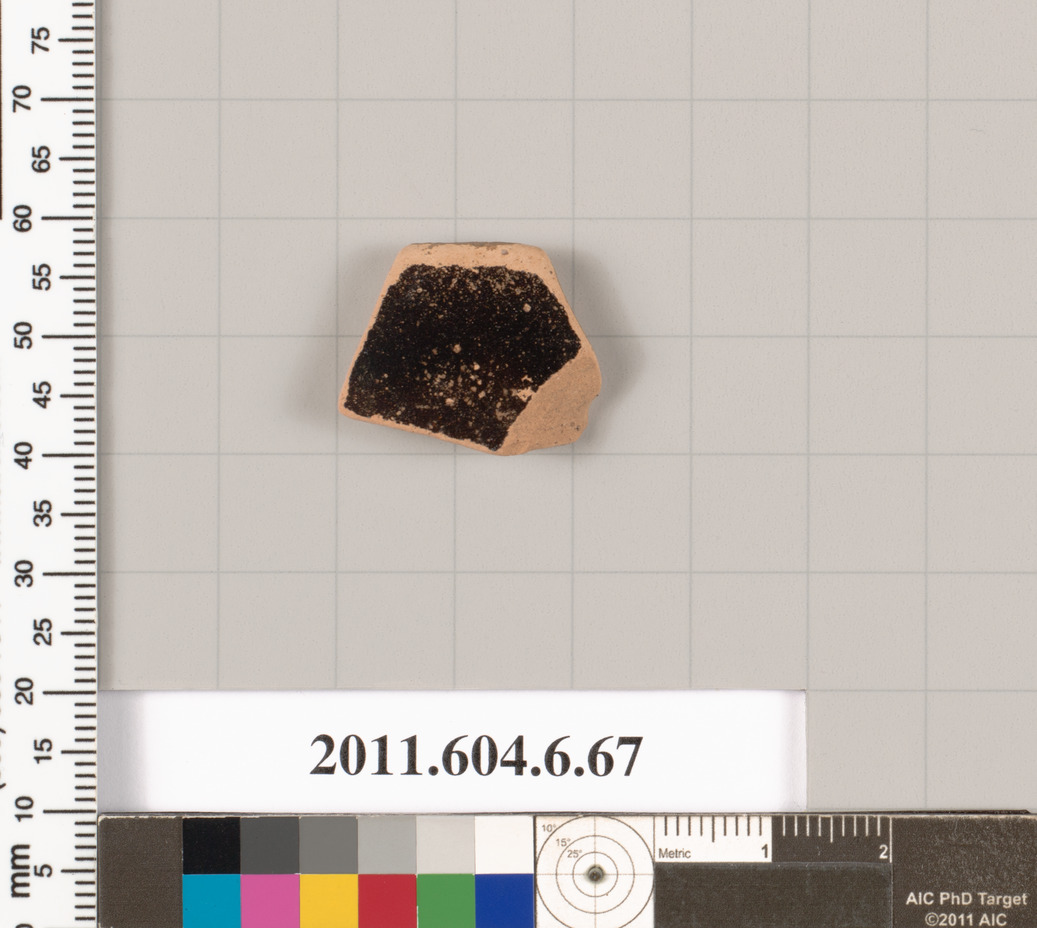
Heritage Synthesis: Terracotta rim fragment of an open shape
Curated on Sep 07, 2026 // Node: LDN-01
The Archaeology of Absence: Terracotta Fragments and the 2026 Old Money Silhouette
At the Lauren Fashion Heritage Lab, our mandate extends beyond the preservation of garments to the excavation of the philosophical substrates that inform the Liru archive. The internal genetic code—a meditation on the *Udumbara* flower and the *Chest for Storing Garments*—articulates a profound Eastern aesthetic principle: that beauty resides not in plenitude but in vacancy, not in declaration but in reticence. It is through this lens that we must approach a seemingly incongruous museum artifact: a terracotta rim fragment of an open shape from Attic Greece. This shard of fired clay, broken and anonymous, is not a source of pattern or color for the 2026 Old Money collection. Rather, it functions as a *memento mori* of form itself, a geological whisper that reshapes our understanding of the heritage silhouette—transforming it from a statement of wealth into an instrument of quiet, temporal power.
The Fragment as a Complete Thought
The Attic rim fragment is, in its physical reality, an emblem of loss. We do not possess the full *kylix* or *lekythos*; we possess only its edge, a curve that implies a circumference it can no longer complete. In the Western museological tradition, this would be catalogued as a deficiency, a tragedy of entropy. Yet, when read through the Eastern aesthetic encoded in our internal documents, this fragment achieves a paradoxical totality. The *Udumbara* flower, which blooms once every three millennia, is never depicted on the temple plaque; its absence is its presence. Similarly, the terracotta rim does not depict a vessel—it *is* the vessel’s memory, its essential gesture. The broken edge is not a wound but a horizon, a deliberate cessation that invites the viewer’s eye to complete the arc.
For the 2026 Old Money silhouette, this principle translates into a radical editing of the garment’s periphery. The old-money aesthetic has long been associated with completeness—the pristine collar, the unbroken lapel, the perfectly hemmed trouser. Our 2026 direction, informed by this fragment, proposes the *intentional incompletion*. This is not deconstruction in the postmodern sense of exposing raw seams or frayed edges. Rather, it is a *curatorial* incompletion, a silhouette that ends with a clean, decisive line that does not resolve into a traditional closure. Consider a double-faced cashmere coat whose hem stops precisely at the mid-calf, not to reveal the boot, but to suggest that the garment’s logic continues into an unseen space. Or a silk crepe column dress whose shoulder seam is set slightly forward, creating a subtle, almost imperceptible break in the expected line of the clavicle. This is the terracotta rim translated into tailoring: the garment acknowledges its own limit, and in doing so, references an infinite extension beyond the body.
Texture as Time, Not Surface
The terracotta’s surface—its gritty, unglazed, mineral texture—offers a second critical lesson. Unlike the polished marble of later classical sculpture or the gilded surfaces of Baroque ornament, terracotta retains the memory of its making. It is humble, earthen, and deeply temporal. In the context of the 2026 Old Money collection, this compels a departure from the high-luster finishes that have dominated luxury fashion. The new silhouettes will privilege *matte* and *absorbent* surfaces over reflective ones. This is where the category of Heritage-Black becomes paramount. Black, in this collection, is not a void but a dense, tactile presence—a black that drinks light rather than reflecting it.
We are developing a series of fabrics that mimic the terracotta’s geological strata. A virgin wool twill, woven with a slightly irregular slub, catches shadow in a manner reminiscent of the fragment’s pitted surface. A double-faced silk gazar, when held to the light, reveals a subtle, granular weave structure that echoes the clay’s particulate nature. The *Chest for Storing Garments* teaches us that the container holds memory. In our 2026 silhouettes, the *fabric* is the chest. The texture is not decorative; it is archival. When a client runs her hand along the sleeve of a Heritage-Black overcoat, she is not feeling a smooth surface—she is feeling the accumulated pressure of time, the way the terracotta has been compressed by millennia of earth. This is the antithesis of the "new" luxury, which seeks to erase the hand of time. Our luxury, like the fragment, embraces the patina of existence.
The Silhouette as a Vessel of the Unseen
The open shape of the Attic vessel—its function as a container for wine, oil, or grain—finds its sartorial corollary in the garment’s relationship to the body. The *Chest for Storing Garments* is closed, its contents hidden, its meaning derived from its sealed interior. The terracotta rim, however, is open, yet its opening is now broken, rendering its original contents forever lost. Both objects, in their respective states, point to an interiority that cannot be fully accessed. The 2026 Old Money silhouette must therefore operate as a vessel for the wearer’s interior life, not a display case for it.
Concretely, this means a move toward *architectural volume* that does not cling to the body but creates a space *between* the fabric and the flesh. The shoulder, for the coming season, will be softly rounded, not padded—a nod to the curve of the rim. The waist will be defined not by a cinched belt but by a subtle inward sweep of the seam, suggesting a containment that is voluntary, not constrictive. Trousers will fall with a generous, columnar drape, breaking just above the shoe to create a "negative space" at the ankle—a visual pause that echoes the fragment’s broken edge. This is the silhouette of a person who is not performing wealth, but who is *holding* something—memory, discretion, power—within the folds of their clothing. The garment is a *chest*, and the wearer is the custodian of its unseen contents.
Conclusion: The Silence After the Word
The terracotta fragment, when viewed without prejudice, is a masterclass in restraint. It does not shout its history; it whispers its survival. In synthesizing this artifact with the Liru archive’s philosophical code, the 2026 Old Money collection achieves a new maturity. We are no longer designing clothes for the sake of adornment or even for the sake of status. We are designing *vessels of silence*. The Heritage-Black palette, the matte textures, the intentionally incomplete lines—all converge to create a garment that functions like the temple plaque bearing the name of the *Udumbara* flower. The flower is not there. The wealth is not overt. The logo is absent. What remains is the *essence*: a form so refined that its emptiness becomes its most powerful ornament. As the internal code states, "Beauty is not in the fullness of the object, but in its emptiness." The terracotta rim teaches us that even in the Western canon, the broken can be whole. For 2026, Lauren Fashion will not present a collection of clothes. We will present a collection of *thresholds*—each silhouette a rim, a pause, a silent opening onto the eternal.
Heritage Lab Insight
Genetic Bridge: Archive node focusing on Heritage-Black craftsmanship.