← BACK TO ARCHIVES
Heritage-Black
Heritage Synthesis: Terracotta fragment of a kylix (drinking cup)
Curated on Sep 07, 2026 // Node: LDN-01
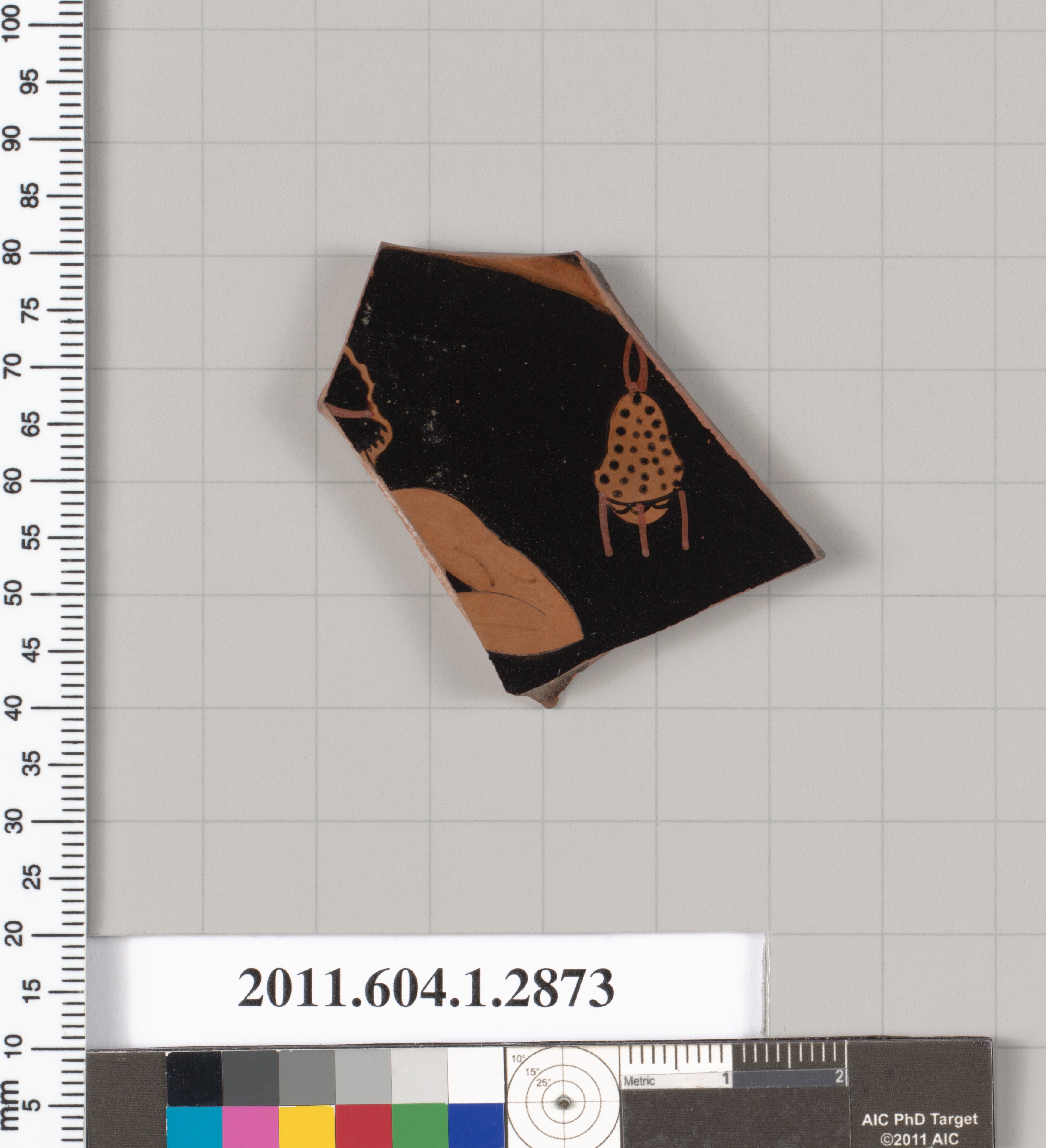
The Terracotta Kylix and the Architecture of Restraint: A Dialectical Blueprint for 2026 Old Money Silhouettes
The internal archive of Lauren Fashion Heritage Lab holds a peculiar tension. We study the hallucinatory density of *The Temptation of Saint Anthony*, where objects writhe as spiritual adversaries, and the serene economy of the *Loquat Painting*, where a single branch of fruit becomes a universe of contemplative stillness. These are our philosophical poles: conflict and harmony, distortion and presence. Yet, when we turn to the museum artifact before us—a terracotta fragment of an Attic kylix, a humble drinking cup shattered by time—we find a third, more foundational principle. This fragment is not a narrative of spiritual warfare nor a meditation on natural vitality. It is a testament to *functional grace*. And it is precisely this quality, I argue, that must inform the 2026 Old Money silhouette, which risks devolving into mere nostalgia without a rigorous, material-based dialectic.
The kylix fragment, in its broken state, offers a profound lesson in the aesthetics of the *everyday object*. Unlike the demonic vessels of Saint Anthony’s trial, this cup was not designed to provoke. Unlike the loquat branch, it was not painted to inspire transcendental reverie. It was made to be held, to be drunk from, to be passed around a symposium. Its beauty was not an escape from function but the *perfection of function*. The surviving curve of the bowl, the delicate stem, the painted tondo on the interior—these elements speak to a culture that understood that the highest art is often the most quietly integrated into life. This is the genetic code we must extract: Old Money is not about display; it is about the *dignity of utility*, the quiet confidence of an object that knows its purpose and fulfills it with impeccable proportion.
From Fragment to Fabric: The Dialectic of Material Presence
How does this inform a 2026 silhouette? We must move beyond the superficial reading of “minimalism” or “quiet luxury.” The terracotta fragment teaches us a specific material philosophy. Terracotta is earth-baked, humble, and yet its fired surface achieves a permanence that outlives empires. Its color is not a vibrant statement but a grounded, warm neutral—a foundational tone. For our 2026 Old Money wardrobe, this translates into a prioritization of **Heritage-Black**, not as an absence of color, but as a *concentrated presence*. Like the dark glaze on the kylix’s interior, Heritage-Black in cashmere or high-twist wool should not read as somber. It should read as a container for light, a surface that absorbs and reflects with a quiet, internal luminosity.
The fragment’s broken edge is equally instructive. It reveals the *cross-section* of the ceramic body—the raw, unglazed interior that speaks to the material’s integrity. In our silhouettes, this translates to a focus on *construction*. The 2026 Old Money garment must not hide its seams but perfect them. A jacket’s internal canvas, the precise roll of a lapel, the hand-finished buttonhole—these are the “cross-sections” of our craft. They are invisible to the casual observer but palpable to the discerning eye. This is the antithesis of fast fashion’s hollow shell. It is a return to the kylix’s promise: that the inside is as true as the outside, that the object’s integrity is not compromised by its surface beauty.
The Symposium of Self: Silhouette as Social Container
The kylix was a vessel for the symposium, a ritualized space of intellectual and social exchange. Its form encouraged a specific posture—a reclining, relaxed, yet engaged body. It did not demand attention; it facilitated connection. Translating this to the 2026 silhouette, we must design for a similar *social architecture*. The Old Money aesthetic is not about the solitary, dramatic entrance (the Saint Anthony model of spiritual combat). It is about the easeful, confident presence within a room (the kylix model of convivial grace).
Therefore, the silhouette must prioritize *mobility and drape* over rigid structure. Consider a coat in a heavy, fluid wool—its shoulder line should be precise but not armored. Its length should create a vertical line that suggests composure, not intimidation. The trousers should break with a clean, single fold, echoing the kylix’s simple curve. The overall effect is not one of distortion (Saint Anthony) nor of stark, isolated simplicity (the Loquat’s single branch), but of a *harmonious integration* with the wearer’s body and the social environment. The garment becomes a modern kylix: a beautifully proportioned container for the self, designed for the exchange of ideas, not the projection of ego.
Resisting the Baroque: The Discipline of the Tondo
The most instructive element of the kylix fragment is its interior tondo—the circular image visible only when the cup is drained. This is a private pleasure, a hidden gem. It is not for the public gaze but for the individual’s moment of reflection. In our 2026 designs, this translates to the concept of the *interior detail*. It could be a vibrant silk lining in a Heritage-Black overcoat, a hidden plaid in the under-collar of a jacket, or an unexpected, tactile jacquard inside a glove. This is not ostentation; it is a nod to the wearer’s own cultivated sensibility. It is the loquat’s quiet fruitfulness hidden within the kylix’s functional form.
This principle actively resists the baroque temptations of contemporary luxury—the logos, the exaggerated proportions, the desperate need for visual novelty. The kylix fragment, in its very brokenness, reminds us of the *endurance of proportion*. The 2026 Old Money silhouette must be designed with the same sense of timelessness. It should not chase the season’s trend but refine the archetype. The shoulder, the waist, the hip, the hem—these must be balanced with the mathematical clarity of Greek pottery. This is the “conflict” we embrace: not the conflict of spiritual torment, but the disciplined tension between the fabric’s natural drape and the tailor’s precise cut. It is a harmony achieved through rigorous control, a stillness that is dynamic.
Conclusion: The Fragment as Future
In the *Loquat Painting*, we see eternity in a moment. In the *Temptation*, we see the sublime in chaos. In the terracotta kylix, we see neither. We see *time itself*—the evidence of use, the beauty of wear, the survival of an object that was never meant to be art but became art through its faithful service to life. This is the ultimate lesson for 2026. The Old Money silhouette must not be a costume of a bygone era. It must be a functional vessel for contemporary life, designed with such integrity and proportion that it will, like the kylix fragment, age with grace and carry the story of its wearer into the future. It must be Heritage-Black in its depth, terracotta in its groundedness, and kylix-like in its quiet, enduring utility. This is how we honor the past—not by replicating it, but by distilling its essence into a form that is ready for the next symposium.
Heritage Lab Insight
Genetic Bridge: Archive node focusing on Heritage-Black craftsmanship.