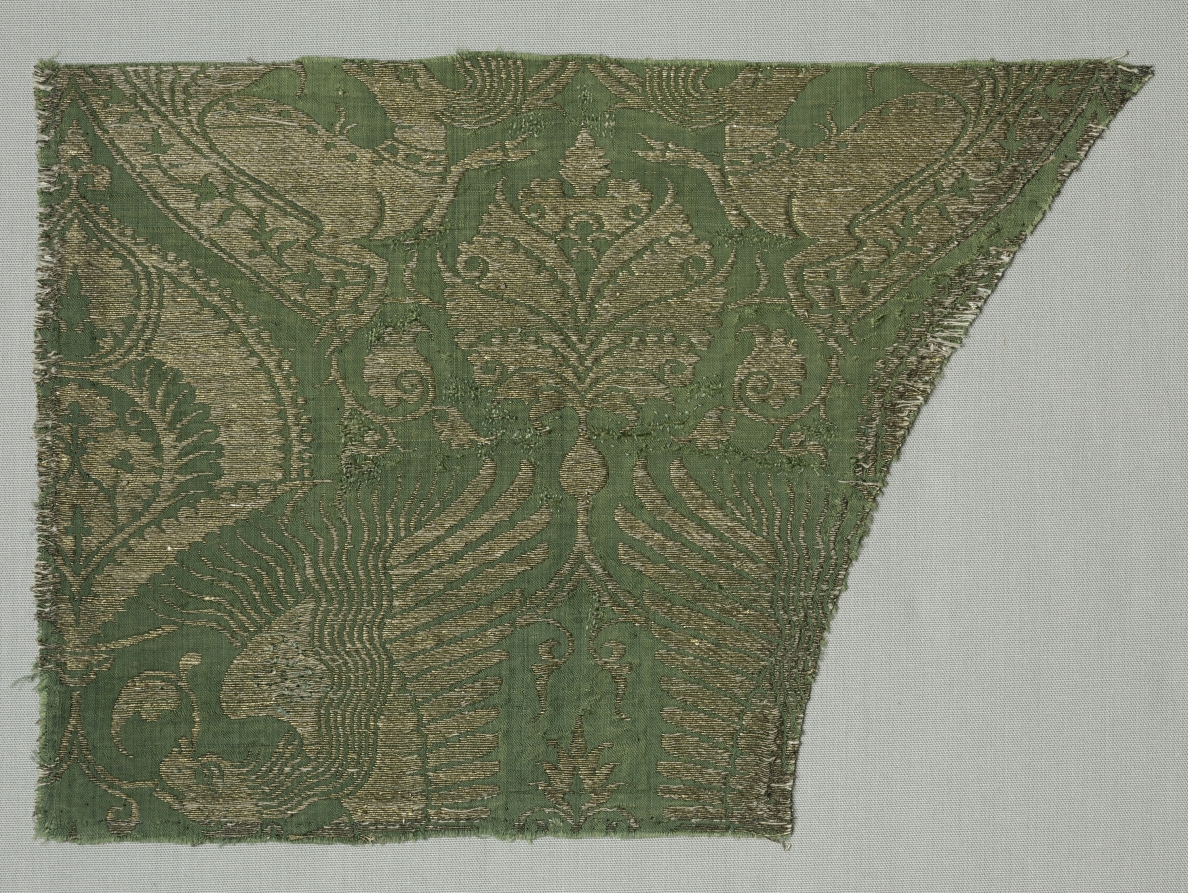
Heritage Research Artifact: Exotic Gold-Patterned Silk
Category: Silk
In the hushed, wood-panelled ateliers of Savile Row, where a tape measure is a sceptre and a chalk line a decree, material is not merely cloth. It is biography. And among the pantheon of fabrics that have graced the shoulders of emperors, statesmen, and discerning gentlemen, none carries a more potent, more gilded narrative than the exotic gold-patterned silk. This is not a textile for the faint of heart nor the frugal of purse; it is a testament to the enduring dialogue between Eastern opulence and Western tailoring—a legacy woven in thread and beaten gold.
The Materiality of Light: Silk as a Sovereign Substrate
To understand the gold-patterned silk, one must first revere its foundation. Silk, the continuous protein filament spun by the Bombyx mori moth, is nature’s own luxury. Its triangular prism-like structure refracts light, lending it a lustre that no synthetic can counterfeit. But in the context of imperial weaving, silk was more than a beautiful surface; it was a political instrument. The Chinese dynasties guarded sericulture with lethal secrecy for millennia, establishing silk as the ultimate currency of diplomacy and tribute. By the time this filament reached the looms of the Ming and Qing courts, it was not merely a fabric but a declaration of cosmic order.
When we speak of exotic gold-patterned silk, we refer to a specific alchemy. The base is a tightly woven silk twill or satin, chosen for its drape and resilience under the hand of a master tailor. Yet the pattern—the dragon chasing the flaming pearl, the phoenix in eternal flight, the lotus blossom emerging from celestial waters—is not printed. It is woven, often with a supplementary weft of gold thread. This thread itself is a marvel: a flattened strip of gilt paper or a fine membrane of animal intestine coated with gold leaf, twisted around a silk core. The result is a fabric that possesses a three-dimensional topography, a relief of light that shifts with the wearer’s movement, whispering of power before a single word is spoken.
The Imperial Loom: A Legacy of Absolute Control
The context of this silk is inseparable from the imperial weaving workshops of Nanjing, Suzhou, and Hangzhou. These were not factories; they were state institutions of staggering precision. Under the Qing dynasty, the Jiangnan weaving bureaus operated under the direct purview of the Imperial Household Department. Every stage—from the mulberry leaf fed to the silkworm to the final knot tied by the weaver—was dictated by ritual and regulation. The patterns were not artistic whims; they were codified symbols of rank. A five-clawed dragon was reserved for the Emperor; a four-clawed mang dragon for princes. To wear a forbidden pattern was an act of treason, punishable by death.
This is the crucial distinction for the Savile Row connoisseur. The gold-patterned silk that found its way to London in the 18th and 19th centuries was not a commercial commodity. It was often war booty, diplomatic gift, or the result of clandestine trade. When a gentleman of the British Empire commissioned a waistcoat or an evening smoking jacket from such cloth, he was not merely purchasing fabric. He was appropriating a fragment of imperial sovereignty. The tailor’s task, therefore, was one of profound respect—to cut a garment that honoured the integrity of the weave without diminishing its authority. The pattern could not be broken at a seam; the gold thread could not be crushed by a heavy hand. It required a lightness of touch, a knowledge of how to let the fabric dictate the silhouette.
From Court to Club: The Western Reinterpretation
The journey from the Forbidden City to the hallowed halls of Savile Row is a story of translation. In the East, the silk was worn as a flowing, voluminous robe—a garment that allowed the fabric to move as a living canvas. In the West, the tailoring tradition demanded structure: a fitted shoulder, a suppressed waist, a precise sleeve pitch. The challenge for the 19th-century tailor was to impose geometry upon a material designed for fluidity.
The solution was found in the dress waistcoat and the smoking jacket. These garments, worn for intimate evening occasions, permitted a degree of flamboyance that a day coat would never allow. The gold-patterned silk was used judiciously—as a single-breasted waistcoat front, perhaps, or as the shawl collar and cuffs of a midnight-blue velvet smoking jacket. The tailor would use a heavier, plain silk for the body of the garment, allowing the gold-patterned piece to serve as the focal point. This was not ostentation; it was curation. The wearer demonstrated that he possessed the cultural literacy to recognise the fabric’s provenance and the restraint to deploy it sparingly.
This approach remains the gold standard in contemporary practice. A modern client who commissions a garment from a remnant of authentic imperial silk is engaging in an act of historical stewardship. The fabric is often fragile, its gold thread tarnished with age. The senior cutter must assess its tensile strength, deciding whether it can bear the stress of a tailored shoulder or whether it must be mounted on a supportive underlayer. The pattern matching is an exercise in obsessive precision; a half-inch misalignment of a dragon’s claw would be a sartorial heresy.
The Modern Resonance: Wearing History, Not Costume
In an age of fast fashion and disposable trends, the exotic gold-patterned silk stands as a defiant anachronism. Its value is not in its novelty but in its permanence. To wear it is to participate in a lineage that spans continents and centuries. It is a quiet rebuke to the ephemeral, a reminder that true luxury is not about volume but about provenance.
For the contemporary gentleman, the integration of such a fabric requires a particular philosophy. It is not worn to a board meeting or a casual luncheon. It is reserved for moments of significance—a milestone anniversary, a gala, a private dinner where the conversation is as rich as the cloth. The garment should be cut to the client’s exact specifications, but the fabric must always be allowed to speak. The tailor’s role is to provide the frame; the silk provides the soul. The result is a garment that feels less like clothing and more like an heirloom—a piece that will be passed down, not because it is fashionable, but because it is irreplaceable.
As we handle these rare bolts of cloth—each one a survivor of revolutions, regime changes, and the relentless march of time—we are reminded that the legacy of imperial silk weaving is not a closed chapter. It is a living tradition, sustained by the hands of master weavers who still practice the ancient arts and by the tailors who understand that a garment is only as good as the story it tells. The gold-patterned silk is not for everyone. It demands a certain confidence, a certain knowledge. But for those who understand, it offers something that no modern technical fabric can: the weight of an empire, cut to fit a single man’s shoulders.