The Fabric of Transcendence: A Study in Ultimate Line
To comprehend the artefact before us—this rendering of the Nehan, the Death of the Buddha—one must first appreciate the foundation. The silk is not merely a surface; it is the inaugural, critical decision. It is the equivalent of a bespoke cloth from the finest merchant, a heavy, duchess-weight silk of impeccable tooth and a closed, tight weave. This is a canvas that accepts ink and pigment not as a passive recipient, but as an active collaborator. It provides a slight resistance, a dignified hesitation, which grants the brushwork its essential clarity and prevents the colours from bleeding into vulgarity. The inherent sheen of the silk, a subdued lustre akin to a well-maintained mohair blend, interacts perpetually with the applied gold and mineral pigments, ensuring the composition shifts with the ambient light—a static image that possesses, paradoxically, a quiet animation. This material choice speaks of an understanding that profound narrative requires profound substance.
The Drapery of Parinirvana: Tailoring the Scene
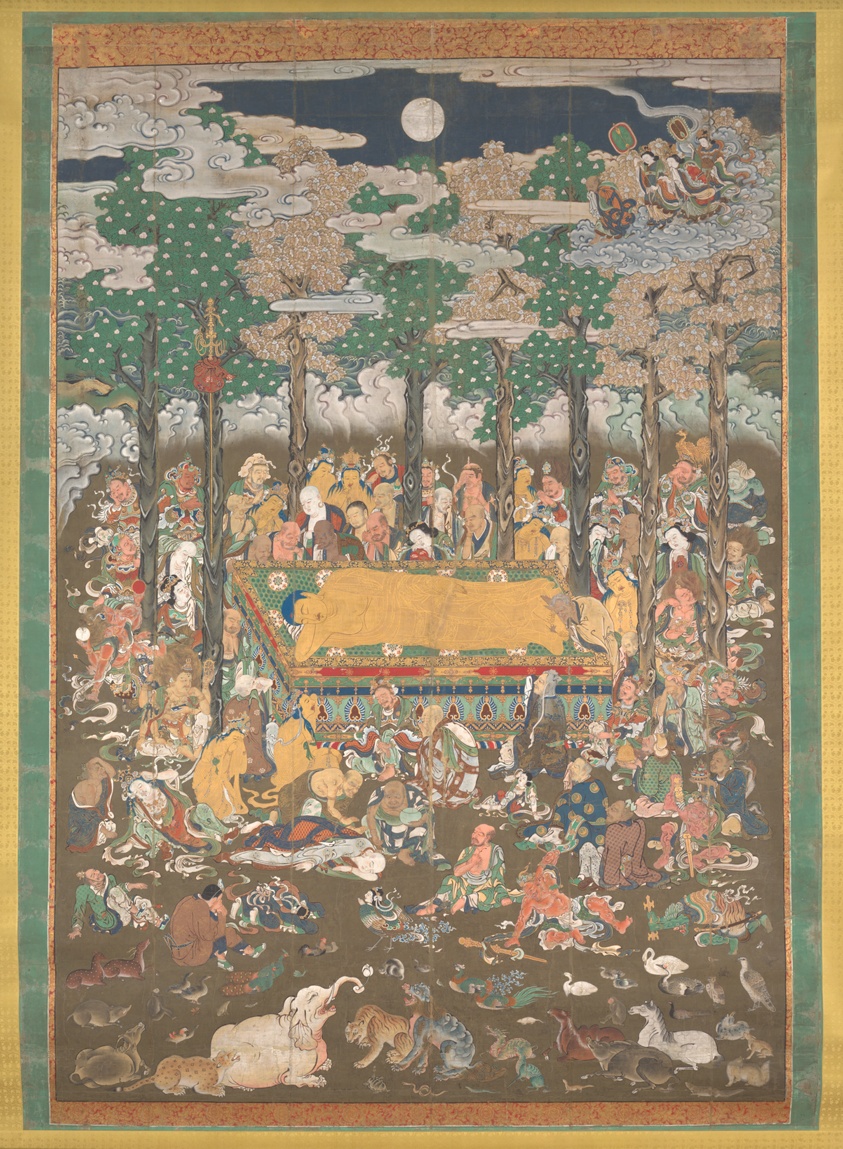
The scene is one of monumental repose, yet it is articulated through an exquisite language of line and fold. Observe the treatment of the Buddha’s robes as he rests upon the dais. The artist’s brush describes the cascading fabric with a fluid elegance that would commend itself to a master cutter. There is no haphazard crumpling here. Each fold and fall is meticulously composed, using ink lines of modulated thickness—from the finest hairline to a confident, weight-bearing stroke. This delineation creates a rhythm, a visual cadence that guides the viewer’s eye across the form without haste. The folds are not merely descriptive; they are architectural. They suggest the sublime geometry of the figure beneath while simultaneously abstracting it into a landscape of serene, flowing lines. This is the sartorial principle of drape, executed not in wool but in ink, achieving a timeless silhouette that transcends the corporeal.
A Bespoke Palette: Colour as Code
The colouration, while restrained, is applied with a strategic precision that belies its apparent simplicity. This is not a palette of flamboyance, but of coded significance and hierarchical clarity. The mineral pigments—malachite greens, azurite blues—are ground to a peerless fineness and applied in layered washes, building depth and luminosity. Their application is selective, highlighting celestial beings, specific flora, or the nimbus, thus creating a subtle but unmistakable focal hierarchy amidst the monochrome crowd of mourners. The use of gold, however, is the masterstroke. It is not gilding for mere ostentation. It is deployed with the discretion of a perfectly placed silk knot on a lapel. It traces sacred outlines, illuminates aurae, and picks out the intricate patterns of heavenly robes. This gold, applied over the silk, catches the light and holds it, ensuring the sacred elements of the scene perpetually assert their presence against the mortal grief depicted below. It is the visual equivalent of a whispered yet authoritative command.
Composition: The Balanced Ensemble of Grief and Grace
The composition is a study in controlled asymmetry and balanced ensemble. The recumbent Buddha forms a powerful, horizontal anchor—a baseline of eternal calm. Around him, the assembled multitude of disciples, bodhisattvas, animals, and celestial beings is arranged with the thoughtful consideration of a group portrait. There is a palpable density to the crowd, a sense of shared, overwhelming emotion, yet the artist ensures each figure, from the lion in paroxysms of grief to the most serene celestial attendant, maintains its individual character and posture. The space is managed with supreme confidence; the areas of intense detail and emotional agitation are counterweighted by voids of silk, by the serene expanse of the Buddha’s form, and by the deliberate, upward sweep of the landscape elements. This creates a narrative rhythm, allowing the eye to move from the epicentre of peace, through the concentric circles of distress, and back again. It is a perfectly fitted composition, where no element can be added or removed without disturbing the integrity of the whole.
Heritage and Hand: The Imperative of Craft
Ultimately, this hanging scroll on silk stands as a testament to the inseparable union of profound spiritual narrative and peerless material craft. The subject matter—the Parinirvana—represents the final, perfect release, the ultimate letting go. Yet, its depiction here is an act of immense control, discipline, and technical mastery. Every brushstroke is a commitment, every wash of colour a calculated risk on the unforgiving silk. The fluid elegance of the line work is not accidental spontaneity; it is the hard-won result of a lifetime’s dedication to the craft. This artefact reminds us that true heritage resides in this very tension: between the transcendent message and the tangible, meticulous human hand that conveys it. The silk, the ink, the colours, and the gold are not incidental; they are the essential vocabulary of that expression. To behold the Nehan scroll is to witness a summit of artistic endeavour, where material, technique, and narrative are tailored together into a single, seamless garment of enlightenment—a definitive statement, cut from the cloth of eternity itself.