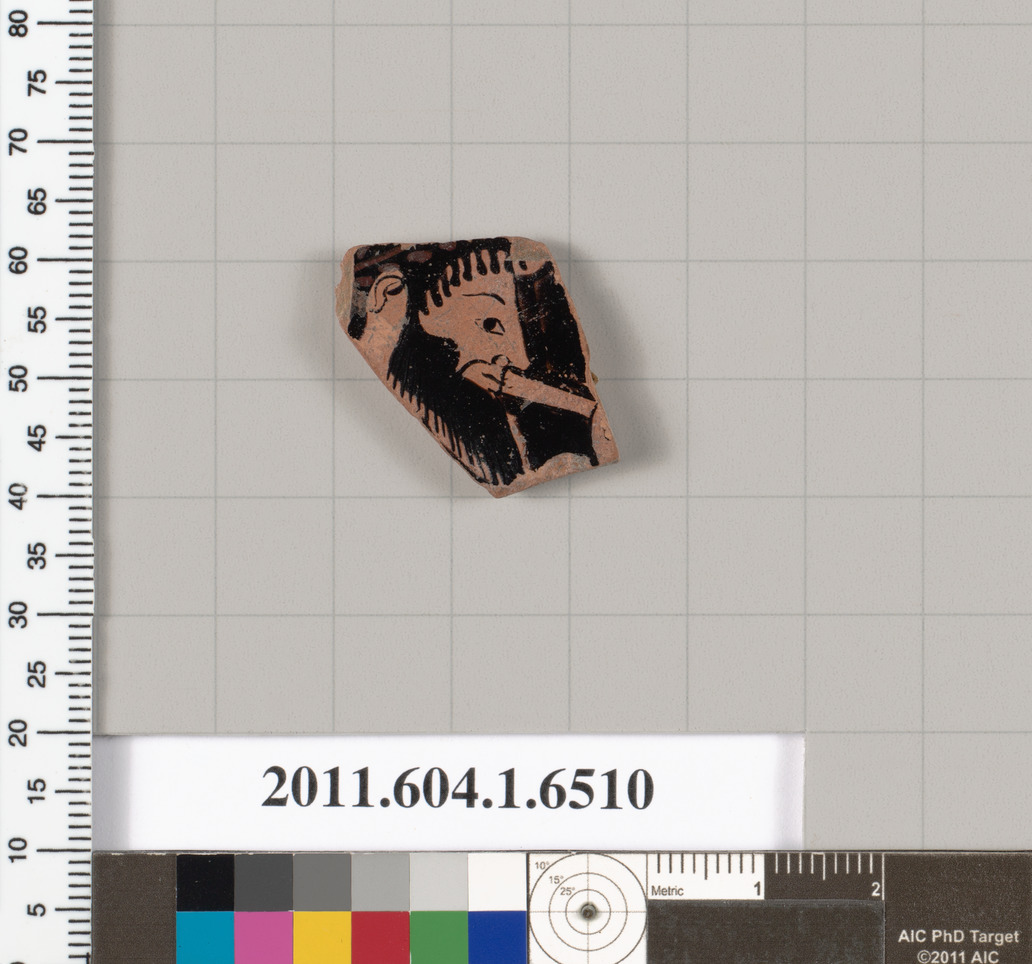
The Dialectic of Restraint and Release: An Attic Kylix Fragment and the 2026 Silhouette of Quiet Power
The internal genetic code of Lauren Fashion, as deciphered from the aesthetic dialogue between Han Gan’s Portrait of Night-Shining White and Yun Shouping’s Album of One Hundred Flowers: Peony and Plum Blossom, establishes a foundational tension. It is the tension between the monochromatic, potent abstraction of bound energy and the polychromatic, serene embodiment of naturalistic harmony. To project this dialectic onto the 2026 "Old Money" silhouette—a concept denoting not mere wealth but inherited cultural capital, discretion, and enduring authority—requires a transhistorical lens. The terracotta fragment of an Attic kylix (drinking cup), a quintessential artifact of Athenian aristocracy in the 5th century BCE, serves not as a literal template but as a profound philosophical informant. It bridges the Chinese aesthetic poles articulated in our archives and crystallizes their principles into a theory of form, posture, and intentional emptiness relevant for contemporary sartorial discourse.
The Kylix Fragment: Vessel of the Civic Body
At first glance, this fragment—a curved section of a shallow, wide-bowled drinking cup with a slender stem—appears distant from the concerns of fashion. Yet, its essence is profoundly corporeal. The kylix was not a storage vessel but a performative one, central to the symposium, the all-male drinking party that was a cornerstone of Athenian political, social, and intellectual life. Its design was ergonomically genius: the broad, shallow bowl allowed wine (mixed with water) to be easily drunk while reclining, and the twin horizontal handles facilitated a graceful, palm-up lift. The fragment captures a poise of controlled engagement. The user’s hand would cradle the stem, fingers curling around the handles, presenting a silhouette of relaxed yet ready composure. This is not the gripped fist of a tool but the open, receiving hold of a participant in dialogue. The painted scenes often on its interior (tondo) and exterior, typically depicting mythological narratives or Dionysian revels, were revealed only as the wine was consumed, structuring revelation into the ritual. Thus, the kylix embodied a paradox: a vessel of leisure (scholé) that was also an instrument of civic formation, its form dictating a specific, dignified bodily habitus.
Informing the 2026 Silhouette: Architecture of the Unspoken
The 2026 "Old Money" silhouette, informed by this artifact, moves beyond nostalgic replication of tailoring. It embraces an architectural philosophy of the contained self, directly conversant with the "bound energy" of Night-Shining White and the "structured leisure" of the kylix.
Firstly, the Silhouette as Calibrated Containment. Han Gan’s masterpiece teaches us that supreme power is often most palpable under restraint. The taut缰绳 (reins) and post that bind the steed are not limitations but the very devices that illuminate its explosive potential. Similarly, the kylix’s stem is the constraint that elevates the bowl, creating a dynamic equilibrium. For 2026, this translates to silhouettes built on a foundation of rigorous, almost abstract structure—sharp shoulder lines, precise armholes, elongated vertical seams—that create a sense of internal armature. This is the "post and reins" of the garment. The body within is not forced into unnatural shapes, but its movement is channeled and dignified. A wool crepe blazer, cut with geometric purity, becomes a vessel for the wearer’s intent, its clean lines echoing the kylix’s stem. The "Old Money" power here is not loud; it is the quiet hum of potential energy, the knowledge that the silhouette itself is the embodiment of restraint that implies formidable release.
Secondly, the Primacy of the Negative Space. The kylix fragment is, fundamentally, a study in purposeful void. The bowl’s emptiness is its function; it is designed to be filled and emptied in a social ritual. This mirrors the "extreme simplicity" and "vast blankness" of Han Gan’s painting, where the unpainted ground is charged with meaning—be it moonlight, air, or cosmic void. In the 2026 silhouette, this principle manifests as a mastery of strategic negative space. It is the precise drape of a Heritage-Black cashmere duster coat that swings away from the body as one moves, creating a dynamic, air-filled gap between garment and limb. It is the deep, single-breasted placket on a velvet evening jacket that reveals a stark expanse of shirtfront, a modern tondo for personal presence. The silhouette is not a second skin, but a carefully calibrated envelope of space around the wearer, acknowledging atmosphere and movement as part of the design.
Thirdly, the Surface as a Field of Cultivated Revelation. Where Yun Shouping’s peony and plum blossom represent a harmonious, surface-level celebration of natural beauty, the kylix introduces a narrative of layered revelation. The decorative scene at the bottom of the cup was hidden until the final draught, making the act of drinking a journey toward an aesthetic epiphany. For the 2026 silhouette, this informs a move beyond overt logos or blatant luxury. Instead, value and heritage are encoded in textures and details revealed upon closer inspection or specific movement: the subtle glint of a gold-thread pinstripe woven into a navy brocade trouser only visible in certain light; the intricate back-vent construction of a tailored jacket, apparent only when the wearer is seated; the astonishing softness of a cashmere-lined collar felt only by the wearer. This is "Old Money" as a knowing whisper, not a shout. The garment’s full story is disclosed through intimate engagement, mirroring the symposium’s ritualized revelation.
Conclusion: The Unified Aesthetic Posture
The terracotta kylix fragment, therefore, acts as the crucial interlocutor between the two poles of our internal genetic code. From the Night-Shining White, it takes the concept of dramatic tension through containment; from the Album of One Hundred Flowers, it borrows the appreciation for crafted surface and harmonious form suited to human ritual. It synthesizes these into a tangible, three-dimensional object lesson in aristocratic poise. The resulting 2026 "Old Money" silhouette is neither austerely minimalist nor floridly decorative. It is an architecture of intentionality—where cut creates containment, negative space speaks volumes, and luxury is a slowly unraveling scroll of detail. It clothes the body not for mere adornment, but to instill the habitus of the modern symposium: a posture of calm, ready engagement with the world, where power is held in reserve, beauty is discovered in layers, and the individual is both the vessel and the animating spirit within. It completes the aesthetic巡礼 (pilgrimage) from Tang dynasty potency to Qing dynasty lyricism, by way of Athenian civility, arriving at a silhouette of profound, quiet authority.