Thebes, Médinet-Habou, and the Architecture of Austerity: Informing the 2026 Old Money Silhouette
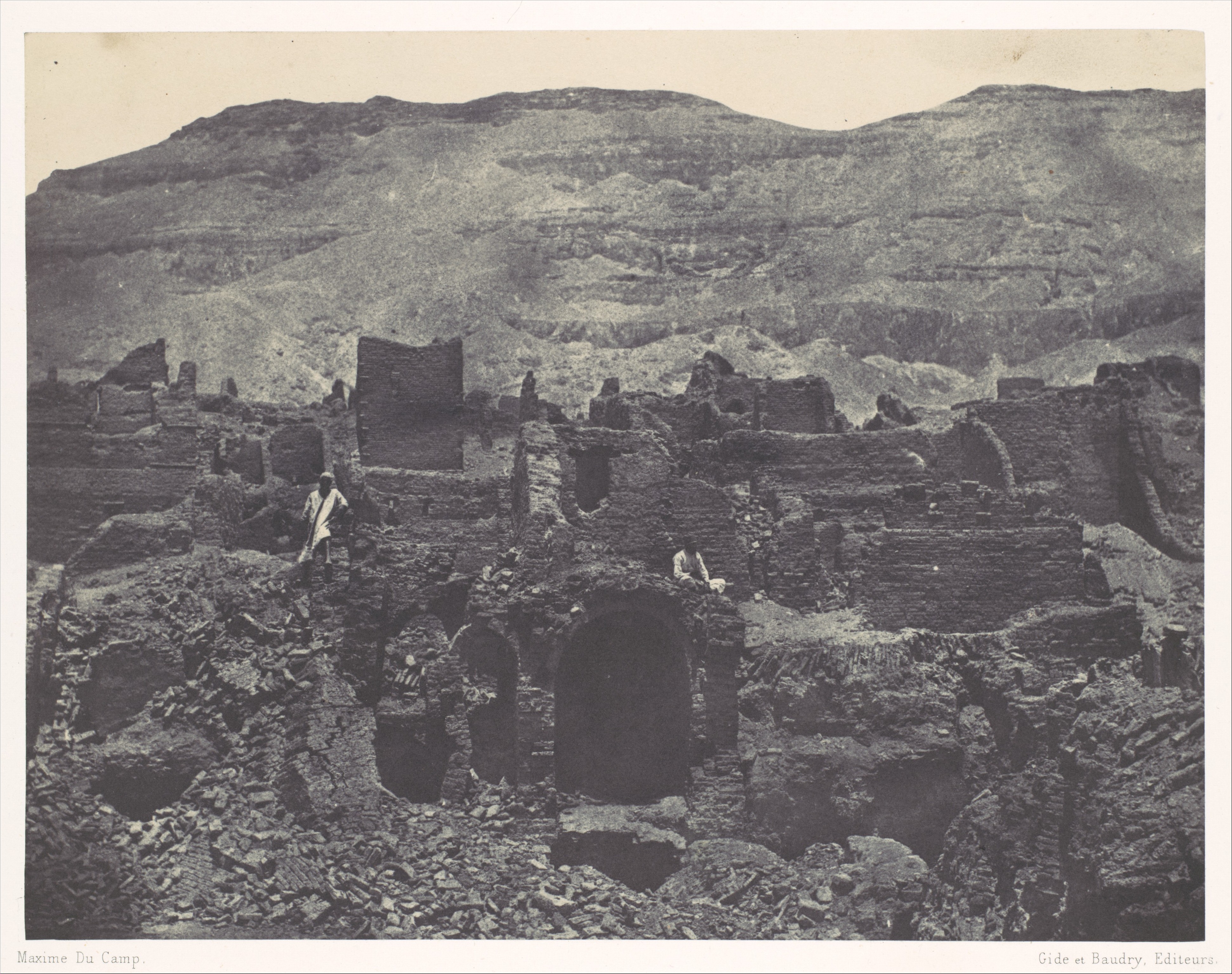
The Lauren Fashion Heritage Lab’s internal genetic code posits a profound dialogue between the serene contours of Bodhisattva and the abstract textures of Sample of Fibrolite, centered on color restraint, spatial breath, and the eloquent use of negative space. This internal philosophy finds a powerful and resonant external corollary in a specific visual artifact: the salted paper print from a paper negative depicting the ruins of Médinet-Habou in Thebes. This 19th-century photographic process, the Blanquart-Évrard, with its inherent softness, granular texture, and profound tonal range, does not merely capture an ancient site; it performs an act of aesthetic translation. It filters the monumental, sun-scorched austerity of Ramesside architecture through a lens of Romantic decay and scholarly contemplation. This confluence—of our internal code’s “silent aesthetics” and the artifact’s “documented grandeur”—directly informs the conceptual foundation for the 2026 Old Money silhouette, moving it beyond nostalgic revival into the realm of structured, timeless authority.
Decoding the Artifact: Blanquart-Évrard as an Aesthetic Filter
The chosen photographic medium is not incidental but integral to the message. The Blanquart-Évrard process, an early improvement on calotype negatives, produced prints with a rich, matte surface and a remarkable depth in the shadows, though highlights could appear chalky. The paper negative imbued the final image with a subtle, woven texture—a literal grain that echoes the Sample of Fibrolite’s fibrous inspiration. In the view of Médinet-Habou, this technique transforms stone. The monumental columns and hieroglyphic-covered pylons are not presented with clinical sharpness but are softened, their edges blending with the ambient light. The deep shadows in the colonnades become pools of absolute black, not empty voids but spaces of potential and mystery, directly mirroring the “negative space” and “visual breathing” prized in our internal code. The overall effect is one of textured monumentality and silent endurance. The ruin is not decaying; it is settling into a permanent, dignified state of being. This is the core aesthetic principle for 2026: clothing not as fleeting fashion, but as architecture for the body, designed with a permanence that softens with time, not disintegrates.
From Stone to Silhouette: The Pillars of the 2026 Old Money Form
The 2026 Old Money silhouette, informed by this research, will be built upon three architectural principles derived from the artifact and filtered through our heritage code.
1. The Pylon Silhouette: The massive, sloping gateways (pylons) of Egyptian temples provide the foundational silhouette. This translates into tailoring that emphasizes a broad, unwavering shoulder line—not padded, but constructed—that tapers cleanly to a narrow hem. Coats and dresses will employ strategic seaming to create this trapezoidal form, conveying stability and unshakeable presence. Like the pylon’s surface covered in carved narratives, the fabric’s texture becomes the “hieroglyphics”—through the fibrous complexity of a Fibrolite-inspired jacquard, or the subtle, glaze-like sheen of a Bodhisattva-inspired silk faille. The silhouette is a canvas for profound texture, not ornament.
2. The Colonnade Rhythm: The repetitive, rhythmic spacing of columns in the ruins informs pattern and construction. This appears not in literal prints, but in the rhythm of fastenings, the spacing of tucks or pleats, and the vertical lines of double-breasted closures or columnar seams. It creates a sense of measured, disciplined order. The “negative space” between these elements—the gap between buttons, the fall of a lapel—is as crucial as the elements themselves, providing the “breathing room” essential to both the artifact’s photograph and our internal philosophy. This rhythm rejects clutter, embracing a stately, deliberate pace.
3. The Patina of Time: The Blanquart-Évrard print’s tonal gradation, where stark white stone meets velvety black shadow, dictates a new color and material strategy. The 2026 palette is one of mineral and shadow: basalt black, limestone white, sandstone beige, and deep, photographic sepia. These are not flat colors but possess depth and variation, achieved through fabric manipulation—mixing yarns of different lusters, or using finishing techniques that create a subtle, wear-induced patina. The goal is the Bodhisattva ideal of “微渐变” (micro-gradient), where color reveals itself slowly, with nuance. Fabrics will be chosen for their ability to age gracefully: heavy linens that soften, woolens that bloom, leathers that develop a character, mirroring the ruin’s dignified erosion.
Conclusion: The New Architecture of Presence
The 2026 Old Money silhouette, therefore, is an exercise in sartorial archaeology. It excavates the principles of enduring form from the ruins of Médinet-Habou, processes them through the contemplative, subtractive lens of our Bodhisattva/Fibrolite code and the textured poetry of the Blanquart-Évrard print. It moves away from the overt, logo-driven signifiers of wealth toward a far more powerful language of quiet authority and textured integrity. This is clothing as a personal monument: structured yet breathable, monumental yet nuanced, built from the finest materials to stand the test of time. In an era of digital noise and ephemeral trends, this silhouette offers a sanctuary of silence and substance. It answers the call of our heritage conclusion: true luxury is indeed the courage of leave-behind—the confidence to let impeccable structure and profound texture speak, in a whisper that echoes across centuries.