Interstitial Visions: The Attic Eye-Cup, Cyclical Time, and the 2026 Silhouette
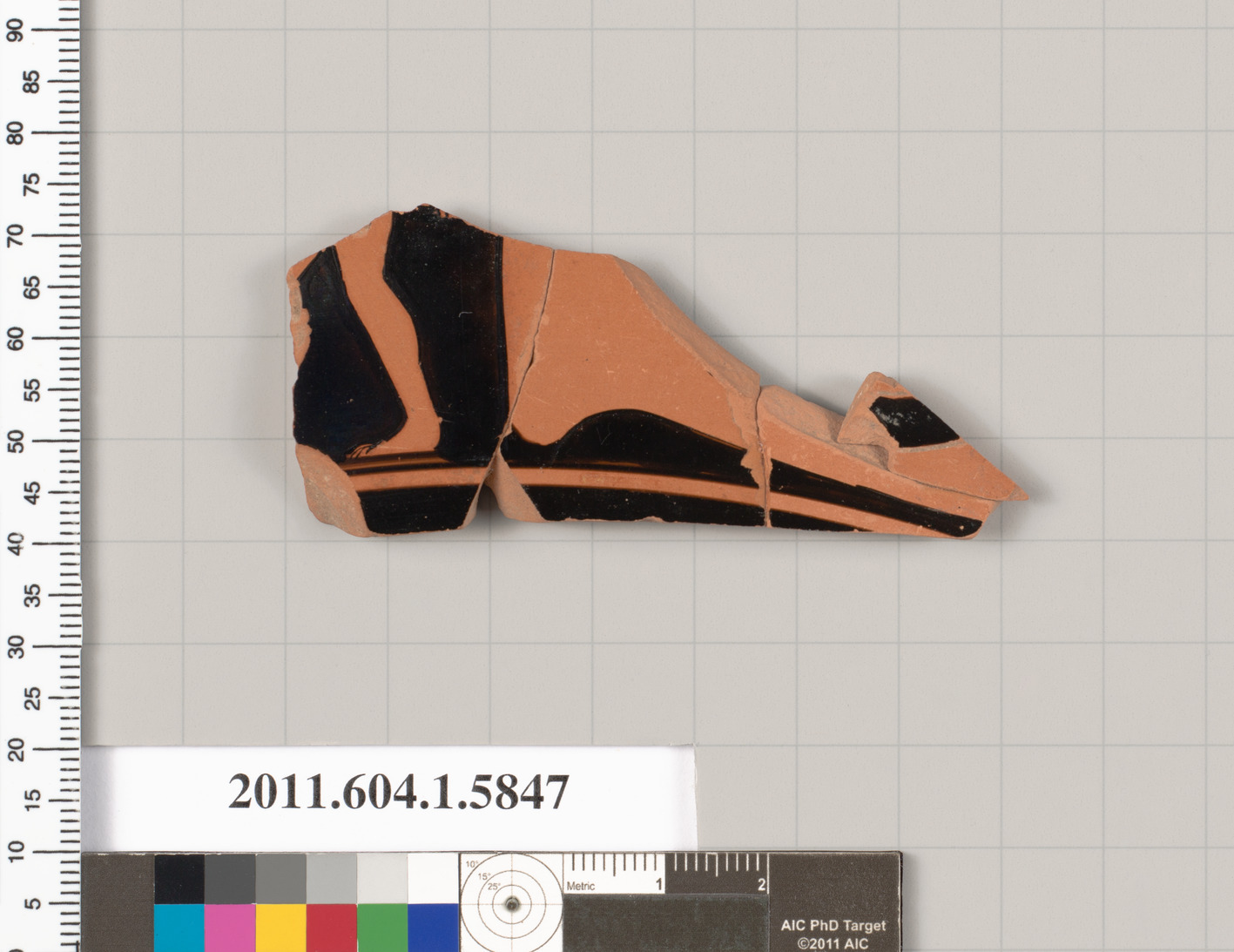
The Lauren Fashion Heritage Lab operates on the principle that aesthetic codes are not invented but rediscovered, circulating in a cultural continuum that connects the atelier to the archive and the archaeological fragment to the avant-garde. Our internal genetic code—a dialogue between Paul Gauguin’s Ia Orana Maria and an Ancient Egyptian feline funerary beast—established a framework of spiritual displacement, symbolic guardianship, and the construction of transcendent interfaces. It posits fashion as a vessel for navigating between the mundane and the metaphysical. The introduction of a new museum artifact, a Terracotta fragment of an Attic Greek eye-cup (kylix), refracts this thesis through a different temporal and formal lens, directly informing the philosophical and sartorial contours of the 2026 Old Money silhouette. This analysis will demonstrate how the eye-cup’s specific materiality, ritual function, and potent symbology catalyze a shift from opulent display to a more profound, psychologically resonant, and cyclically-minded elegance.
The Artifact: Ritual, Gaze, and the Fractured Whole
The Attic eye-cup, circa 550-525 BCE, is not merely a drinking vessel but a sophisticated instrument of symposium culture. Its defining feature—large, painted eyes on the exterior—operated within a complex system of gaze and agency. As the cup was raised to drink, the painted eyes of a mythological beast or gorgon would “see” the other symposiasts, while the drinker’s own eyes, peering over the rim, would be framed by the vessel’s handles, becoming part of the artifact itself. This created a dynamic, tripartite visual field: the object’s gaze, the drinker’s gaze, and the communal gaze of the party. The terracotta fragment we study is a shard of this complete circuit, a reminder of both wholeness and its inevitable rupture. Its aesthetic is one of stark graphic power: the black-figure or red-figure painting on the orange clay is graphic, deliberate, and meant to be “read” in the hand and in social performance. Unlike the internalized spirituality of Gauguin or the eternal formalism of Egypt, the Greek cup’s symbolism is active, social, and prophylactic—the eyes ward off evil while facilitating a ritualized, masculine communion that balances pleasure with intellectual and political discourse.
Informing the 2026 Silhouette: The Archaeology of Elegance
The 2026 Old Money silhouette, as decoded through this fragment, moves beyond the overt signifiers of inherited wealth (the “logo-less logo”) towards an elegance that is archaeological, psychological, and guardian-like. It embodies a wisdom that understands time as cyclical, not linear, where fragments of the past are continuously reassembled into a meaningful present.
1. Silhouette as Reconstructed Vessel: The fragment’s state is key. It does not present a complete image but suggests a once-complete form. This directly informs a silhouette built on architectural integrity with deliberate deconstruction. Imagine a flawlessly tailored Heritage-Black wool blazer, its structure echoing the cup’s purposeful form, but with a seam left partially open or finished with a raw, self-fabric edge, revealing the “clay” beneath the “glaze.” A columnar dress in heavyweight matte silk might feature an asymmetrical hem, as if a piece of the original pattern was lost and rediscovered. The silhouette is not damaged but honestly fragmentary, acknowledging the wear of time and history upon the body and the wardrobe. It speaks of garments not bought, but inherited—even if from one’s own past iterations.
2. The Prophylactic Gaze and Guardian Details: The apotropaic function of the painted eyes translates into subtle, protective details embedded within the 2026 silhouette. This is not literal eye motifs, but a language of warding through precision. It manifests in the exacting geometry of a collar that frames the face with the severity of a Greek key pattern, creating a “protected” neckline. Seamlines might be top-stitched in a contrasting, nearly invisible thread, tracing the body’s contours like the precise brushwork on the cup, serving as both reinforcement and symbolic boundary. Fastenings—hooks, eyes, or minimalist clasps—are emphasized not as decoration but as ritual closures, securing the self within the garment’s sanctum. The silhouette becomes a guardian interface, much like the棺椁 platform’s feline beast, but for the modern psyche, warding off the chaos of the digital agora.
3. The Social Ritual and Cyclical Time: The eye-cup was central to the symposium, a ritual of conversation and community. The 2026 Old Money silhouette is designed for an analogous, modern symposia—the intimate dinner, the boardroom meeting, the private viewing. Its elegance is performative and social, meant to be “read” in close quarters. Colors are drawn from the artifact’s palette: the deep Heritage-Black of the painted figures, the warm terracotta of the clay body (translated into burnt sienna, ochre, or brick in cashmere and silk), and the creamy white of the slip. These are non-chromatic, earth-born tones that speak of antiquity and authenticity. Furthermore, the fragment reminds us that what is “old” is not static. The 2026 silhouette embraces cyclical time—a garment’s life is not linear from runway to discard, but a loop of wear, archive, repair, and re-wear. Fabrics are chosen for their ability to patina: vegetable-tanned leathers, untreated wools, crêpe that softens with age, mirroring the terracotta’s honest wear.
Synthesis: From Visual Theology to Sartorial Archaeology
Where our internal genetic code explored the construction of sacred interfaces (Gauguin’s earthly paradise, Egypt’s eternal fortress), the Attic eye-cup fragment introduces the critical elements of the social ritual, the fractured narrative, and the active gaze. It completes a trinity of heritage inspiration: Egypt offers the eternal form, Gauguin offers the subjective spiritual infusion, and the Greek fragment offers the socially-performative and archaeologically-aware vessel.
The resulting 2026 Old Money silhouette is therefore a profound evolution. It is an elegance that carries the weight of history without being burdened by it. It is a silhouette that understands itself as both a protector and a participant in the rituals of modern life. It rejects the pristine, untouched look of fast fashion for a dignity earned through considered wear and intellectual heritage. In the graphic starkness of a black wool coat against a terracotta-toned dress, in the guardian precision of a seam, in the acceptance of the fragmentary and the cyclical, we see the direct lineage from the symposium to the salon. The terracotta shard teaches us that true luxury is not about presenting an unbroken surface to the world, but about possessing the discernment to reassemble the fragments of the past into a personally and culturally resonant whole. For 2026, Old Money is not merely what you possess; it is the wisdom with which you curate, repair, and re-contextualize your inheritance, holding the gaze of history with quiet, prophylactic assurance.