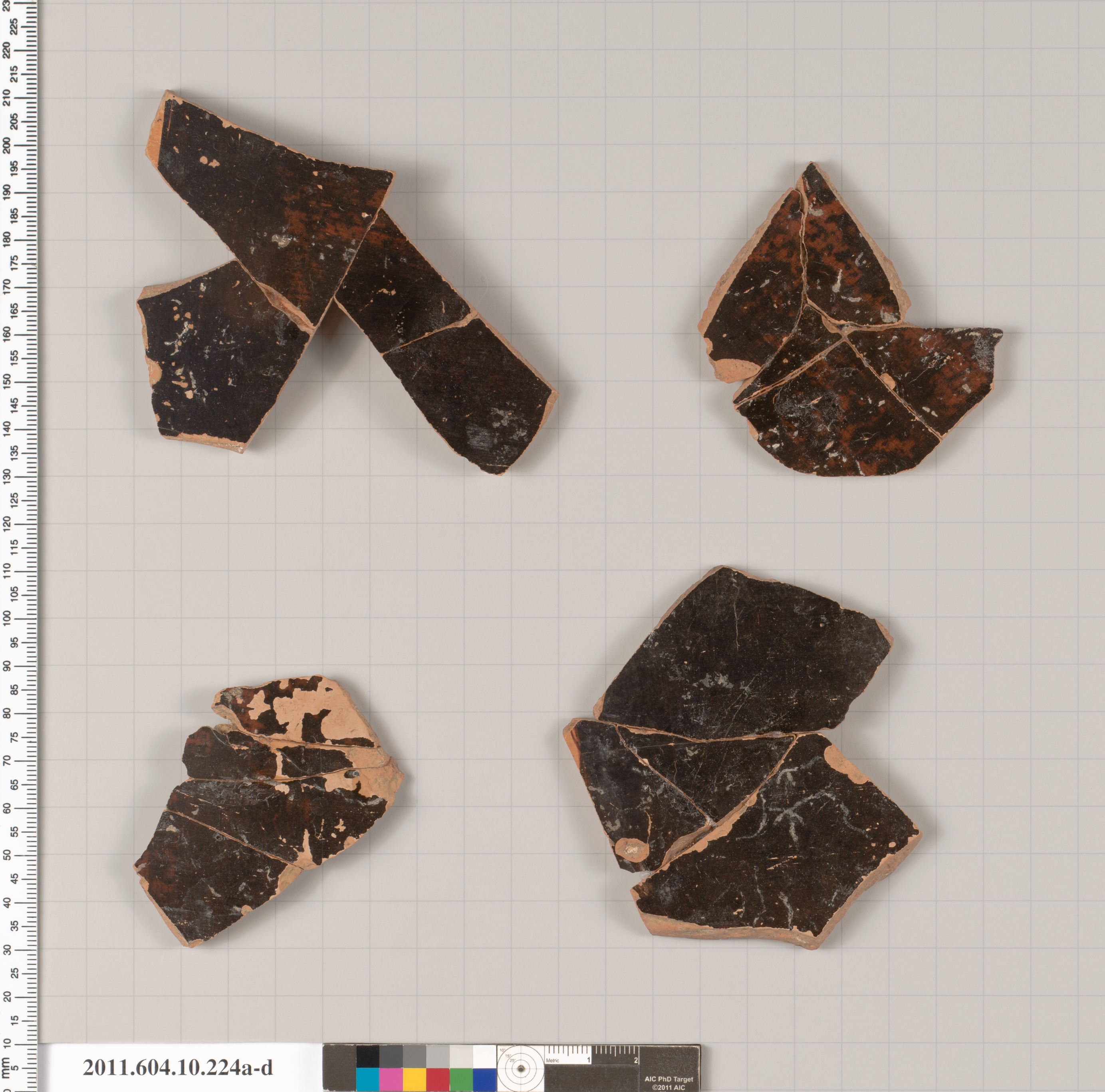
Vessel, Fragment, Silhouette: Etruscan Terracotta and the Archaeology of Old Money Aesthetics
The Lauren Fashion Heritage Lab’s foundational research posits that enduring style is not invented but excavated. It exists as a latent form within the material and conceptual archives of human craft, awaiting reactivation through a contemporary lens. Our internal genetic code, analyzing the dialogue between a Ming dynasty carved lacquer box and Caravaggio’s The Musicians, established a methodology for transcultural aesthetic synthesis, focusing on material philosophy, narrative temporality, and art as meta-performance. Applying this same rigorous lens to a seemingly distant artifact—the terracotta fragments of a closed-shape Etruscan vessel—reveals a profound blueprint for the 2026 Old Money silhouette. This analysis moves beyond superficial vintage revival, proposing instead that the next evolution of quiet luxury is rooted in an archaeology of form, where the values of permanence, contained volume, and patinated integrity are excavated from ancient ceramic wisdom.
The Philosophy of the Closed Shape: Contained Power and Introspective Volume
The Etruscan closed-shape vessel—an amphora, stamnos, or hydria—is an exercise in sovereign self-containment. Unlike an open krater, its purpose is not communal display but the secure holding of precious contents: oil, wine, water. Its form is defined by a continuous, unbroken contour, a curve that swells with potential energy before tapering to a stable base and a narrow aperture. This is the antithesis of the flamboyant or the revealing. For the 2026 Old Money silhouette, this principle translates into a departure from the deconstructed or the overtly body-conscious. The key lies in architectural volume that implies rather than reveals. Imagine a wool-cashmere blend coat whose cross-section mirrors the vessel’s ovoid body, its weight and swing derived from geometric purity rather than excessive tailoring. A column dress in heritage-black matte jersey, falling from a subtle, neck-concealing yoke, creates a monolithic, closed shape that carries the wearer’s form as the vessel carries its liquid—with dignified reserve. The silhouette speaks of contained value, where luxury is not an external appliqué but the inherent quality of the space held within.
The Fragment as Testament: Patina, Imperfection, and Temporal Integrity
The artifact’s state as a fragment is critically instructive. These terracotta shards are not merely broken; they are time-keepers. The cracks, the erosion of painted detail, the way the clay itself has conversed with millennia of earth and air—this is the ultimate patina. It narrates a biography of use, survival, and dignified decay. This directly challenges the Old Money trope of “pristine” or “brand-new” perfection. For 2026, the Lauren interpretation of Old Money embraces the aesthetics of integrity over perfection. This means fabrics that honor their life: brushed wool that softens into a personal haze, vegetable-tanned leather that develops a unique cognac gloss, and heavy silk that acquires a subdued rumple rather than a brittle crease. In silhouette, this translates to designs that incorporate strategic, mindful asymmetry—a seam allowed to follow the natural warp of a woven plaid, a hemline slightly irregular as if shaped by time, a closure that appears discovered rather than manufactured. The garment, like the fragment, becomes a testament to a narrative beyond the immediate.
Terracotta’s Material Truth: Tactile Authenticity and Earth-Bound Elegance
Terracotta, fired earth, is a material of profound honesty. Its color is intrinsic, its texture granular and direct. It makes no attempt to disguise its origin. This material truth forms the third pillar of our 2026 silhouette philosophy. In an era of high-tech synthetics, Old Money sophistication will pivot toward unapologetically elemental materials whose luxury is communicated haptically. The palette will draw from the terracotta fragment’s own: burnt sienna, ochre, iron-oxide black, and chalky white. Fabrics will prioritize innate, tactile character over high-gloss sheen. Think of a bouclé wool that mimics the gritty texture of clay, a nubby linen-hemp blend that echoes raw earth, or a felted cashmere that holds the shape and matte dignity of fired ceramic. The silhouette, in turn, will honor the drape and structure of these authentic materials, allowing the fabric’s own weight and memory to inform the shape, much as the potter’s hand guides the yielding yet resistant clay on the wheel.
Therefore, the Etruscan terracotta fragment does not offer a literal pattern but a conceptual triad for 2026: the contained volume of the closed shape, the narrative dignity of the fragment, and the honest elegance of elemental material. This archaeology of form moves Old Money beyond a mere social signifier into the realm of cultural philosophy. The resulting Lauren silhouette will be one of assured quiet, a vessel of personal history and refined taste. It will not shout its status but will, like the ancient artifact that inspired it, possess an undeniable gravity—a presence built on the profound principles of containment, integrity, and truth. It is the wearable manifestation of a timeless dialogue, where the silent eloquence of a broken pot from antiquity finds its resonant echo in the cut of a collar, the fall of a sleeve, and the steadfast curve of a skirt, composing a modern symphony in the key of Heritage-Black.