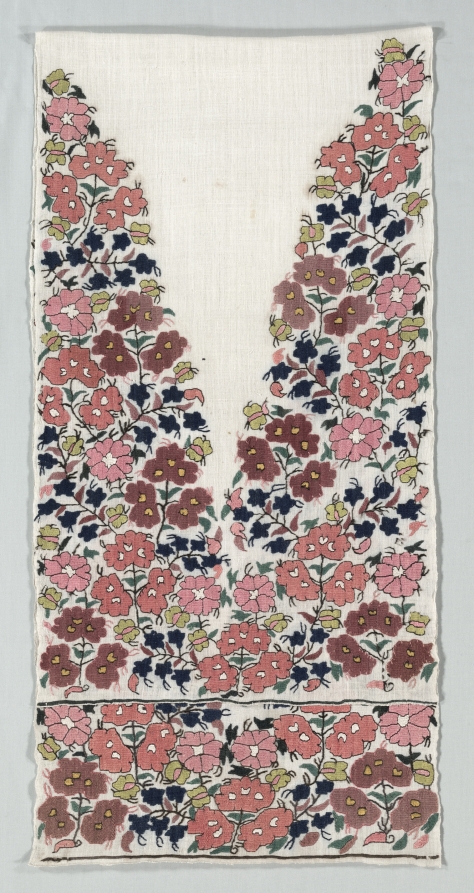
On the Material Supremacy of Silk
To comprehend the scarf—specifically the silk scarf—one must first acknowledge the absolute primacy of its material. This is not a matter of mere fibre content, a tick-box on a label. It is the foundational chapter in a narrative of unparalleled luxury, technical mastery, and historical weight. Silk is, and has always been, the nonpareil; a filament so fine, so strong, so possessed of a inherent luminosity that it has commanded empires, inspired mythologies, and defined the very parameters of luxury for millennia. Its acquisition was, for centuries, a state secret of the most profound order, a form of intellectual property guarded by Imperial China with a severity befitting nuclear codes. The very geography of human interaction was shaped by its trade, along routes not casually named, but christened for the material itself. All that follows—the weave, the pattern, the cut, the drape—is contingent upon this sovereign substance.
The Imperial Loom: A Legacy of Commissioned Perfection
The transition from cultivated filament to woven marvel was not an industrial process but an imperial one. We speak here of the legacy of imperial silk weaving, a context far removed from the cottage or the atelier. This was a state-sanctioned, bureaucratically managed pursuit of the technically flawless. Consider the Chinese Imperial Silkworks, or the later, magnificent Ottoman court manufactories of Bursa and Istanbul. These were not factories in the vulgar, modern sense. They were closer to research institutions and artistic academies, operating under direct patronage, their output destined not for market but for court, for diplomacy, for the sacred. The loom was an instrument of statecraft.
This institutional framework demanded and achieved a standard of execution that became the immutable benchmark. The density of threads, the precision of the count, the consistency of the dye—these were metrics of power. Patterns were not whimsical; they were codified. The five-clawed dragon for the Son of Heaven alone; the intricate *saz* leaves and *çintamani* motifs reserved for the Ottoman Sultan’s court. The scarf that descends from this tradition carries, in every warp and weft, this ethos of commissioned perfection. It is an item born not from demand, but from decree, and this distinction is palpable. The hand that passes over its surface touches the outcome of a system where cost was immaterial and excellence the sole objective.
The Architecture of the Drapery: Weave as a Testament
Within this rarefied context, the construction of the silk itself—the weave—becomes a language. The twill, most famously in the form of *jacquard*, represents the apogee of this technical narrative. To hold a heritage silk scarf of this calibre is to hold a topographic map of complexity. The reverse is not a mere backing, but the obverse of the same medal, a negative image of equal clarity and intent. This is the result of the loom’s intelligence, a binary system of raised and lowered threads executing a pre-ordained programme to produce a image that is inherent to the structure, not applied upon it.
This structural integrity grants the true silk scarf its defining characteristics: a peerless drape that falls with gravitational certainty, a weight that is substantial yet ethereal, and a durability that belies its apparent delicacy. The hem, whether hand-rolled and stitched or left with the fine, fringed *crépage* of the selvedge, is the final, telling signature. It speaks of a respect for the material’s own boundary, a refusal to compromise its integrity with a clumsy overlook. The scarf is, in its essence, a self-contained canvas, its edges as considered as the field they contain.
The Scarf as a Portable Estate: Symbolism and Conveyance
Thus, we arrive at the artifact itself. The silk scarf is the most distilled, portable, and versatile manifestation of this imperial weaving legacy. It is, in effect, a portable estate—a bearer of symbols, a conveyer of status, and a functional piece of armour against the elements of both climate and society. Its square metreage is a field upon which the iconography of power was miniaturised and mobilised. A court’s visual language—heraldic, floral, geometric—could be worn, gifted, or deployed as a banner.
This function as a communicative device transcends the merely decorative. To knot a heritage silk scarf from a house with a documented provenance is to align oneself with a specific lineage of taste. The choice of pattern—a bold *paisley* tracing its lineage to Mughal Kashmir and the Scottish mills that sought to emulate it; a precise *foulard* of equestrian tools; a narrative *carre* teeming with mythological scenes—is a statement of affiliation. It signals an understanding of the code. The manner of its wearing, whether nonchalantly knotted at the throat of a trench coat or arranged with studied precision as a headscarf, demonstrates not merely fashion, but fluency.
A Contemporary Heirloom: The Enduring Covenant
In an age of relentless production and disposable trends, the heritage silk scarf stands as a quiet but immovable rebuttal. Its value is not subject to the season’s flux. Properly conserved—away from direct light, rested between wearings—it does not degrade; it matures. The colours, derived from historically resonant dyes like cochineal or indigo, deepen rather than fade. It is an heirloom that need not reside in a vault, but can be animated daily, its story reactivated with each wear.
To acquire and to wear such a piece is to enter into a covenant with history. It is to acknowledge that true luxury is not a product of branding, but of provenance, material integrity, and executed intent. It is to understand that the softness against one’s skin is the same that graced the necks of emperors and ambassadors, that the pattern which catches the light was once a privilege reserved for the palace. The silk scarf, in its sublime materiality and imperial legacy, remains a singular artifact: a testament to human ingenuity at its most refined, and a lasting standard against which all other notions of textile luxury must, inevitably, be measured.