On the Material Substantiation of Legacy
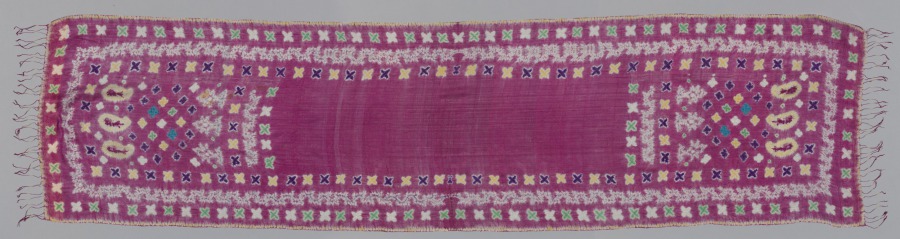
To consider silk is to engage with a narrative of absolute authority. It is not merely a textile; it is the physical manifestation of a cultivated hierarchy, a tangible expression of power so refined that its very substance commands deference. Within this realm, the silk veil stands as a particular, and peculiarly potent, artifact. Its purpose, ostensibly one of concealment, is in fact a profound exercise in revelation. It speaks not of absence, but of a presence so significant it must be framed, softened, yet never wholly obscured. To examine the heritage of the imperial silk veil is to audit the ledger of dynastic ambition, where threads become the gossamer ledgers of statecraft, devotion, and identity.
The Loom as Administrative Apparatus
The imperial silk veil did not simply emerge from a workshop; it was promulgated by a bureaucracy. The legacy of imperial weaving, particularly as perfected in the Chinese court from the Tang through Qing dynasties, represents perhaps history's most elegant fusion of artistic pursuit and administrative control. State-run ateliers, such as the renowned Jiangnan manufactories, operated with the precision and secrecy of a cabinet office. Patterns were not designs; they were edicts. The dragon, the phoenix, specific cloud forms—these were regulated motifs, their use circumscribed by sumptuary laws as stringent as any legal code. The veil destined for an empress or a high consort was, in its conception, a document of her station, its iconography a clear statement of her proximity to the celestial mandate.
The materiality of the silk itself was a controlled substance. The cultivation of the mulberry groves, the rearing of the Bombyx mori silkworms, and the complex processes of reeling and dyeing were often state monopolies. The resulting fabric—whether the heavyweight, brocaded kesi (cut silk) or the airy, almost translucent ling—was a product of a protected, closed-loop system. This control ensured that the veil's quality was unimpeachable, its fineness a direct reflection of the empire's capacity to marshal nature and artisan alike in the service of its iconography. The veil was, therefore, a testament to governance. Its flawless surface was the desired outcome of flawless order.
A Dialectic of Concealment and Display
Herein lies the essential tension that elevates the veil from mere accessory to psychological instrument. Its function was to shield, yes, but from the vulgar gaze, not from perception. It served to create a mystique, a softening focus that demanded a more nuanced engagement from the observer. The face behind the veil was not hidden; it was mediated. The silk acted as a filter, diffusing light, blurring precise features, and forcing the viewer to complete the image with expectation and reverence. It transformed a human countenance into a living portrait, its details suggested by the luxury of its frame.
This dynamic was acutely understood in ceremonial context. During imperial rites or appearances, the veil performed a dual role. It protected the sanctity of the imperial person, maintaining a necessary, awe-inspiring distance. Simultaneously, it showcased the empire's most exquisite material production. The veil moved with the wearer, catching light, its embroidered symbols—a five-clawed dragon, perhaps—momentarily clarified before retreating again into soft focus. It was display through discretion, a masterclass in the power of suggestion. The wealth was in the weave, the authority in the artful obstruction.
The Heritage in the Hand: A Continuum of Excellence
For the contemporary custodian of heritage—be it an institution, a design house, or a discerning individual—the imperial silk veil offers not a pattern to copy, but a principle to uphold. The principle is that of uncompromised provenance. The value of the artifact was inextricably linked to the integrity of its creation chain, from mulberry leaf to final stitch. In a modern context, this translates to a rigorous, almost forensic, understanding of material origin, dye lot, and artisan provenance. It is the antithesis of the disposable.
Furthermore, it champions the notion of appropriate symbolism. The imperial weavers did not deploy motifs frivolously; each element carried heraldic weight and narrative depth. A modern interpretation need not use dragons, but it must understand that decoration, at this level, is communication. The pattern, however abstracted, must possess intentionality and intellectual resonance, speaking to a lineage of thought rather than fleeting fashion.
Finally, the veil teaches the lesson of textural authority. The choice of a specific silk weave—the crisp, geometric structure of a damask versus the fluid, painted quality of a satin—was a deliberate tool for shaping presence. The material, in its very hand and drape, communicated before a single word was spoken or a single step taken.
Conclusion: The Lasting Impression
The legacy of the imperial silk veil is not preserved in static museum displays alone, though they provide the essential reference. It endures in a continued appreciation for objects where material, craftsmanship, and symbolic purpose are in perfect, unspoken alignment. It is a legacy of depth over surface, of implication over declaration. To hold such an artifact, or to commission its spiritual successor, is to acknowledge that true luxury is a considered exercise in power—the power to command the finest materials, to patronize the highest skills, and to communicate status through the subtle, potent language of restrained excellence. The silk veil, in its serene majesty, remains a definitive statement: that the most powerful messages are often delivered in a whisper, through a medium so exquisite it demands the world lean in to listen.