The Dialectic of Emptiness and Plenitude: Terracotta Kylikes and the 2026 Old Money Silhouette
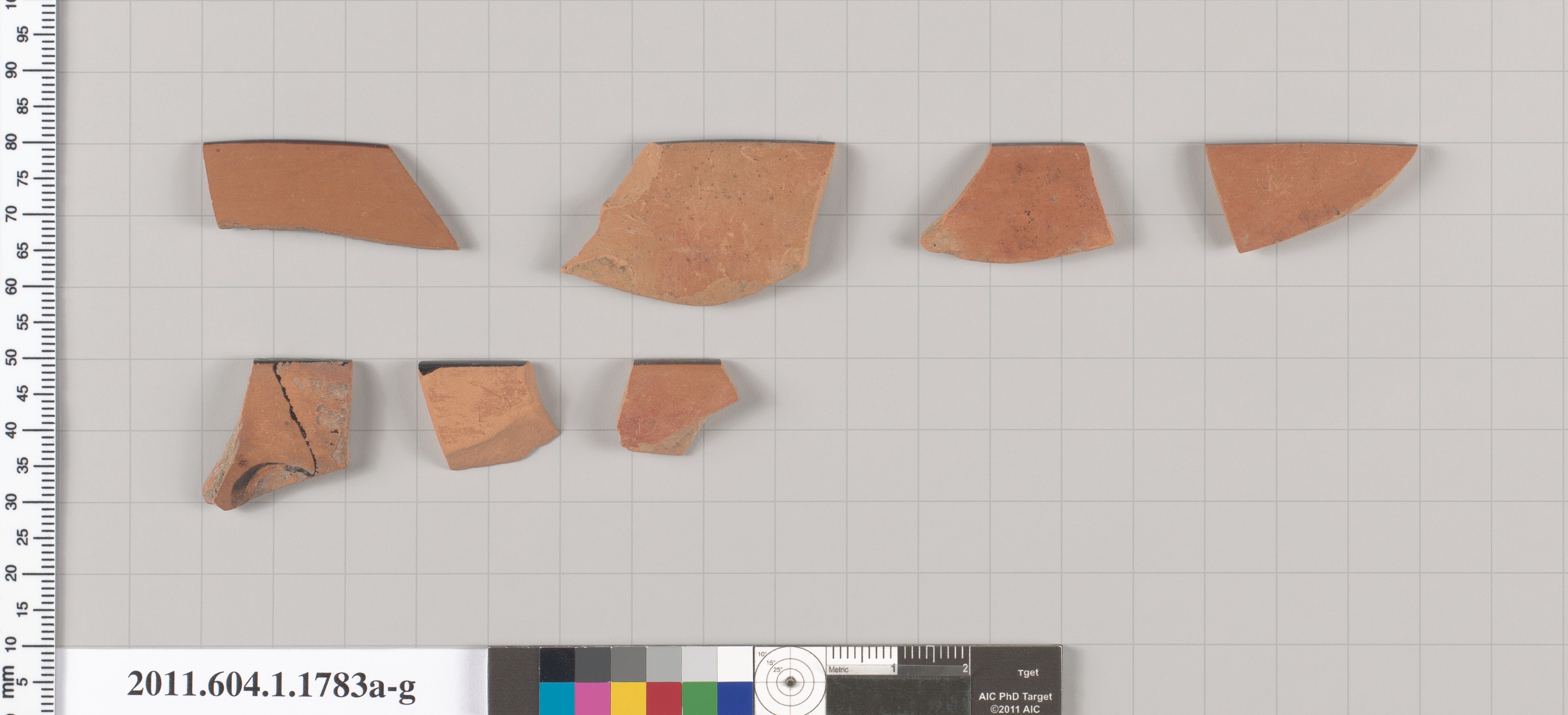
The Lauren Fashion Heritage Lab’s internal genetic code, centered on the dialogue between the transcendent “Udumbara Flower” Temple Tablet and the worldly “Beast-and-Grape” Bronze Mirror, establishes a foundational aesthetic philosophy: true luxury resides in the tension and synthesis between the spiritual void and the material plenitude, between the ephemeral hint and the enduring form. This internal code finds a profound and resonant interlocutor in the external museum artifact: Terracotta rim fragments of Attic kylikes (drinking cups). These ancient Greek relics, seemingly distant from Eastern aesthetics, engage in a cross-cultural dialogue that powerfully informs the conceptual framework for Lauren’s 2026 Old Money silhouettes. The 2026 collection will not be defined by ostentatious wealth, but by a cultivated, intellectual austerity—a Heritage-Black philosophy rendered in cloth, where the "old money" ethos is decoded as a silent, potent dialogue between the empty vessel and the full life it implies.
The Kylix as Vessel: Form, Function, and the Aesthetic of the Unadorned Ground
The Attic kylix was not merely a drinking vessel; it was a central artifact of the symposium, the cornerstone of Athenian social, intellectual, and political life. Its form is a study in deliberate, sophisticated simplicity. The terracotta fragments reveal the essential ground—the unglazed, earthy clay that serves as the canvas. This is the “Udumbara” principle applied to classical form: an embrace of the essential material, a celebration of the "empty" space that is, in fact, charged with potential. The kylix’s wide, shallow bowl and elegant stems were designed for practical grace and communal interaction (the cup’s interior imagery was revealed only upon drinking). For the 2026 silhouette, this translates to a foundational reverence for architectural cut and intrinsic materiality. Silhouettes will prioritize the purity of line and the integrity of fabric—luxurious wools, matte-finish heritage cottons, and fluid crêpes that echo the tactile, honest quality of terracotta. The “Old Money” statement is first made through what is not there: excessive ornament, logos, or disruptive detailing. The garment itself becomes a vessel, its value inherent in its form and drape, much like the kylix’s value was in its function and social role.
The Fragment as Narrative: The Semiotics of the Partial and the Poetics of Wear
We encounter these kylikes not as whole objects, but as fragments. This fragmentation is crucial. It speaks of history, of use, of a life lived. The broken edge tells a story of time’s passage, while the surviving painted figures or patterns on the rim—a glimpse of a god, a warrior, a grapevine—act as potent, partial symbols. This is the “Beast-and-Grape” principle in a distilled, archaeological key. The narrative is not sprawling and all-encompassing but is hinted at, interrupted, and thus made more powerful. For the 2026 collection, this informs a sophisticated approach to detail and insignia. Iconography will be subtle, partial, and symbolic—perhaps a discreet embroidered motif at the cuff recalling a Greek meander (a key pattern often found on vase rims), a jacket lining printed with a fragmentary fresco, or a clasp shaped like a weathered artifact. The “wear” is conceptual; finishes may suggest a gentle patina, not of distress, but of cherished ownership. The Old Money aesthetic understands that true legacy is read in the subtle traces, not in loud declarations.
Synthesizing the Dialogue: The 2026 Silhouette as a Symposium of Ideas
The 2026 Lauren Old Money silhouette emerges from the synthesis of this tripartite dialogue: the empty spiritual signifier (Udumbara), the full material symbol (Beast-and-Grape Mirror), and the fragmented classical vessel (Kylix). The resulting philosophy is one of cultivated austerity and intellectual resonance.
Silhouette Strategy: Cuts will be clean, architectural, and inherently dignified, referencing the kylix’s balanced proportions. The drape will be paramount, with fabrics chosen for their ability to fall and move with a statuesque grace. Think columnar dresses, tailored coats with minimal seaming, and wide-leg trousers that echo the flowing lines of a chiton. The palette will be anchored in a spectrum of Heritage-Black—not merely black, but deep clay terracottas, oxidized ivory, fresco white, and archival charcoal. These are colors that speak of earth, stone, and antiquity.
Detail Philosophy: Embellishment, where it exists, will follow the “fragment” rule. A single, exquisite passage of textural contrast—a panel of brocade recalling the Beast-and-Grape’s abundance, a sheer insert as ephemeral as the Udumbara flower, or a geometric embroidery inspired by vase patterns—will be strategically placed to interrupt the purity of the form, creating a focal point that rewards closer inspection. Hardware will be modeled on archaeological finds: toggle closures resembling ancient seals, belt buckles inspired by metalwork fragments.
Ultimately, the Lauren 2026 Old Money silhouette is conceived as the modern equivalent of the symposiast’s kylix: a vessel for a cultivated life. It is an artifact that carries within its form the emptiness of potential (the Udumbara’s spirituality), the fragmented narrative of legacy (the kylix’s history), and the coded, symbolic richness of a life well-lived (the Mirror’s prosperity). It does not shout its value; it contains it. In a world of noise, this collection will offer the profound quiet of the terracotta fragment, the eloquent silence of the Heritage-Black canvas, and the enduring power of the perfectly poised, empty vessel.