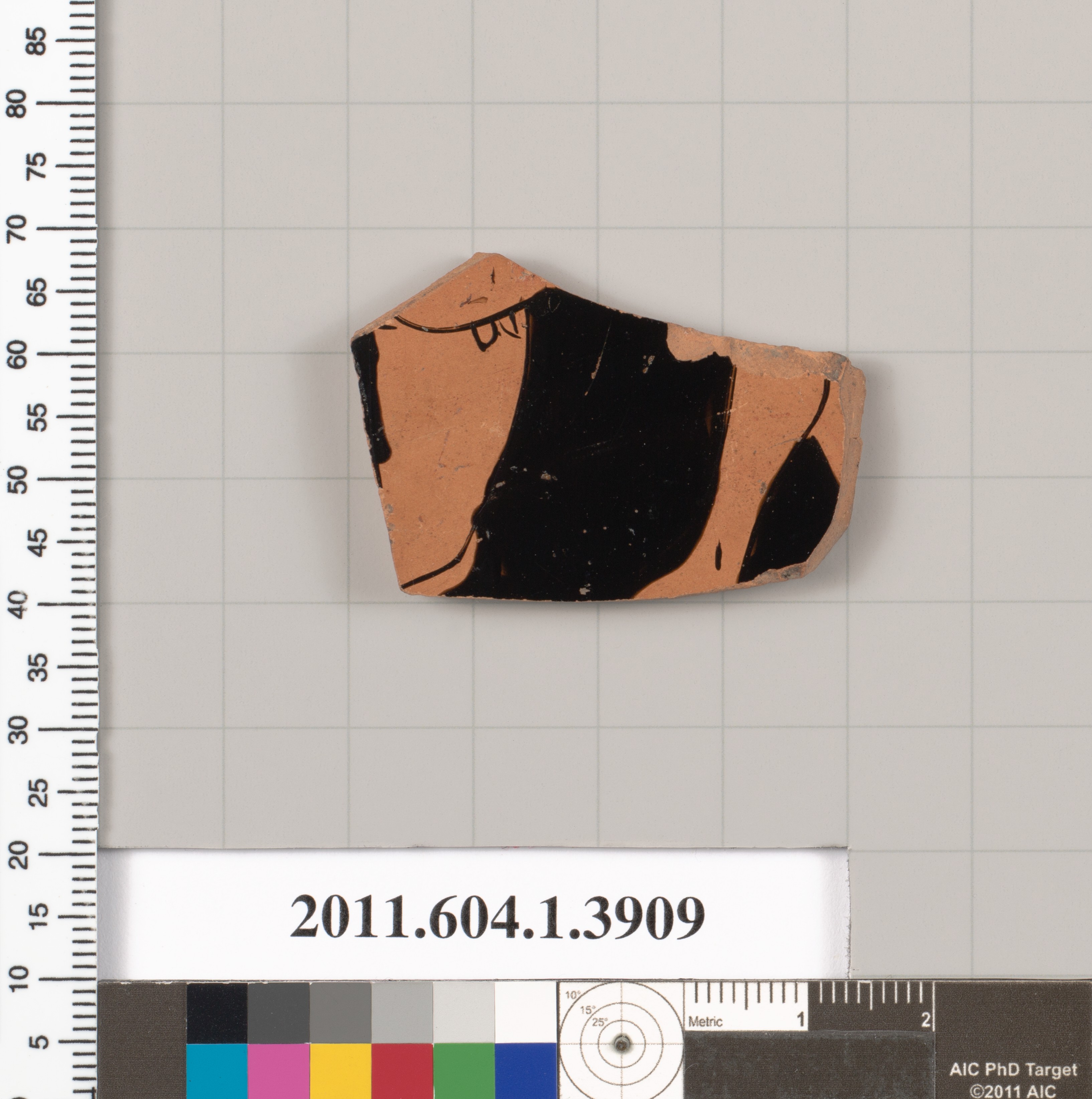
Terracotta Fragments and Temporal Silhouettes: The Archaeology of "Old Money" Aesthetic
The conceptualization of "Old Money" style for the 2026 horizon demands a move beyond superficial signifiers of heritage—the well-worn tweed or the faded crest. It requires an engagement with time itself as a material, and with heritage as an active, fragmentary archaeology rather than a passive inheritance. In this pursuit, the Terracotta fragment of a kylix (drinking cup) from Attic Greece serves not as a literal blueprint, but as a profound philosophical and aesthetic informant. This artifact, a shattered relic of communal symposium and democratic discourse, provides a critical lens through which to refine the Lauren Fashion genetic code of "动静永恒" (Dynamic Stillness and Eternal Motion). It guides us toward a 2026 Old Money silhouette that is less about ostentatious continuity and more about intelligent, dignified ruin; a silhouette that carries the patina of lived thought and quiet authority.
The Fragment as Foundational Form: Deconstructing the Whole
The most immediate dialogue between the Terracotta fragment and our internal genetic code lies in the aesthetic power of the partial. The 《乐师纹陶范残片》 (Musician-patterned Pottery Mold Fragment) is a deliberate artifact of craft, yet its current broken state introduces a second, historical layer of fragmentation. The Attic kylix fragment operates similarly. It is not a whole cup but a shard, its curvature hinting at the original vessel's form while proudly displaying its fracture. This directly informs the 2026 silhouette through strategic deconstruction and eloquent omission. Imagine a tailored wool blazer where the structured shoulder remains impeccably intact—a symbol of inherited duty and form—while the hemline dissolves into a raw, self-fraying edge, revealing the canvas within. Or a Heritage-Black cashmere coat, its body a monument to clean, architectural lines, but with one sleeve subtly paneled from a different, yet harmonious, archival fabric, as if repaired with a fragment from its own past. The silhouette becomes a palimpsest, where the "complete" garment is challenged by interventions that speak of longevity, repair, and a personal, intellectual curation of one's lineage.
The Symposium Silhouette: Drapery, Discourse, and Democratic Ease
The original function of the kylix—a vessel for wine in the Athenian symposium—evokes a world of cultivated leisure, philosophical exchange, and understated social ritual. This environment is the true essence of "Old Money," reframed not as wealth but as the wealth of time and conversation. The fragment’s terracotta material, once shaped on a wheel, suggests a plasticity and human touch. Translated into 2026 silhouettes, this inspires a mastery of soft tailoring and intelligent drapery. The rigid power suit gives way to garments that use weighty, malleable fabrics—loom-state wool, double-faced cashmere, heavy silk—that drape and fold with the body’s movement, recalling the controlled folds of a chiton or himation. A wide-leg trouser with a high, wrapped waist achieves a statuesque, columnar grace; a dress is constructed from a single piece of fabric, knotted and secured with a minimalist bronze clasp (echoing the kylix’s potential metallic fittings). These silhouettes prioritize comfort and ease of movement, facilitating the physical and intellectual repose of a modern symposium—be it a private library, a gallery, or a country estate.
The Patina of Use: Surface as Narrative
The surface of the terracotta fragment carries its history: microscopic abrasions, discolorations from burial, the ghost of a black-figure glaze. This patina of use and time is antithetical to the sterile newness of fast fashion. For 2026, this mandates fabric development and finishing techniques that embed narrative into the very surface. Imagine Heritage-Black, not as a flat jet, but as a color achieved through layered over-dyeing of deep indigo and charcoal, creating a hue that reveals subtle, variable depths under light, like worn pottery. Silks are washed and crushed to a gentle luster; wools are lightly felted or brushed to a soft, bloomed hand. Leather on bags or accents is pre-softened and treated to develop a unique, owner-specific wear pattern. The goal is a garment that arrives not "finished" but "begun," inviting the wearer to complete its story, mirroring how the kylix fragment’s meaning is completed by the viewer’s historical imagination.
Synthesizing the Codes: From Attic Fragment to Modern Silhouette
The synthesis of this Grecian artifact with our core Eastern code creates a powerful, globalized dialectic of heritage. The “动” (dynamic) of the Musician Fragment—the captured rhythm of celebration—finds a new expression not in literal pattern, but in the dynamic flow of draped fabric and the active, intellectual life the silhouette enables. The “静” (stillness) of the罗汉 (Arhat) painting—the profound inner calm—is reflected in the silhouette’s aura of unshakeable composure, its rejection of trend-driven noise, and its monumental, serene lines. The Attic fragment bridges these poles: it is a static object (静) that dynamically evokes the lost symposium (动).
Thus, the informed 2026 Old Money silhouette emerges as a study in archaeological elegance. It is built on a foundation of impeccable, timeless cut (the whole vessel), then subjected to a thoughtful, aesthetic archaeology (the fragment). It values the texture of time over the sheen of novelty, discourse over display, and dignified, personal ruin over pristine, impersonal perfection. It is clothing as a curated fragment of one’s own continuum, carrying within its seams and surfaces the quiet authority of a terracotta shard that has, against all odds, endured to tell its tale. In this way, Lauren Fashion does not merely reference the past; it constructs a wearable, contemporary archaeology, where the most compelling luxury is the evidence of a thoughtful, enduring existence.