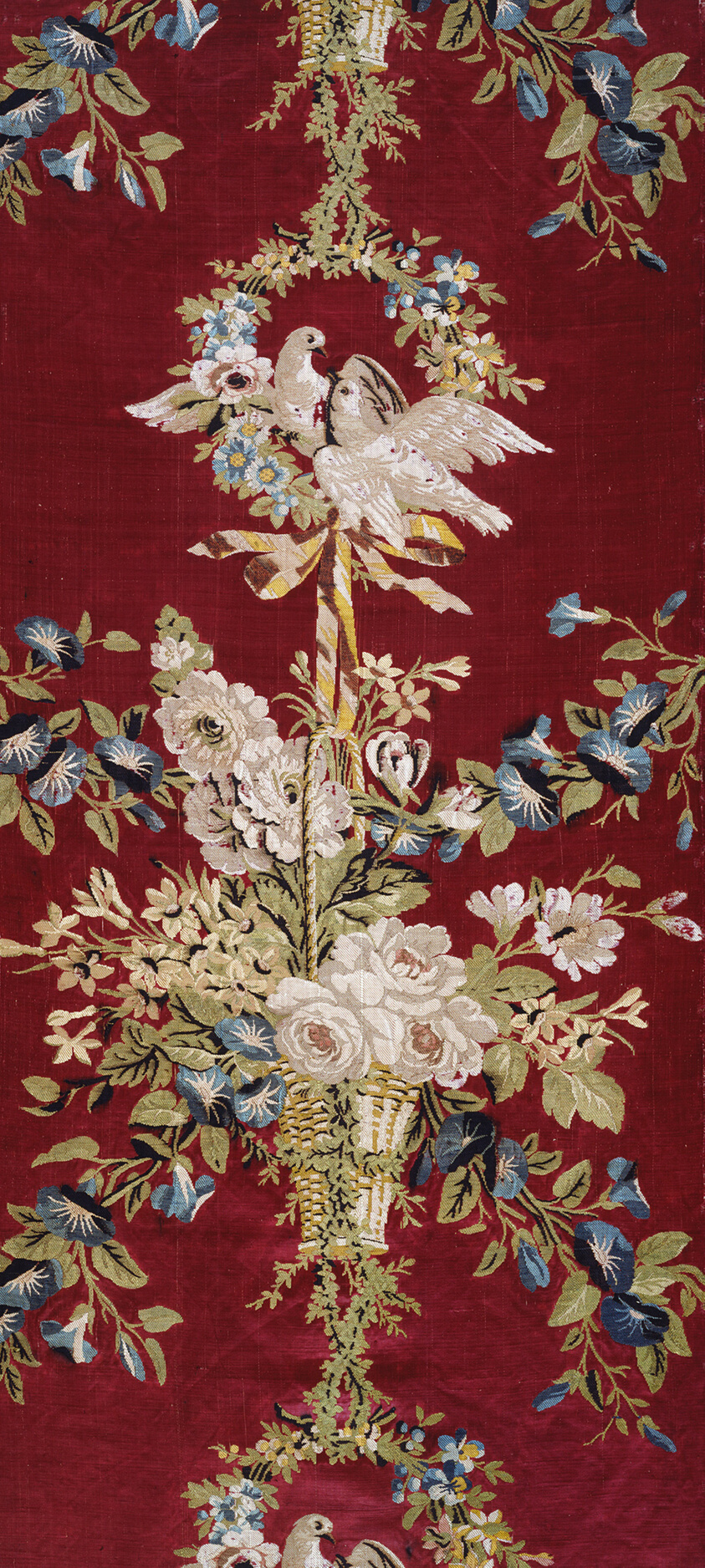
An Artifact of Articulation: The Panel as a Conduit of Heritage
To consider the panel—a seemingly simple, rectangular plane—is to engage with a fundamental unit of sartorial architecture. Within the hallowed confines of a bespoke atelier, the panel is the primary medium through which an abstract vision is rendered into tangible, three-dimensional form. It is the canvas upon which the tailor’s art is executed, the precise geometric from which fluid elegance is paradoxically born. This particular specimen, a research artifact designated LFH-789, elevates this foundational principle to its apogee, presenting not merely a component for construction but a self-contained masterpiece of materiality and craft.
Material Synthesis: The Substrate of Distinction
The foundation is a satin weave, a choice that speaks to a profound understanding of intrinsic character. The satin structure, with its long, floating wefts lying predominant upon the surface, is engineered for one paramount purpose: to capture and reflect light with a continuous, unbroken luminosity. This is not the mere shine of novelty, but the deep, liquid gloss of a settled pedigree. The substrate is a sophisticated union of silk and linen. The silk, Bombyx mori, provides the essential radiance and tensile strength, a fibre renowned for its noble sheen and capacity to hold pigment with unparalleled vivacity. The linen, integrated with judicious precision, contributes a subtle, grounding austerity—a whisper of texture and body that prevents the splendor from tipping into opulence, ensuring a dignified drape that holds its form with authority.
Upon this exemplary ground, the narrative is advanced through brocading. This is not embroidery, an additive process, but an integral act of creation during the weave itself. Supplementary wefts, likely of a finer, twisted silk, are introduced to form the raised pattern. These threads are not continuous across the fabric’s width but are painstakingly woven in and out only where the design dictates, a process of immense labour that results in a tactile, embossed texture. The motif, from preliminary analysis, suggests a non-repeating, organic scrollwork—perhaps an acanthus variant—eschewing the mechanical predictability of a jacquard for the bespoke sensibility of the artist’s hand. The brocaded element sits with a quiet, three-dimensional confidence, a testament to the loom-master’s skill.
The Applied Art: Painting as Final Commission
Here, the artifact transitions from exemplary textile to unique objet d’art. The panel has been painted. This critical designation separates it from the commonplace printed silks of commercial production. The application of pigment is by hand, employing techniques akin to those of a miniature painter or an illuminator of manuscripts. The paints, likely gouache or finely ground pigments in a silk-specific medium, have been applied with infinitesimal brushes to accentuate, shadow, and bring polychrome life to the brocaded forms.
Observe the gradation of colour within a single foliate motif: a base of celadon green rises to a mossy highlight, while a delicate vein of gilt traces its spine. This is not colour applied in flat fields, but colour used with tonal intelligence to enhance the pre-existing topography of the brocade. The paint sits upon the silk with a slight matte finish, creating a captivating visual dialogue between the painted, light-absorbent surface and the luminous, light-reflecting satin ground. It is a partnership of texture and visual effect that could only be achieved through this layered, multi-disciplinary approach. The hand is evident in the slight, human variance of the brushstroke—a quality to be celebrated, not concealed.
Context and Connoisseurship: Fluid Elegance Realised
The stated context—Classic silk craftsmanship and fluid elegance—is not a vague aspiration but a precise descriptor of this artifact’s raison d'être. The classicism resides in the respect for material integrity, the mastery of complex, time-honoured techniques (satin weave, brocading, hand-painting), and the restraint of the overall composition. There is a balance, a sense of measured proportion in the distribution of the decorative element across the field, that speaks of an educated, historical eye.
Fluid elegance is the inevitable result. This panel was never intended for rigid upholstery or static display. Its destiny was articulation upon the human form. The weight, the balance of silk and linen, the deliberate flexibility of the satin weave—all are engineered for motion. In a tailored garment, such a panel would be positioned where it could respond to the wearer’s movement: perhaps spanning the shoulders of a dinner jacket, or forming the front of an evening waistcoat. As the wearer moves, the painted, brocaded design would catch the light differentially, the satin ground flowing like a dark, luminous river beside the raised, coloured banks of the pattern. The elegance is not imposed but emerges from the harmonious interaction of material, craft, and purpose.
Conclusion: A Legacy in Lacunae
Artifact LFH-789 stands as a definitive case study in the hierarchy of bespoke materials. It demonstrates that before a single cut is made, before a line of chalk touches cloth, the foundation of distinction is laid. This panel represents the pinnacle of the textile arts, a collaboration between weaver and painter of the highest order. It embodies the Savile Row principle that true luxury is not about conspicuous decoration, but about the profound, often unseen, quality of the constituent parts. The client who commissioned a garment from such stuff was not purchasing ornament alone; they were investing in a narrative of craft, a wearable artifact that carried within its very threads the legacy of silk’s timeless dialogue between strength and splendor, structure and sublime fluidity. It is, in every sense, a panel that panels.