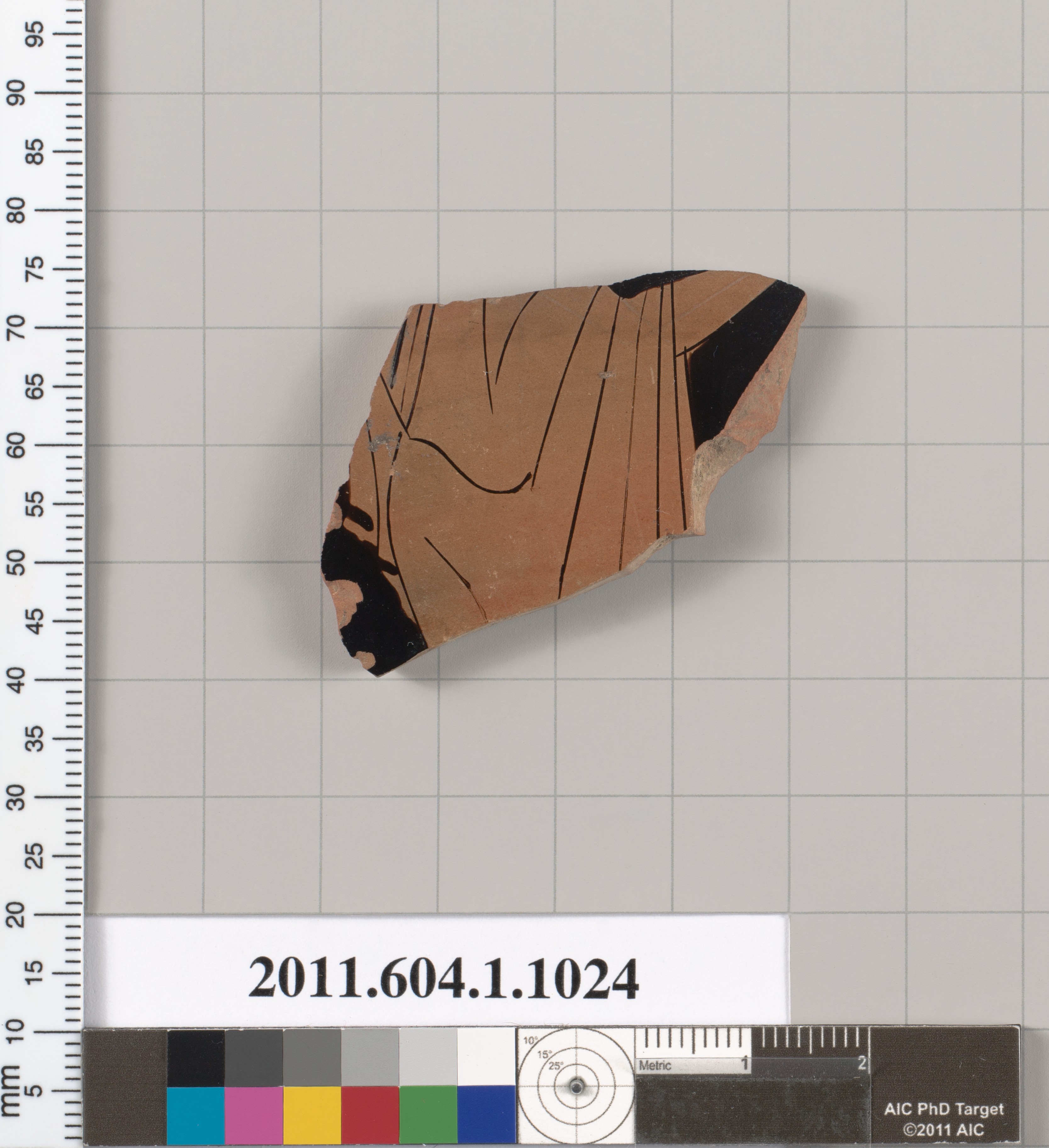
The Primordial Fragment: Terracotta, the Kylix, and the Archaeology of Old Money Silhouettes
The provided internal genetic code articulates a profound dialectic within Eastern aesthetics, contrasting the earthy, pastoral “Herdsman and Water Buffalo” with the transcendent, ceremonial “Monk’s Vestment.” This framework reveals a core Lauren Fashion Heritage Lab principle: true luxury is born not from ostentation, but from the resonant dialogue between the primal and the perfected, the human trace and the idealized form. To project this philosophy onto the 2026 Old Money aesthetic—a concept denoting inherited elegance, discretion, and timeless authority—we must identify a foundational artifact that embodies these universal tensions. The Terracotta fragment of an Attic kylix serves as this perfect, primordial catalyst. This shattered vessel, far from a complete museum piece, is the archaeological key to deconstructing and reconstructing the 2026 silhouette. It moves the Eastern philosophical dialogue into a Western, yet universal, material realm, informing a vision where Old Money is not merely worn, but excavated.
The Fragment as Genetic Blueprint: Imperfection, Trace, and Authenticity
The very state of the artifact—a fragment—is its first lesson. Unlike a pristine vase, the broken kylix speaks of time, use, and survival. Its fractured edges and partial form reject the sterile perfection of the new, advocating instead for an aesthetic of authentic provenance. For 2026 Old Money silhouettes, this translates beyond distressed finishes into a fundamental design philosophy. Silhouettes will embrace an architectural integrity that appears honed by time. Imagine a single-breasted wool blazer where the drape is not merely tailored but appears to have settled into its form over decades; its structure is evident, yet its edges are softened, its canvas slightly molded to an implied history. This is the “herdsman” principle—the earthy, human, “imperfect” trace—manifested in cut and hang. The silhouette carries the memory of its own form, much like the fragment carries the memory of the whole vessel.
The Kylix’s Democratic Form: Unadorned Utility as the Highest Luxury
The kylix was a drinking cup, a vessel of daily symposium (communal feast) in ancient Athens. Its terracotta material is humble, clay from the earth. Yet, in its Attic iteration, it became a canvas for the highest expressions of art and social ritual. This duality is critical. It informs an Old Money silhouette that prioritizes unassuming material intelligence and ritualized function. The 2026 interpretation moves away from blatant luxury fibers towards profound respect for foundational materials: densely woven heritage wools, matte-finish cottons, and undyed linens that gain patina with wear. The silhouette of a wide-leg linen pant or a perfectly proportioned camel hair polo coat derives its authority from its archetypal utility and exquisite, understated proportion—the sartorial equivalent of the kylix’s perfect circle. The luxury is in the rightness of the form for its purpose, a democratic ideal elevated to an art.
The Contour as Canvas: The Figure in the Negative Space
Here, the fragment offers its most potent formal insight. A kylix is defined by its elegant, sweeping bowl and its horizontal handles. In silhouette, it is a study in balanced negative space. This directly informs 2026’s approach to the body. Old Money silhouettes will be conceived as a series of considered voids and volumes around the figure. The “bowl” of the kylix translates to the generous, rounded ease across the shoulders and back of a shawl-collar cardigan or the soft, encompassing drape of a tweed duster coat. The “handles” suggest points of structural definition—the sharp, clean angle of a set-in sleeve head on a men’s shirt, the precise yet gentle cinch of a self-fabric belt on a dress. The body moves within the garment as wine swirled within the cup; the silhouette is a container for graceful, assured motion, not a restrictive second skin.
From Terracotta to Heritage-Black: The Patina of Time and Light
The color and surface of terracotta—the warm, oxidized, mineral-rich hue—provide the final chromatic and textural directive. This is not a flat, synthetic black, but a Heritage-Black: a black deepened with undertones of umber, sienna, and iron-oxide earth. It is the black of aged pottery, of well-turned soil, of shadows in ancient architecture. This becomes the cornerstone palette for 2026. In this context, Heritage-Black is not merely a color but a condition of light. It absorbs and softens light, much like the matte surface of terracotta, creating a silhouette that is definitive yet gentle, authoritative without aggression. It serves as the unifying “ground” against which the dialogue of textures—the rough-hewn (the herdsman’s earth) and the meticulously crafted (the monk’s devotion)—can play out. A Heritage-Black wool crepe suit, its surface possessing a subtle, non-reflective depth, becomes the modern analogue to the fired clay fragment: timeless, resilient, and rich with implied narrative.
In conclusion, the Terracotta kylix fragment synthesizes the Eastern duality presented in our genetic code into a Western material manifesto for 2026. It embodies the “Herdsman’s” earthly authenticity through its fractured state and humble clay, and the “Monk’s” devotion to ideal form through its perfected, ritual geometry. The resulting Old Money silhouette is an archaeology of elegance: excavated from history, built on foundational materials, structured around the body’s dignified movement, and finished in the profound, light-absorbing depth of Heritage-Black. It is a silhouette that does not shout its status but, like a fragment of a civilization’s finest ware, quietly asserts its enduring and undeniable value through the eloquent language of form, trace, and time.