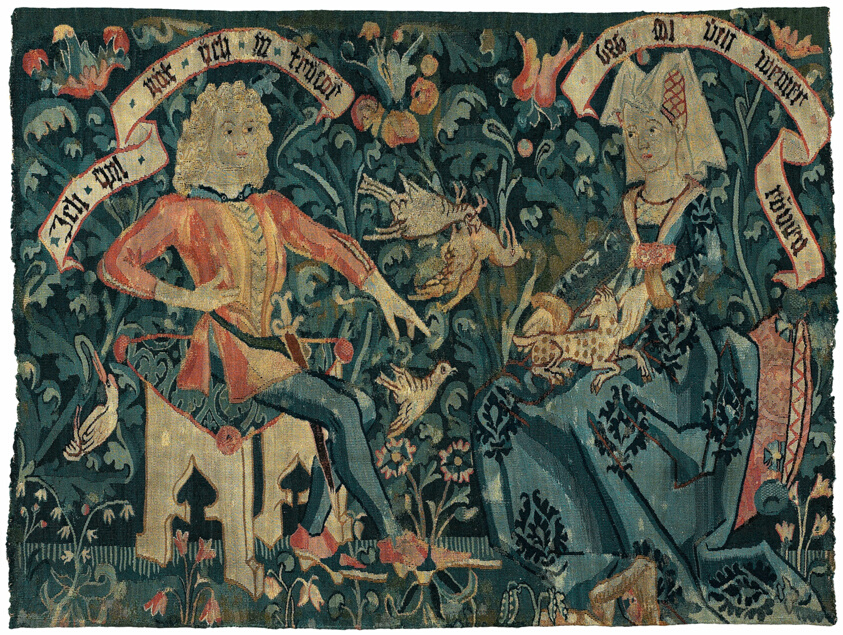
An Exegesis on Material Confluence: The Lovers
To apprehend the artifact designated ‘The Lovers’ is to engage in a discourse not merely on textile, but on the very philosophy of union. It represents a deliberate and scholarly confluence of three distinct material lineages—hemp, wool, and silk—executed through the exacting discipline of slit and double interlocking tapestry weave. This is not an exercise in mere decoration; it is a calculated manifesto on harmony, tension, and the foundational principles of enduring elegance, articulated through the silent language of the loom.
Material Provenance and Hierarchical Dialogue
The genius of the piece lies first in its tripartite material selection, each element chosen for its intrinsic narrative and structural virtue. Hemp provides the substratum, the essential groundwork. Its robust, fibrous character speaks of utility and earth, a tacit acknowledgement of the raw, unadorned foundation upon which any refined construct must rest. It is the canvas, the sober baseline that refuses frivolity.
Upon this ascetic foundation dialogues Wool, the element of substance and resilience. Sourced from flocks nurtured in specific terroirs, its crimp and memory introduce volume and tactile authority. Wool is the intermediary, possessing a dignified warmth and a capacity for definition. It mediates between the rustic certainty of hemp and the ethereal propositions of silk, providing structural integrity and a moderating weight.
And then, Silk. Here is the apogee, the strategic flourish. Its introduction is not wholesale, but rather deployed as a commanding accent—a river of luminosity woven into the more substantive landscape. Silk embodies the principle of fluid elegance; it captures and refracts light, introducing a variable, animate quality that changes with the observer’s position and the hour’s passage. It represents the ideal, the aspirational gleam, the soft power that elevates the ensemble from the proficient to the profound.
The Architecture of the Weave: Slit and Double Interlocking Tapestry
The chosen construction methodology is as critical as the materials themselves. The slit and double interlocking tapestry weave is a technique of formidable complexity and intentionality. It is the architectural discipline that binds the material trinity into a coherent, singular entity.
In a standard tapestry weave, discontinuous wefts of different colours or materials create discrete blocks of pattern. Where these blocks meet vertically, a slit is formed—a deliberate, graphic pause. This technique, employed with rigour, renders the contrasts between hemp, wool, and silk with crisp, cartographic clarity. The slits are not flaws but rather articulated joints, acknowledging the distinct identity of each material. They introduce a subtle, rhythmic texture—a geometric cadence to the composition.
The double interlocking method, however, is where true synthesis is engineered. At selected junctures, the wefts of adjacent blocks are not left to form a slit but are looped around one another, interlocking with meticulous precision. This creates a seamless transition, a zone where hemp fibres and silk filaments become inextricably linked, their individual properties subsumed into a new, hybrid strength. It is the technical manifestation of the piece’s theme: the point of contact, the embrace, the moment where distinct entities forge an indivisible bond. This interlocking prevents the slits from elongating under tension, ensuring the artifact’s longevity—a marriage both beautiful and enduring.
Context: The Heritage of Fluid Elegance
To situate ‘The Lovers’ within the context of classic silk craftsmanship is to recognise its dialectical relationship with tradition. Historical silk tapestries, from the storied ateliers of Lyon to the imperial workshops of the East, often pursued a painterly illusionism, seeking to obscure their woven nature in favour of pictorial artifice.
This artifact rejects such obfuscation. It derives its power from an honest exposition of its own making. The slits reveal the mechanics of construction; the differing lustres of wool and silk celebrate their inherent materiality rather than disguising it. The fluid elegance here is not that of a simulated brushstroke, but that of a perfectly resolved structural equation. The silk’s fluidity is counterpoised by the tectonic stability of hemp and wool, creating a dynamic equilibrium that is the essence of sophisticated drape and comportment.
The elegance is thus intellectual before it is visual. It is the elegance of a hypothesis perfectly demonstrated, of three contradictory material statements resolved into a single, irrefutable argument. The piece does not merely hang; it drapes with the authority of logical conclusion.
Conclusion: A Manifesto in Thread
‘The Lovers’ stands, therefore, as a peerless research artifact within the Lauren Fashion Heritage Lab. It transcends its status as a textile specimen to become a treatise on unity. It posits that true harmony is not homogeneity, but the respectful and ingenious integration of opposites. The earthy, the substantive, and the sublime are brought into concert through an architecture of loom and mind.
It is a silent lesson in bespoke philosophy: that foundation (hemp), character (wool), and brilliance (silk) must be expertly balanced, and that the joints which bind them—be they deliberate slits or interlocking embraces—must be crafted with integrity. The result is an object of quiet, formidable power, embodying a fluid elegance that is both timeless and rigorously, impeccably modern. It is, in the final analysis, less about affection and more about alliance—a permanent covenant woven in thread.