A Scrutiny of Substance: The Portrait as Woven Document
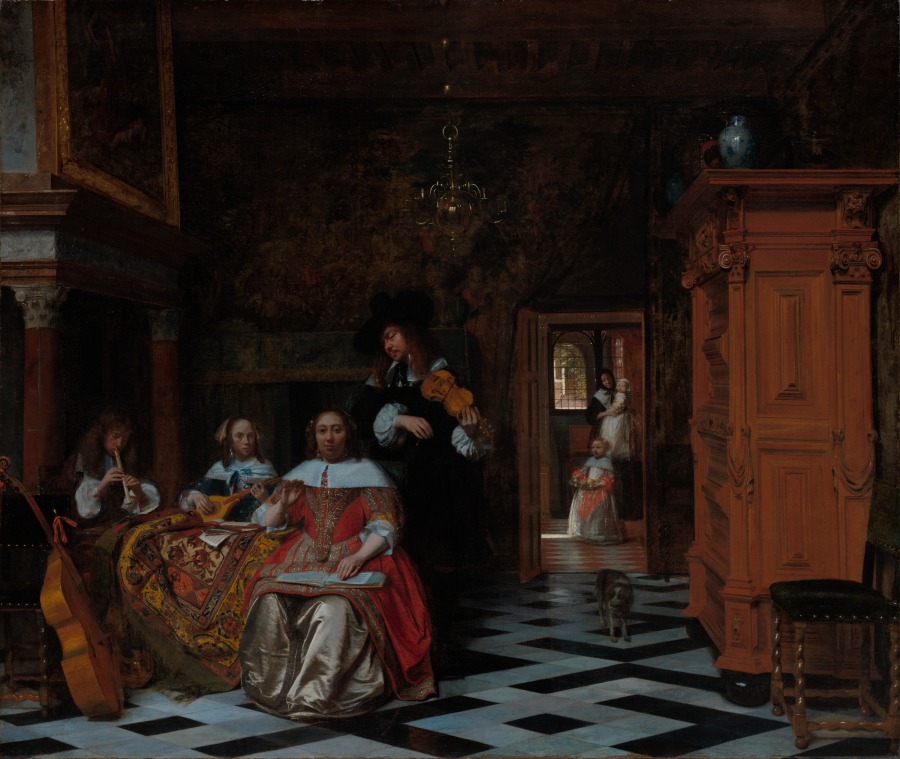
To the untrained eye, it is a mere depiction; a charming, if somewhat formal, scene of domestic concord. To the connoisseur, however, the artefact in question—a portrait of a family engaged in musical performance—demands a more forensic examination. Its true subject, one must assert, is not the figures portrayed, but the very ground upon which they are rendered: silk. This is not a painting applied to a surface, but an image emerging from the surface, woven with a precision that speaks of imperial mandate and a legacy of technical supremacy that rivals the finest bespoke tailoring. The materiality is the message, and the message is one of profound cultural authority.
The Loom as Atelier: Imperial Command and Technical Execution
Consider the provenance. This silk did not originate in a minor workshop; it is the product of the imperial weaving establishments, likely of Suzhou or Nanjing during the Ming or high Qing dynasties. These were not mere manufactories; they were the equivalent of a royal atelier, operating under the direct patronage of the court. The patterns, colours, and techniques were strictly regulated, their usage often dictated by sumptuary laws. To possess a portrait of such dimension and complexity in silk tapestry (kesi) or finely patterned satin damask was to possess a testament to one's status, woven by hands that served the Son of Heaven himself. The thread count, the density of the weave, the brilliance of the dyes—each element conforms to a standard of excellence that brooks no compromise. Much like the hidden canvas of a Savile Row coat, the foundation is impeccable.
A Composition in Thread: Decoding the Woven Narrative
The scene itself—a family ensemble, perhaps with a qin (zither) and xiao (flute)—is a deliberate articulation of Confucian ideals: harmony, filial piety, and cultivated refinement. However, the narrative is secondary to the demonstration of technical virtuosity. Observe the subtle gradations of colour in a robe, achieved not with pigment but through the painstaking integration of differently dyed wefts. Note the intricate rendering of the musical instruments’ grain and the delicate fretwork, a feat of loom programming that requires the foresight of a master weaver. The faces, likely executed with a finer silk thread or minimal supplementary painting, possess a restrained detail that avoids vulgarity, focusing instead on the dignity of the whole.
This is where the parallel to the sartorial arts becomes most pronounced. The portrait’s composition is akin to the balance of a bespoke garment. The central figures form the strong, structured silhouette—the chest and shoulders of the piece. The background elements—a scholar's rock, a slender bamboo—provide the subtle texture, the equivalent of a unique lining or a discreet pick-stitching. The entire work is engineered, not merely drawn. Each thread is placed with intention, bearing tension and contributing to the integrity of the whole, just as each stitch in a canvassed jacket secures a legacy of structure and drape.
Legacy in the Weave: From Imperial Loom to Modern Heirloom
The legacy of imperial silk weaving, therefore, is encapsulated in this single artifact. It represents the apex of a controlled ecosystem: from the cultivation of the mulberry trees and the rearing of the silkworms under careful supervision, to the complex dyeing processes using mineral and vegetable extracts, and finally to the orchestrated labour of master weavers at the loom. This was a supply chain of the utmost rigour, its quality assured from origin to completion—a principle any establishment of standing would recognise as fundamental.
Today, the portrait exists as a heirloom of a different order. It is a testament to a worldview where material and image, status and artistry, were inextricably fused. The silk is not a passive support; it is the active carrier of identity. To study it is to understand that true luxury resides in this unity of purpose and execution. The quiet confidence it projects does not shout; it is woven into its very being. In an age of rapid reproduction and disposable imagery, this woven portrait stands as a solemn reminder that the most enduring statements are those constructed, thread by deliberate thread, with a patience and skill that transcends generations. It is, in the final analysis, a masterpiece of tailored heritage.