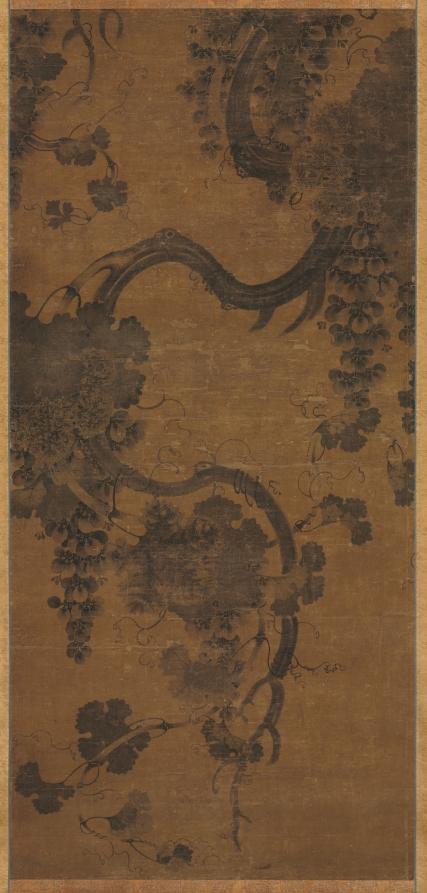
On the Viticultural Motif: A Treatise in Silk
To consider the grape, in its pure botanical form, is to appreciate a singularly potent symbol of cultivated abundance. Its journey from wild vine to ordered trellis mirrors civilisation’s own progression. Yet, when this motif is translated into the medium of imperial silk—specifically through the supreme disciplines of kesi (slit-tapestry) and complex brocade—it transcends mere ornamentation. It becomes a coded language of power, prosperity, and cosmic order, rendered in filaments of untold fineness. This artifact examines the grape cluster not as fruit, but as a sovereign emblem, its material execution in silk constituting the very apex of pre-industrial textile artistry.
The Imperial Vineyard: Symbolism Woven into Warp and Weft
The grapevine, with its sinuous tendrils and densely packed fruit, offered a profound allegory for the imperial court. Its inherent qualities—fecundity, perennial growth, and the transformation of its juice into wine, a substance of ritual and celebration—resonated deeply with Confucian and Daoist ideals of benevolent rule. A ruler presided over a flourishing, fruit-bearing realm. The grape, often interlaced with scrolling acanthus or peony, spoke of a kingdom in harmonious, organic abundance. Furthermore, the grape’s association with the Western Regions, secured via the Silk Roads, imbued it with an aura of cosmopolitan sophistication. To display the motif was to demonstrate a reach of influence that extended beyond the Middle Kingdom, incorporating desirable exotica into the native visual lexicon. It was a statement of global, as well as agrarian, wealth.
Material Sovereignty: The Kesi and Brocade Techniques
The expression of this symbolism demanded a technique of commensurate authority. This was found in the meticulous, painstaking disciplines of the imperial weaving workshops. Two methods stand paramount.
Kesi (Slit-Tapestry): Often described as “carved silk,” kesi is less a weave and more a form of textile pictography. Each colour area is built up from its own bobbin of weft, interlocking with the warp only where required. This creates the distinctive slit lines between colour blocks—flaws transformed into features. For a grape cluster, the technique allowed for astonishing tonal gradation. A single bunch could shift from deep aubergine at its base to a luminous amethyst at its tip, each berry defined by a minute slit, giving the composition a carved, almost gem-like clarity. The tendrils, often in gold thread, would appear to float free from the ground, a testament to the weaver’s ability to defy the inherent grid of the loom.
Polychrome Figured Brocade: Here, the complexity is engineered into the loom itself, typically a sophisticated drawloom. The grape motif becomes part of an overarching, densely patterned ground—a diapered field perhaps, or a swirling cosmos of other auspicious symbols. The pattern is pre-determined by the arrangement of heddles and lashes; the weaver’s role is one of flawless execution. The grapes here are defined by sheen and texture. The use of supplementary wefts, often of untwisted floss silk, would give the fruit a plump, lustrous appearance, catching the light differently from the matte ground. This was silk as architectural fabric, its patterns speaking of immutable order and repeatable, endless bounty.
A Legacy of Uncompromising Patronage
The production of these silks was an enterprise of staggering resource. The silkworms themselves, fed on pristine mulberry leaves, produced filaments of consistent, breathtaking fineness. The dyes—crimson from madder or sappanwood, violet from gromwell, imperial yellow from gardenia, and the most revered blues from indigo—were prepared with alchemical precision. The looms, vast and mechanically intricate, represented a significant capital investment. Most critically, the weavers were not artisans in the common sense; they were civil servants of the needle and shuttle, their labour directed and consumed solely by the court. This vertical integration, from mulberry grove to palace storeroom, ensured that the quality of the symbol—the grape—was never betrayed by the quality of its substance. The material was, in every sense, sovereign.
Conclusion: The Enduring Benchmark
To hold a fragment of such silk, to examine the grape motif rendered through these imperial techniques, is to understand a fundamental principle of heritage: that true luxury lies not in ostentation, but in the relentless pursuit of an ideal through material means. The grape cluster, in this context, is far more than a decorative fruit. It is a compact of meaning—prosperity, longevity, cosmopolitan power—locked into the very structure of the cloth. The kesi’s carved clarity and the brocade’s luminous density set a benchmark for textile artistry that remains unsurpassed. It speaks of a system where time was immaterial, where the only metric of success was perfection, and where a symbol of natural abundance was forged, through human genius and sovereign will, into an object of eternal cultural wealth. In the modern lexicon of bespoke creation, we may work with different tools and for different patrons, but the imperative remains: to bind profound meaning to exemplary materiality. The imperial silk weavers, in their treatment of a simple grape, achieved precisely that, establishing a legacy against which all subsequent endeavours in textile symbolism must, inevitably, be measured.