The Frontier of Quietude: Deconstructing the "Old Money" Silhouette Through the Lens of Transitional Aesthetics
The Lauren Fashion Heritage Lab posits that enduring style is not born from ostentation, but from a profound dialogue with silence, transition, and the formal order inherent in the mundane. Our internal genetic code, analyzing the aesthetic resonance between Vermeer’s A Maid Asleep and Bingham’s A Vignette of Life on the Frontier, provides the theoretical framework: true luxury resides in the mastery of the "in-between," where apparent stillness reveals universal currents of human existence. The 2026 interpretation of "Old Money" aesthetics must transcend mere signifiers of wealth to articulate a philosophy of being—one of assured presence, introspective calm, and an appreciation for the deeply structured rhythms of life. It is here that a seemingly humble museum artifact, an American workman’s cap, becomes an unexpectedly potent cipher for this evolved silhouette.
The Cap as Transitional Artifact: Between Labor and Leisure, Public and Private
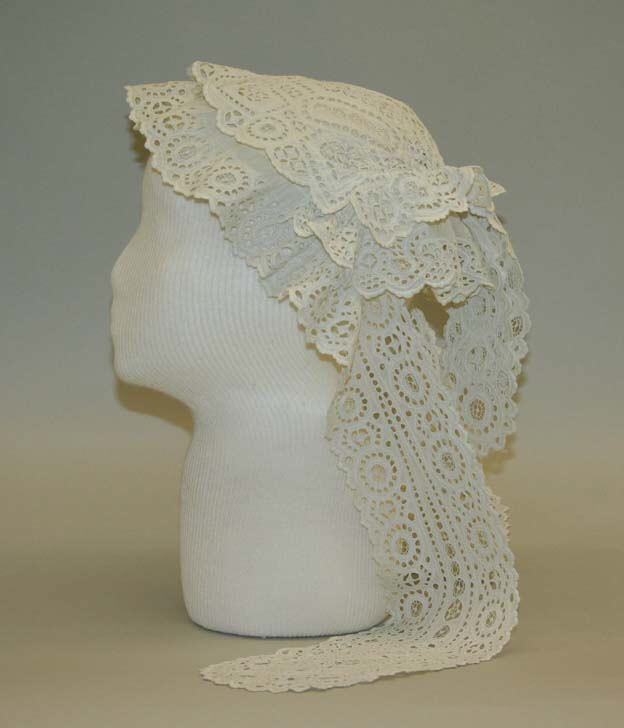
The referenced cap, a staple of 19th and early 20th-century American dress, is inherently an object of the frontier—not merely geographic, but social. It exists in the same transitional realm as Bingham’s riverside figures. It is not the formal top hat of established society nor the bare head of private repose; it is the gear for the journey, for the work of building, for the space between destinations. Like the figures in Bingham’s painting, the cap is worn by individuals in a state of "becoming," engaged in the active construction of their world. Its aesthetic is one of dynamic balance—utilitarian yet possessing a humble, structured form. This directly informs the 2026 Old Money silhouette, which moves away from rigid, ceremonial tailoring towards a sense of purposeful ease. Imagine structured blazers cut from supple, unlined wool, their authority derived from impeccable proportion rather than stiff padding; or trousers with the generous, action-ready articulation of workwear, yet rendered in finest cavalry twill. The silhouette embraces the frontier between effort and elegance, suggesting a life of engaged, unpretentious agency.
Formal Order in the Mundane: Geometry and the Controlled Silhouette
Vermeer’s genius lies in imposing a serene, geometric order upon a scene of intimate languor. The cap, in its purest form, embodies this same principle. Its simple construction—a rounded crown, a visor, a precise seam—is a study in functional geometry. For 2026, this translates to a silhouette defined by architectural clarity over decorative excess. The focus shifts to the integrity of line and the truth of material. A woman’s dress, inspired by the cap’s unadorned dome, might feature a rounded, sculptural shoulder line and a torso seam that follows the body’s geometry with mathematical precision, creating a "controlled静谧" akin to Vermeer’s sleeping maid. The palette, much like the deep, resonant shadows and focused light in both paintings, will be anchored in Heritage-Black, earthy umbers, and chalky whites—colors that feel foundational and timeless, allowing form to speak first and loudest.
The Poetry of the Pause: Introspection and the New Luxury
Both Vermeer’s maid and Bingham’s frontiersmen are captured in a moment of pause—a suspension in the flow of duty. The cap, when doffed and placed on a table, signifies this pause. The 2026 Old Money ethos internalizes this poetry of the pause. It is a silhouette that values introspective luxury. Fabrics become paramount, not for their logo but for their tactile narrative: the dense, quiet nap of a wool melton that recalls military blankets; the fibrous, humble honesty of a superior cotton canvas; the soft, worn-in hand of aged leather. These materials invite touch and contemplation, celebrating the "wear" in "wearable." The silhouette itself avoids the frantic, performative edge of fast fashion. Instead, it offers a sense of composed readiness, a garment that is equally suited for quiet reflection in a private library or for engaged conversation in a public square. It is clothing that, like the cap on the frontier, is built for life’s real journeys, both external and internal.
Conclusion: The Clear Mirror of Refined Existence
Ultimately, the journey from the internal genetic code of 17th-century Dutch painting and 19th-century American genre scenes, through the humble museum cap, to the 2026 Old Money silhouette, is a journey towards a more profound definition of elegance. It is an elegance that finds its power in the margins and transitions, in the quiet mastery of form, and in the dignified acknowledgment of life’s foundational rhythms. The resulting silhouette is neither nostalgic nor ostentatious. It is, as our analysis concludes, a clear and eternal mirror—reflecting an individual who understands that true substance lies in the structured poetry of the everyday, in the calm assurance of one’s place in the world, and in the quiet luxury of a moment, perfectly poised between what was and what will be. The cap, in its simple, geometric humility, reminds us that the most enduring icons are often those born not for show, but for the sincere and ordered navigation of life’s frontier.