The Patina of Power: A Greek Kylix Fragment and the 2026 Old Money Silhouette
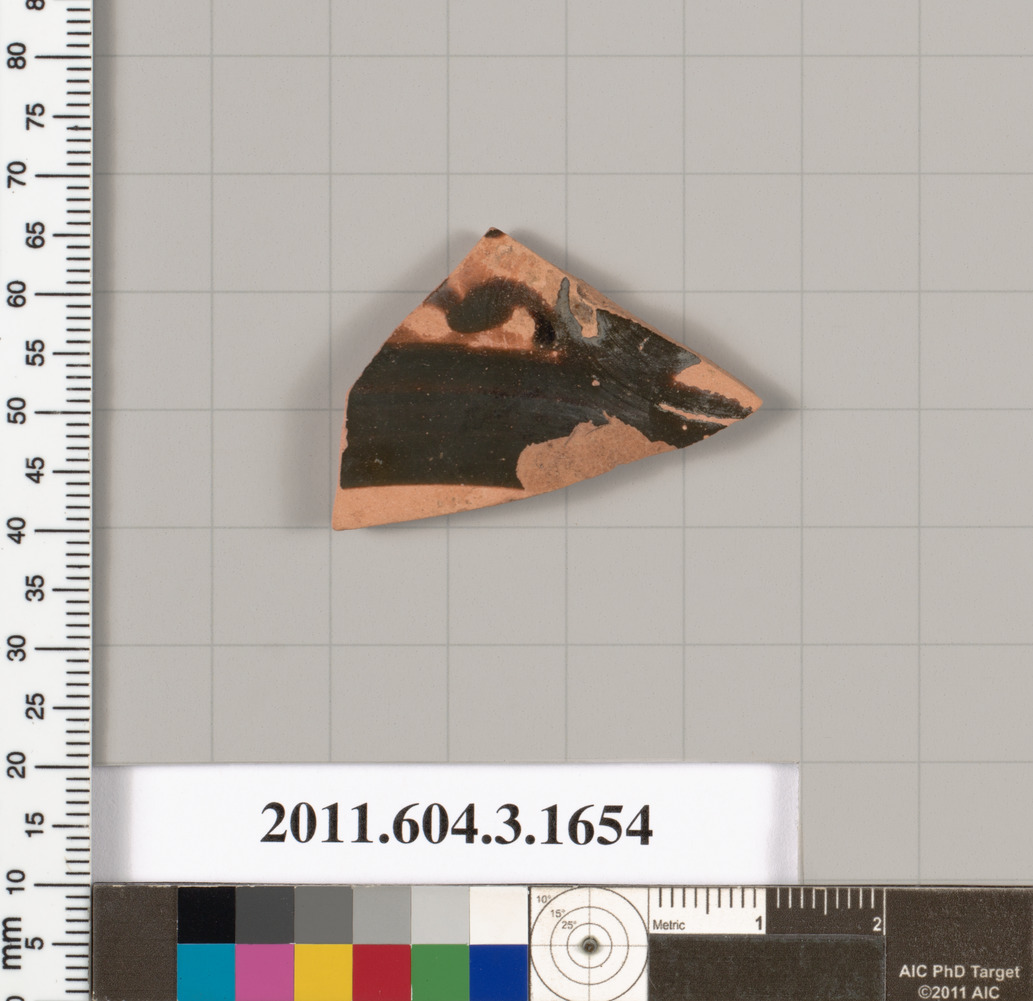
The Lauren Fashion Heritage Lab’s ongoing investigation into the aesthetic politics of surface finds a profound new dimension in a seemingly humble artifact: a terracotta fragment of an Attic Greek kylix, or drinking cup. This excavated shard, bearing the ghost of its original banded decoration, exists in stark material contrast to the opulent, narrative-rich surfaces of the Renaissance Famous Women cassone and the Mughal Caparisoned Elephant miniature. Yet, it is precisely in its fractured, time-worn state that it offers the most potent genetic code for the 2026 interpretation of the Old Money silhouette. Moving beyond the explicit iconography of power and gender, this fragment instructs us in the aesthetics of temporal authority—where elegance is not declared through applied decoration, but emanates from structural integrity, patinated use, and the quiet confidence of enduring form.
From Ornamental Surface to Structural Essence
The cassone and the miniature presented power through dense, didactic surface application—woven narratives and lavish textiles that acted as ideological veneers. The Attic kylix fragment proposes a different paradigm. As a band cup, its primary decoration was likely a simple, encircling frieze, subordinate to the vessel’s overarching form. The cup’s function was communal and sympotic, central to the masculine, philosophical, and political rituals of the Athenian elite. Its authority was derived not from what was painted upon it, but from its role in a performative social grammar. The fragment, in its current state, has lost even that decorative band, leaving only the curved, blackened terracotta—the essential armature of the object. This reduction is not a loss but a revelation. It exposes the primacy of silhouette, of the curve that fits the hand and the lip, of the material strength that allowed it to survive millennia. For 2026, this translates to an Old Money ethos that rejects ostentatious pattern and logo-driven identity. Instead, power is coded in the unassailable correctness of cut, the architectural drape of fabric, and the deliberate, almost archaeological, purity of form. The silhouette itself becomes the statement, as self-contained and resonant as the kylix’s bowl.
The Semiotics of Patina and the Heritage-Black Palette
The fragment’s most compelling aesthetic property is its patina—the chemical and physical transformation wrought by time and earth. Its surface is no longer the bright orange of fresh terracotta but a complex, somber spectrum of blacks, deep umbers, and oxidized reds. This is not a designed color but an earned depth, a visual record of use and survival. This directly informs the 2026 Old Money palette, anchored in what we term Heritage-Black. Heritage-Black is not a flat, aniline black. It is a chromatic family encompassing the smoky charcoal of burnt wood, the green-black bronze of ancient patina, the faded black of archival velvet, and the deep umber glimpsed beneath a worn edge. It is the color of heirloom leather, of tarnished silver, of shadows in a library. This palette embodies a temporal wealth that cannot be purchased new; it must be suggested through fabric treatment, dye layering, and a reverence for materials that develop character with wear, much like the kylix gained resonance through its fracture.
Furthermore, the fragment’s broken state is crucial. It does not pretend to wholeness. It acknowledges history as a process of erosion and discovery. In 2026 Old Money dressing, this translates to a sophisticated dialogue between perfection and trace. A flawlessly tailored wool blazer may be worn with a subtly frayed heritage-silk scarf. A cashmere coat’s line remains pristine, but its texture shows the gentle nap of age. The look avoids the sterility of the untouched, embracing instead the cultivated evidence of a lived, intellectual life—the sartorial equivalent of a well-handled book or a cherished piece of ancient pottery. The silhouette carries its history within its very fibers and folds.
The Silhouette of Ritual and Unspoken Code
The original kylix was an instrument of ritual, its form dictating a specific, cultured bodily practice—the reclined drinking of wine. Its shape was a script for elite behavior. The 2026 Old Money silhouette operates on a similar principle of prescriptive elegance. It is clothing designed for a mode of being, not merely for display. Silhouettes will emphasize a disciplined, upright posture (the structured shoulder, the precise waist) reminiscent of the kylix’s stable stem. Fabrics will possess a substantial, sculptural hand—heavy wools, double-faced cashmere, weighty heritage silks—that move with a deliberate, quiet grace, echoing the ceramic’s material integrity.
This approach rejects the fleeting spectacle of the caparisoned elephant for the enduring, participatory authority of the symposium. The power is not in being looked at, but in belonging to the ritual. Thus, the 2026 Old Money uniform—be it an impeccably cut trouser suit, a columnar dress, or a tailored coat—functions as a visual passport into a realm of unspoken codes and assured taste. Its beauty, like that of the kylix fragment, is axiomatic, not explanatory. It does not shout its value through decoration; its value is inherent in its form, material, and the patina of implied wisdom and lineage.
In conclusion, the terracotta fragment teaches us that ultimate luxury is time itself, and the most powerful silhouette is one that has been refined by it. For Lauren’s 2026 vision, the Old Money aesthetic evolves from a display of surface wealth to a manifestation of deep, structural heritage. It finds its expression in the Heritage-Black palette, in silhouettes that are architectural and ritualistic, and in a philosophy where elegance is measured not by glitter, but by the profound, quiet authority of the fragment that has endured, speaking across centuries in a language of beautiful, broken perfection.