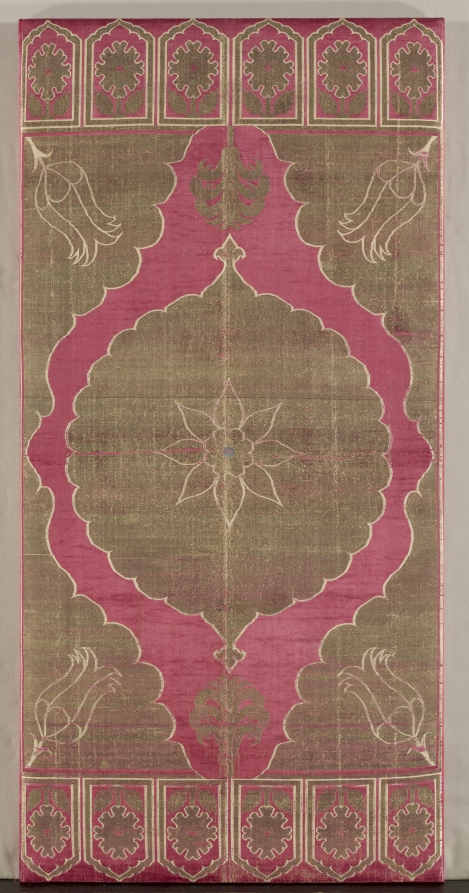
An Examination of Material Distinction: The Lampas Silk Cushion Cover
To engage with a lampas silk cushion cover is not merely to assess a soft furnishing. It is to handle a condensed treatise on imperial ambition, a portable canvas upon which the very logic of power was, for centuries, articulated through thread. The form—a cushion—suggests domesticity, repose. The materiality—silken lampas—contradicts this utterly, speaking of dynastic theatres, of tribute, and of a technological sovereignty so potent it was, for over a millennium, guarded as a state secret. One does not simply recline upon such an object; one aligns oneself with a legacy of consummate craft.
The Sovereign Fibre: Silk as Imperial Currency
First, one must understand the foundation. Silk is not a mere textile. From its mythic origins in the Chinese court, it was engineered as an instrument of state. Its cultivation, the meticulous husbandry of the Bombyx mori silkworm, was a controlled science. Its transformation from cocoon to filament required a precise, labour-intensive protocol. This command over a biological and mechanical process yielded a fibre of unrivalled lustre, strength, and tactility—attributes that became synonymous with imperial authority itself. To drape in silk was to wear one’s affiliation with the celestial order; to bestow it was to demonstrate boundless wealth; to export it, under heavy restriction, was to conduct geopolitics. The Silk Roads were, in essence, the arteries of this luxury diplomacy, with lengths of silk serving as both currency and credential. Thus, the very silk in our subject cushion is heir to this economy of awe.
The Architecture of Opulence: The Lampas Weave
If silk provided the lexicon, lampas constituted the complex grammar. It represents the apogee of the drawloom weaver’s art, a structure of formidable technical ambition. The method employs at least two warps and two wefts, creating a textile with a pronounced ground and a patterned float. This is not surface application, as in embroidery; this is pattern woven into the substance of the cloth itself. The result is a reversible, densely textured fabric where the design—be it a scrolling acanthus, a phoenix, or a complex arabesque—possesses a palpable, raised identity.
To produce lampas was an enterprise of time and orchestration. The loom became a kind of proto-computer, its configuration—the intricate tying of the heddles and the pattern harness—a form of programmed memory. A single mis-thread would flaw the entire sequence. This demanding process meant lampas was reserved for narratives of consequence: for ecclesiastical vestments announcing divine favour, for royal robes projecting terrestrial power, and for the furnishings of palaces where statecraft was performed. The cushion cover, therefore, translates this language of monumental adornment into an object of intimate scale, a subtle but profound assertion of taste.
A Legacy in Miniature: From Throne Room to Drawing Room
The journey of lampas silk from imperial ateliers—be they in Byzantium, Damascus, Lucca, or later, Lyon—to the domestic interior marks a fascinating democratization of prestige. Where once such fabrics cloaked emperors and canopied altars, the rise of a mercantile aristocracy and, later, an industrial elite, created a new market for inherited grandeur. The cushion cover becomes a critical artifact in this transition. It is a fragment of that imperial aesthetic, scaled for private consumption.
Consider its likely provenance: a length of historic lampas, perhaps from an 18th-century robe or a wall hanging, carefully curated and repurposed by a discerning owner or a specialist house. This act of conservation and re-contextualization is not vandalism, but homage. It acknowledges that the fabric’s inherent value—its beauty, its narrative weight—transcends its original function. Placed upon a Chesterfield or a Bergère, the cushion ceases to be a mere accessory. It becomes a focal point, a conversation piece that speaks of connoisseurship. It asserts that the owner understands the language of threads, can read the weave, and appreciates the centuries of refinement required to produce such an effect.
Conclusion: The Unspoken Statement of Provenance
In final analysis, the lampas silk cushion cover is an exercise in condensed heritage. Its materiality, silk, connects us to the oldest networks of luxury and power. Its structure, lampas, represents a pinnacle of pre-industrial technological artistry. Its form, the cushion, signifies its successful translation into the lexicon of modern, refined living. It does not shout; it insinuates. It carries within its warp and weft the quiet confidence of provenance, the assurance that comes from an association with the absolute best. In a world of mass-produced imitation, it remains an authenticator—a small, sumptuous testament to the enduring authority of imperial craft, now enlisted in the service of personal distinction. To possess it is to curate a fragment of history, and to acknowledge that true luxury is, and always has been, a narrative woven in silence.