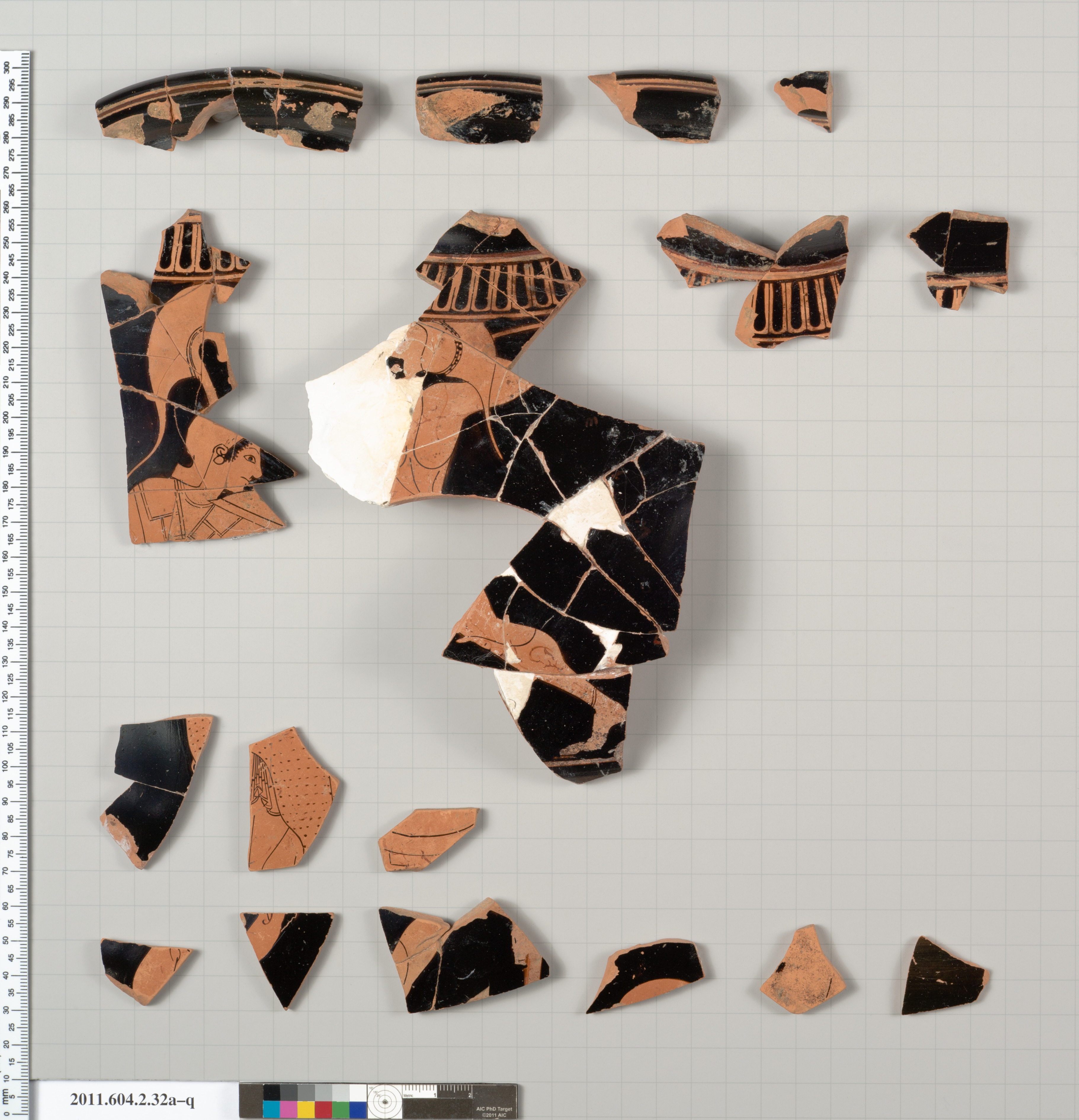
The Dialectic of Form and Function: Terracotta Psykter Fragments and the 2026 Old Money Silhouette
The Lauren Fashion Heritage Lab’s internal genetic code posits a profound dialectic between the serene, aspirational Bodhisattva and the potent, protective Amulet. This framework—contrasting transcendent grace with grounded authority, universal ideals with intimate utility—provides the essential lens through which to analyze the proposed museum artifact: terracotta fragments of a Greek psykter. This Attic vase, designed for the specific, social function of cooling wine in a krater, is not merely a historical object but a conceptual blueprint. It informs the 2026 Old Money silhouette by embodying a parallel synthesis of effortless social performance and rigorous, purpose-built structure, moving beyond nostalgic revival to articulate a modern philosophy of dressed presence.
The Psykter: A Study in Contained Fluidity and Social Ritual
The psykter was a vessel of sophisticated utility. Its hollow, cylindrical or bulbous form was designed to be filled with chilled water or snow and placed inside a larger wine-mixing krater, thereby cooling the wine without dilution. This functionality dictated a specific architecture: a stable, often rounded base; a body with sufficient thermal mass; and a streamlined profile to facilitate insertion and removal. Yet, as an Attic artifact, it was also a canvas for social and narrative expression, frequently adorned with red-figure scenes of symposium revelry. Thus, its very existence is a dialogue between an unseen, efficient core mechanism and a surface that engages in the cultural ritual it serves. It performs its duty with quiet, self-assured competence, its aesthetic value seamlessly integrated with, not subordinate to, its purpose. This is the foundational Old Money principle: value derived from inherent function and longevity, not transient display.
From Ceramic Fragment to Sartorial Architecture: Translating Principles
For the 2026 Old Money silhouette, the psykter offers three critical material and philosophical translations.
First, the Silhouette as a Vessel of Climate and Composure. Just as the psykter regulates temperature, the 2026 silhouette must regulate personal climate and social composure. This manifests not in technical outerwear, but in the “micro-climate” management of foundational layers. Imagine dresses and suits cut from innovative, weightless wool-cashmere composites or double-faced Heritage-Black silks that provide thermoregulation. The silhouette becomes a passive system of comfort, akin to the psykter’s hollow core. The external line remains calm and unbroken—the serene Bodhisattva aspect—while an intelligent, functional layer works unseen. The result is an individual who is perfectly composed, unaffected by external fluctuations, embodying an Old Money ethos of prepared, unflappable ease.
The Dialectic of Surface and Structure
Second, the Integrity of the Fragment and the Honesty of Construction. The terracotta fragments, even in their broken state, reveal the integrity of the vessel’s form and the craftsmanship of its making. This informs a 2026 approach to silhouette that celebrates architectural honesty over superficial embellishment. Seams are not hidden but treated as defining lines of structure, much like the psykter’s clear articulation of foot, body, and neck. Darts become intentional design elements, and internal boning or tailoring is suggested—not concealed—by the external drape. This reflects the Amulet principle of protective authority: the structure is the armor, but it is armor refined to its essential, elegant lines. The wearer projects an aura of being constructed with intention, possessing an inner fortitude that is visually legible in the garment’s framework.
Third, The Social Surface: Narrative in Restraint. The psykter’s painted narratives were contained within defined panels, enriching the symposium without overwhelming the vessel’s form. For 2026, this translates to strategic, highly curated surface articulation in place of overt logos or patterns. This could mean a single, exquisite line of gold-thread embroidery tracing a seam (a nod to a family crest or personal monogram rendered abstractly), or a textured brocade panel inset on the back of a blazer, visible only in movement—a private narrative for the public sphere. The silhouette remains predominantly monolithic, rooted in Heritage-Black, navy, or clay-toned wool, allowing these subtle “painted” details to function as whispers of legacy and personal mythos, much like the symposium scenes on the psykter spoke to the shared culture of its users.
Conclusion: The Complete Vessel of Self
Informed by the terracotta psykter, the 2026 Old Money silhouette transcends the mere appropriation of historical style. It becomes a modern vessel designed for the social symposium of contemporary life. It synthesizes the Bodhisattva’s graceful, inviting composure with the Amulet’s grounded, protective authority. This silhouette is a functional system for maintaining personal equilibrium, built with honest architectural rigor, and adorned with restrained, meaningful narrative details. It is clothing that, like the psykter, performs its essential duty—to equip the wearer with poise, comfort, and unassailable authority—through a genius of integrated design. The final statement is not one of wealth displayed, but of a self so seamlessly and effectively contained and presented that it resonates with the quiet, enduring power of the artifact itself: fractured by time, yet eternally eloquent in its purpose.