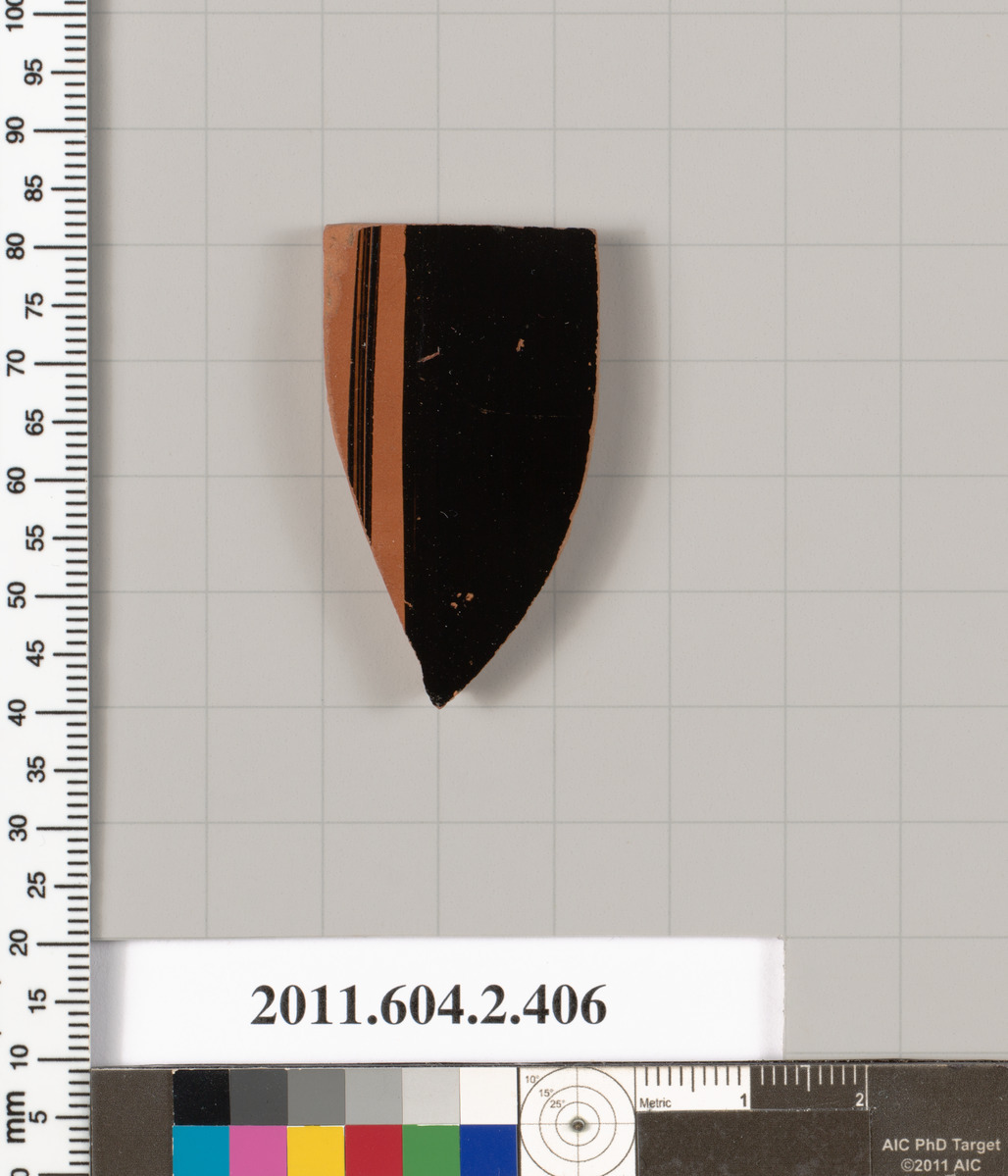
Terracotta Fragmenta and the Architecture of Permanence: Informing the 2026 Old Money Silhouette
The 2026 Old Money aesthetic, as interpreted through the Lauren Fashion Heritage Lab, transcends mere nostalgia for bygone wealth. It is an ethos of cultivated permanence, of forms that carry the weight of history with silent authority. To decode its future silhouette, we look not to recent decades but to antiquity, drawing a profound conceptual line from a Terracotta fragment of a Greek column-krater to the structured elegance of contemporary tailoring. This analysis synthesizes the artifact’s inherent principles with the Lab’s internal genetic code—the Daoist metaphysics of the scholar’s rock and the Zen narrative of the luohan painting—to articulate a silhouette built on architectural integrity, temporal patina, and philosophical depth.
The Fragment as Complete Universe: Structural Honesty and Negative Space
The column-krater fragment, though a shard, retains the undeniable logic of its original whole. Its curved terracotta plane speaks of the vessel’s complete, volumetric form—a “microcosmos” akin to the fantastic mountain scholar’s rock. This is not a literal mimicry of the human form, but an abstract, self-contained architecture. Informing the 2026 silhouette, this principle manifests as architectural cut and structural honesty. Garments will be conceived as volumetric sculptures for the body, with seams and darts treated not as necessary evils but as expressive lines that map the body’s terrain, much like the krater’s contours defined its function. The silhouette embraces a columnar integrity, often using the inherent stiffness of heritage wools and innovative technical felts to create clean, geometric shapes that stand away from the body, creating a protected, personal space—a “wearable vessel.”
Furthermore, the fragment’s broken edges highlight the power of absence, echoing the “empty silence” (空寂) of the luohan painting. In the silhouette, this translates to a masterful use of strategic negative space—a deep, unadorned neckline, a dramatically open cuff, or the precise gap between a jacket’s hem and the trouser break. These voids are not omissions but carefully calibrated pauses, moments of breath within the structured form that invite contemplation and emphasize the purity of the shape itself.
The Patina of Time: Surface, Texture, and the Record of Process
The terracotta surface is a palimpsest of time. Firing irregularities, mineral deposits, and the gentle wear of millennia create a texture that is rich, accidental, and deeply authentic. This “geological poetry” of surface directly opposes the sterile perfection of fast fashion. For 2026, the Old Money silhouette will be defined by its textural intelligence and cultivated patina. Fabrics are chosen for their ability to record a life lived: heritage tweeds woven with irregular yarns, cashmere blended with rough silks to create a “memory” in the cloth, and vegetable-tanned leathers that develop a unique character. This mirrors the scholar’s rock, whose wrinkled surface “records time’s geology,” and the luohan’s robes, whose folds resemble stratified rock. In clothing, this means a silhouette that gains character with wear, where the elbows of a blazer develop a subtle sheen and the knees of trousers form gentle, personal creases—a visual narrative of enduring use.
From Ritual Vessel to Social Armor: The Metaphysics of the Silhouette
The original krater was a central object in the symposion, a ritual vessel for mixing wine and water—mediating between elements and facilitating communal dialogue. The Lauren interpretation transforms this social ritual into a metaphysics of dressed presence. The 2026 Old Money silhouette functions as a kind of “social armor” or contemporary ritual garment. Its imposing, confident architecture provides a protective boundary, a defined personal space in a crowded world, embodying the scholar’s rock’s role as a “metaphysical medium for dialogue with nature.” The wearer, like the seated luohan, achieves a dialectic of “tranquility and vitality”—the outer form is still and poised, yet the cut allows for dynamic, purposeful movement within.
This approach rejects utilitarian pragmatism in favor of the “useless utility” (无用之用) championed by Daoist aesthetics. A precisely engineered wool cape, a coat with complex internal structure—these are not merely for warmth but for the spiritual poise and authority they confer. They are, like the artifacts, “vessels that convey the Way” (器以載道). The color palette, dominated by Heritage-Black, deep charcoals, clay-oxide reds, and mineral whites, further connects to the terracotta fragment and the eternal pigments of the luohan painting, using color’s permanence to “resist the passage of time.”
Conclusion: The Silhouette as Inhabited Landscape
The 2026 Old Money silhouette, informed by the terracotta fragment and refined through the Lab’s Eastern aesthetic codes, is ultimately a “inhabitable spiritual landscape.” It is an architecture of personal space (the krater’s volume), etched with the poetry of time (its patina), and charged with contemplative purpose (the rock and luohan’s philosophy). It moves beyond trend to propose a wardrobe of enduring, meaningful forms. Each garment becomes a fragment of a larger, coherent personal history—a modern artifact that, through its material intelligence and philosophical depth, builds a bridge between the enduring values of the past and the cultivated presence of the future, creating a unique aesthetic dimension in the tension between materiality and spirit.