Fragments of Eternity: The Terracotta Skyphos and the Archaeology of 2026 Old Money Silhouettes
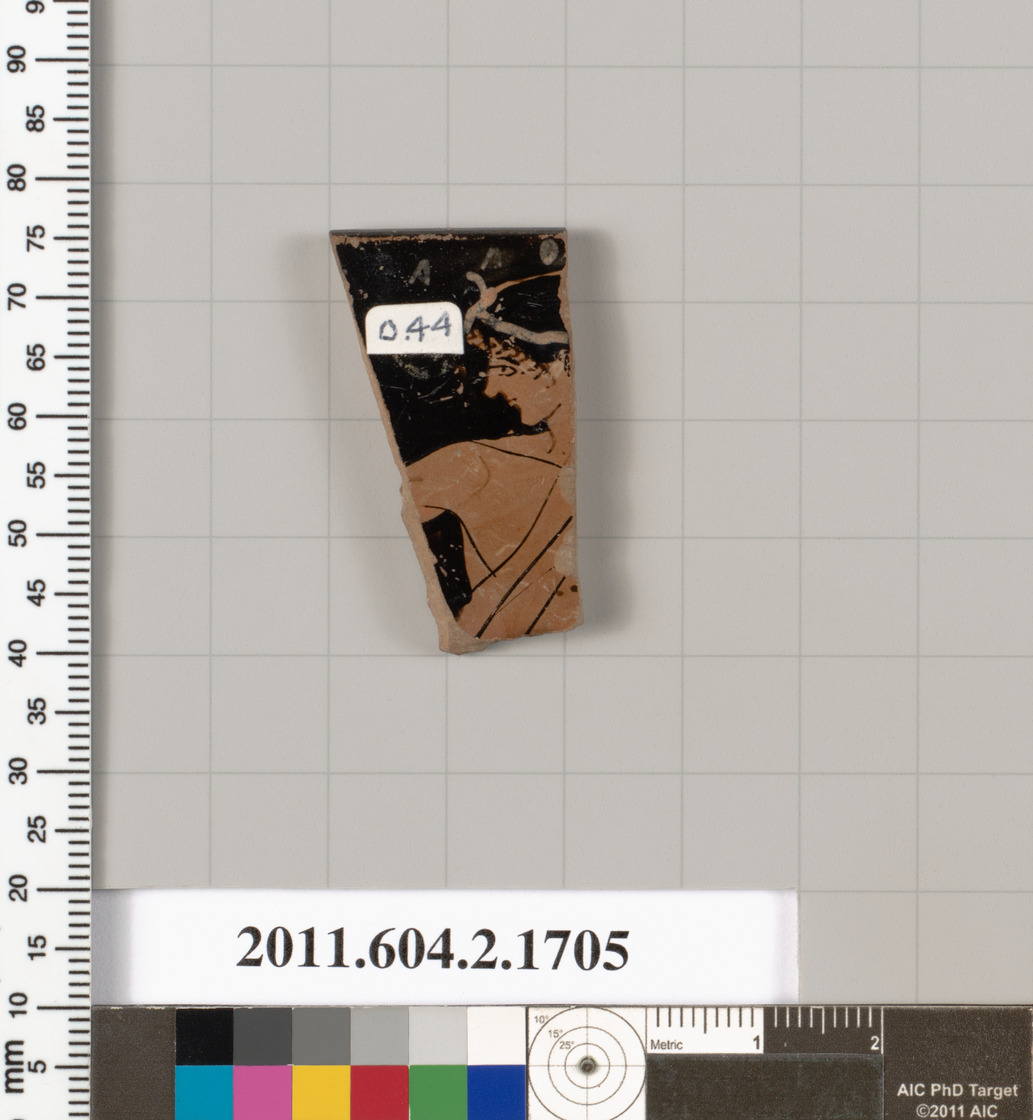
The proposed 2026 Old Money collection for Lauren Fashion seeks not to imitate wealth, but to embody its most profound attribute: permanence through temporal discontinuity. This pursuit finds an unexpected but profoundly resonant muse in the Terracotta rim fragment of a skyphos from Attic Greece. This artifact, a shattered remnant of a deep drinking cup, operates not as a complete aesthetic blueprint but as a methodological cipher. It provides a theoretical framework for constructing a contemporary sartorial lexicon of inherited elegance, one that mirrors the fragment’s own narrative of curated rupture, archaeological layering, and silent authority. The 2026 silhouette, informed by this fragment, will be an exercise in heritage as a verb—an active, intellectual reassembly of timeless principles rather than a passive revival of past forms.
The Poetics of the Fragment: From Ceramic Break to Sartorial Deconstruction
The skyphos fragment’s primary instruction lies in its very state of incompletion. It does not present a whole vessel but a provocative segment, its broken edges speaking louder than any intact curve could. This directly informs the 2026 silhouette’s approach to deconstructed classicism. Imagine a double-breasted blazer, not as a rigid, padded shell, but as a study in intentional reduction. One lapel might remain sharply defined, while the other dissolves into a soft, self-faced roll, echoing the jarring yet natural break of the terracotta. A tailored wool coat could feature a seam left purposefully unfinished along one sleeve, not as negligence, but as a deliberate reference to the archaeological find—a garment that acknowledges its own construction and, by extension, its potential for elegant decay. The silhouette embraces asymmetry born of time, not trend, creating a visual tension that suggests a narrative longer than a single season.
Stratigraphy of Form: Layering History into Line
Upon the terracotta surface, one can infer the lost whole: the curve of the cup, the likely presence of black-figure or red-figure decoration, the traces of social ritual. This stratigraphic implication—where the present fragment hints at complex historical and social layers—is crucial for 2026. Silhouettes will be built through intelligent layering that speaks of cumulative taste, not mere warmth. A foundational layer of finest cashmere (a whisper of the clay’s earthy origin) might be overlain with a tailored waistcoat in heritage-black wool (the formal, structured layer), atop which rests a loosely draped scarf of raw silk, its irregular texture mimicking the terracotta’s weathered surface. Each layer remains distinct yet coherent, a palimpsest of materials that tells a story of refinement accrued over time. The silhouette becomes an archaeological profile, where every line and texture reveals a different epoch of sartorial history.
The Patina of Presence: Surface, Texture, and the Authority of the Worn
The fragment’s value is inextricable from its materiality—the coarse, porous terracotta, once slick with glaze, now bearing the marks of centuries. This translates into a material philosophy for 2026 that prioritizes the authority of inherent texture and developing patina. Fabrics will be chosen for their capacity to age with character: thick, undyed wools that felt slightly at the edges; vegetable-tanned leathers for belts and accents that darken with wear; heavy silks that develop a subdued luster rather than a brash shine. The "Old Money" aesthetic rejects the pristine. Instead, it seeks the eloquence of the gently worn—elbow patches that are not repairs but insignia of intellectual labor, collars that soften with time, tweeds whose flecks of color emerge like sherds from the earth. The silhouette thus gains depth not from ornament, but from the honest evidence of use.
Silence and Gesture: The Contained Volume of the Skyphos
Finally, the original skyphos was a vessel for containment, a defined space for liquid. This concept of contained, purposeful volume critically shapes the 2026 silhouette. It moves away from both extreme minimalism and overt extravagance, favoring a considered, architectural volume that implies substance. This is seen in the gentle, A-line flare of a heritage-black wool skirt, its volume controlled and precise; in the roomy yet sharply defined sleeve head of a tailored shirt; or in the deep, enveloping drape of a cashmere wrap coat. Each garment is a vessel for the body, offering shelter and dignity. The silhouette speaks of reserve and potential, much like the fragment that once held wine—a symbol of social communion and private reflection. Its power lies in what it suggests it can hold, not in what it desperately displays.
In conclusion, the Terracotta rim fragment teaches Lauren Fashion that true heritage is not a finished image but a continuous process of intelligent excavation and reassembly. The 2026 Old Money silhouette, therefore, will be an archaeology of elegance. It will be built from fragments of classic tailoring, layered with historical material memory, finished with the patina of imagined use, and shaped by a philosophy of contained, silent authority. It does not shout lineage; it whispers it through broken lines and textured surfaces, offering a modern wardrobe that, like the ancient skyphos, is designed to hold meaning and endure beyond the fleeting moment.