The Terracotta Kylix and the Architecture of Old Money: A Heritage Analysis for Lauren Fashion’s 2026 Silhouettes
The Lauren Fashion Heritage Lab’s internal genetic code, drawn from the comparative study of a Bodhisattva and an Egyptian Amulet in the Form of a Seated Figure with Bovine Head, establishes a foundational dialectic: the “inward” path of spiritual transcendence versus the “outward” shield of protective power. This paper argues that the Terracotta fragment of a kylix (drinking cup) from Greek Attica—a museum artifact of seemingly secular, convivial origin—provides a third, synthesizing term. It embodies a “horizontal” sacredness: the ritualized, communal performance of aristocratic identity. For the 2026 Old Money silhouettes, the kylix’s formal language—its precise geometry, its narrative friezes, its material integrity—offers a blueprint for a wardrobe that is neither purely meditative nor purely defensive, but rather a social architecture of inherited grace, disciplined ease, and quiet authority.
I. The Kylix as a Ritual Object: From Symposium to Silhouette
The Attic kylix was not a mere drinking vessel; it was the central artifact of the symposium, a male aristocratic ritual of wine, poetry, and philosophical discourse. Its shallow bowl, wide mouth, and twin handles were designed for a specific social choreography: the reclining drinker would hold the cup by its stem, tilt it to drink, and, in the moment of repose, gaze into the painted tondo at the bottom. This tondo often depicted a mythological scene or a moment of sympotic wisdom—a reminder of virtue, mortality, or the gods’ favor. The kylix thus functioned as a portable altar for the performance of arete (excellence) and sophrosyne (self-restraint).
For the 2026 Old Money silhouette, the kylix’s design logic translates into garments that structure social interaction. Consider the double-breasted blazer with a subtly widened lapel—its shape echoing the kylix’s flared rim. The jacket’s cut is not aggressive but generous, allowing the wearer to move with the ease of a symposiast reclining on a couch. The trousers, cut with a gentle taper from a high waist, mimic the kylix’s stem: they ground the figure while permitting a fluid, unhurried gait. The entire ensemble is a vessel for presence, not action. It is designed for the long view—a lunch at the club, a gallery opening, a weekend in the country—where the wearer’s authority is expressed through composure rather than exertion.
II. The Tondo as Narrative: Embroidered Insignia and the Language of Line
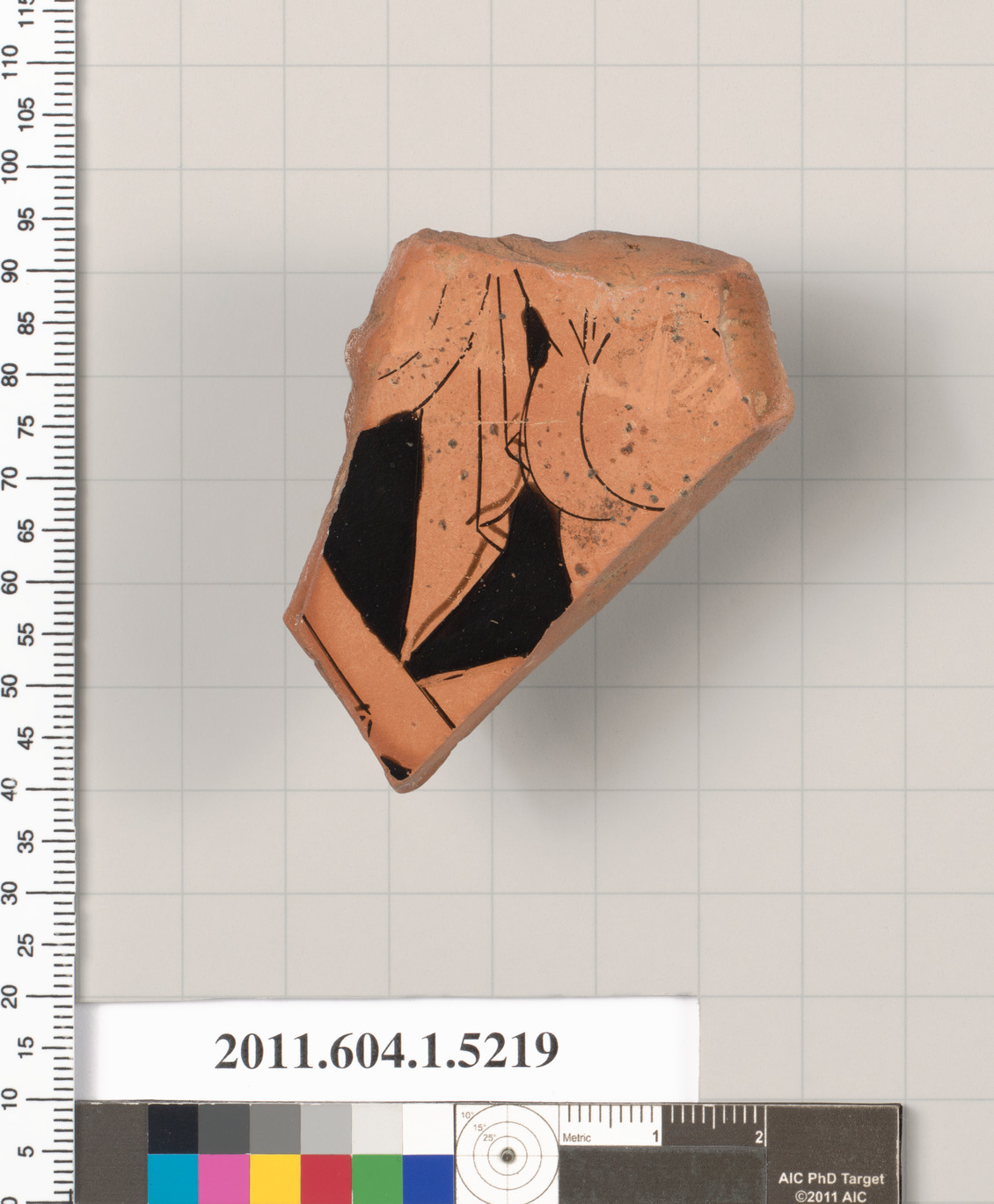
The kylix’s tondo—the circular image at the cup’s center—is a masterpiece of compressed storytelling. In the terracotta fragment, we see the remains of a black-figure or red-figure scene: a god, a hero, or a moment of domestic ritual. This is not a decorative afterthought; it is the moral and social center of the object. The drinker, in the act of tilting the cup, reveals the tondo to his companions, performing a shared cultural literacy. To recognize the scene—to understand its mythic reference—was to affirm one’s place in the aristocratic paideia (education).
For Lauren Fashion’s 2026 collection, this translates into subtle, narrative-driven detailing on the interior or underside of garments. A silk lining of a cashmere overcoat might bear a hand-embroidered motif—a laurel wreath, a Greek key, a simplified kylix silhouette—visible only when the coat is removed or draped. A pocket square could be folded to reveal a monogram in a classical font, or a cufflink engraved with a mythological scene. These are not logos; they are hermetic signals, legible only to those who share the cultural code. They are the tondo of the garment, a private revelation for the discerning eye.
The line quality of the terracotta fragment is equally instructive. The Greek vase painter’s brushstroke—whether the crisp black silhouette of the black-figure technique or the fluid, incised line of the red-figure—is confident, economical, and unerring. It does not seek to imitate nature but to distill essence. For the 2026 silhouette, this suggests a return to tailoring that is both rigorous and relaxed. The shoulder line of a jacket should be clean, with a slight natural roll, as if drawn by a single stroke. The trouser crease should be sharp but not rigid. The neckline of a cashmere sweater should fall in a perfect, unforced curve. Every line must serve the whole, with no superfluous detail. This is the Old Money aesthetic as visual grammar: each element is a word in a sentence of understated elegance.
III. Material as Memory: Terracotta, Wool, and the Patina of Time
The terracotta of the kylix is a humble material—fired clay, painted with slip. Yet its fragility is precisely what gives it value. A broken kylix, like the fragment in the museum, is a witness to history. Its cracks, its faded paint, its worn edges are not flaws but narratives of use. They speak of hands that held it, lips that touched its rim, eyes that gazed into its tondo. This patina of time is the ultimate luxury—a quality that cannot be manufactured, only inherited or earned.
For the 2026 Old Money collection, this principle dictates a material palette that prioritizes natural fibers with a capacity for aging gracefully. Wool from the Scottish Borders, cashmere from Inner Mongolia, silk from Como—these are not just materials; they are living archives. A herringbone tweed jacket, woven on a vintage loom, will develop a soft sheen over decades of wear. A linen shirt will soften and fade, its creases becoming a map of the wearer’s life. The color palette should echo the terracotta fragment: ochre, umber, charcoal, cream, and the deep black of Attic glaze. These are not trendy hues; they are earth tones that resonate with antiquity and permanence.
The construction of the garments must also honor this philosophy. Canvas interfacing in jackets, hand-finished buttonholes, pick-stitching on lapels—these are the invisible structures that ensure a garment’s longevity. They are the terracotta’s firing, the process that transforms raw clay into a durable artifact. A 2026 Old Money garment should feel substantial in the hand, not because it is heavy, but because it is well-made. It should promise to outlast its owner, becoming an heirloom for the next generation.
IV. The Synthesis: From Inward to Outward, from Amulet to Altar
The Bodhisattva offers the inward path of compassion and wisdom; the Egyptian amulet offers the outward shield of divine protection. The Greek kylix offers a third way: the social ritual as a form of sacred practice. For the 2026 Old Money silhouette, this means designing garments that are not merely worn but performed. The act of dressing becomes a symposium—a ritual of self-presentation that honors tradition, signals belonging, and invites shared recognition.
The silhouette itself should be architectural but not rigid. Think of the kylix’s profile: a broad, open bowl balanced on a slender stem, with handles that extend outward like welcoming arms. The 2026 Old Money jacket should echo this balance of volume and restraint. A slightly extended shoulder (the bowl), a nipped waist (the stem), and a flared skirt or wide-leg trouser (the handles) create a silhouette that is both grounded and expansive. It is a silhouette that occupies space with grace, neither shrinking nor dominating.
Finally, the color black—the Heritage-Black of the category tag—becomes the unifying ground. In Greek vase painting, black was the background against which the red-figured scenes emerged. It was not an absence but a field of potential. For the 2026 collection, Heritage-Black is the base note—a deep, matte, almost velvety black that absorbs light and creates depth. It is the color of authority without aggression, of mystery without obscurity. It is the kylix’s glaze, the Bodhisattva’s shadow, the amulet’s obsidian. In this black, the wearer becomes a living artifact, a vessel for the timeless values of discipline, grace, and belonging.