Sacred Geometry and the Silhouette: An Apulian Krater Fragment Informing the 2026 Old Money Aesthetic
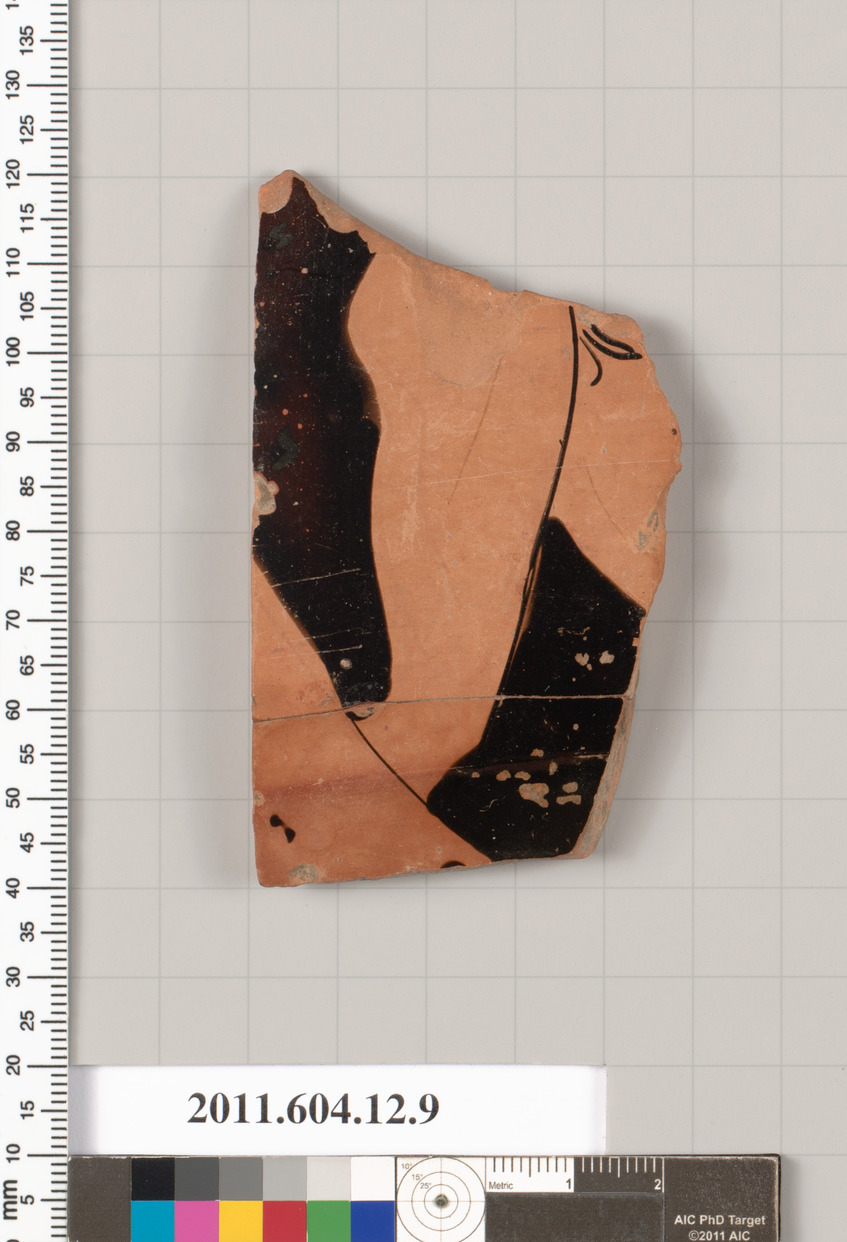
The Lauren Fashion Heritage Lab’s foundational genetic code establishes a profound dialogue between civilizations through the lens of the “sacred body.” It contrasts the externalized, contemplative divinity of a Buddhist Bodhisattva with the internalized, protective potency of an Egyptian amulet, revealing a universal human impulse to materialize the transcendent. To project this philosophical framework onto the sartorial lexicon of 2026’s “Old Money” silhouette—a concept denoting not mere wealth but inherited, understated authority and timelessness—we must identify an artifact that bridges the sacred and the social, the ritualistic and the refined. A terracotta fragment of an Apulian krater, a Greek vessel from South Italy, serves as this pivotal visual source. This fragment, far from being a mere shard, is a portal to understanding how ceremonial form, narrative space, and hierarchical composition can inform a modern ethos of dignified, grounded elegance.
The Krater: Vessel of Ritual and Social Cohesion
In its complete form, the Apulian krater was not a utilitarian object but a centerpiece of ritual and symposium. It was a vessel for mixing wine and water, an act imbued with social and religious significance. Its shape—a wide bowl on a stable foot—commanded presence. The terracotta fragment, likely depicting a scene from mythology or funerary practice, captures a frozen moment of narrative, where human and divine realms interact. This directly parallels the “Old Money” silhouette’s core function as a vessel of personal and social narrative. It is not clothing as loud proclamation, but as a container of heritage, a mixer of tradition and contemporary presence, much as the krater mixed wine. The silhouette itself becomes the stable, architectural form upon which a personal history is subtly inscribed.
From Painted Narrative to Structural Integrity
The artistic analysis of the krater fragment reveals three key principles that translate directly to 2026’s design philosophy:
1. The Grounded Hem and the Stable Foot: The krater’s operational integrity relied on its broad, firm foot. This translates sartorially into a silhouette built from the ground up, emphasizing exceptional tailoring, precise shoulder construction, and fabrics with inherent weight and drape. The 2026 Old Money silhouette rejects precariousness. It embraces midi or maxi lengths, A-line skirts that echo the krater’s gentle flare, and trousers with a clean, full break. The sense is one of immutable stability, of a form that is centered and self-assured, much like the vessel designed to anchor a ceremonial space.
2. The Frieze as a Horizontal Band of Significance: The painted decoration on the krater often ran in horizontal friezes around its body. This creates a structured field for narrative, separating the sacred story from the mundane. In tailoring, this manifests as a meticulous emphasis on horizontal balance: the precise line of a set-in sleeve cap, the clean break of a jacket over a skirt, the sharp edge of a lapel. Embellishment, if present, is contained within these “bands”—a row of subtle pinstripes, a delicate embroidery along a cuff or hem, echoing the contained, meaningful narrative of the ceramic frieze. The body is treated as an architectural form, with each horizontal division reinforcing dignity and order.
3. Terracotta’s Material Honesty and Heritage-Black: The material itself—fired clay, earthy and robust—is crucial. It speaks of authenticity, of a form derived from its substance. This champions fabrics with a palpable, honest texture: heavyweight wools, crisp linens, double-faced cashmere. The color palette is thus grounded in material truth, leading inevitably to the supremacy of Heritage-Black. This is not a stark, graphic black, but a deep, complex black reminiscent of aged terracotta in shadow—a black that absorbs light, holds depth, and conveys solemnity. It is the modern equivalent of the krater’s solemn hue, a color that serves as the perfect, neutral ground for the “narrative” of the wearer’s presence, just as the terracotta ground held the painted figures.
Transcending the Ornamental: The Silhouette as Sacred Vessel
Here, the dialogue with our internal genetic code deepens. The Bodhisattva statue externalized divinity for contemplation; the Egyptian amulet internalized power for protection. The Apulian krater fragment offers a third path: the social vessel that contains and facilitates a sacred or significant communal rite. The 2026 Old Money silhouette, informed by this artifact, aspires to this same role. It is not an ostentatious display (the amulet’s explicit symbolism) nor a purely ethereal ideal (the Bodhisattva’s transcendent form). Instead, it is a modern “vessel” for cultivated identity.
Its clean lines and reserved palette create a form that is both a protective shell (offering the wearer the “amuletic” defense of anonymity and authority) and a contemplative space (offering the “Bodhisattva-like” invitation to project qualities of wisdom and assurance). The silhouette itself becomes the sacred geometry. The drape of a Heritage-Black wool coat, the precise angle of a tuck, the volume of a sleeve—these are the contemporary equivalents of the krater’s elegant curves and painted narratives. They are silent, powerful communicators of a legacy that is both personal and inherited.
In conclusion, this terracotta fragment teaches us that true, enduring style is architectural, narrative, and grounded. It informs a 2026 Old Money silhouette that prioritizes structural integrity over fleeting ornament, horizontal balance over disruptive asymmetry, and the profound depth of Heritage-Black over transient color. It moves beyond fashion to propose clothing as a ceremonial form—a dignified, stable vessel designed to carry the weight of history and the grace of the individual through the symposium of modern life. In this silent dialogue between an ancient Greek artifact and a contemporary aesthetic, we find the enduring principle that the most powerful silhouettes are those that, like the krater, are built to contain worlds.