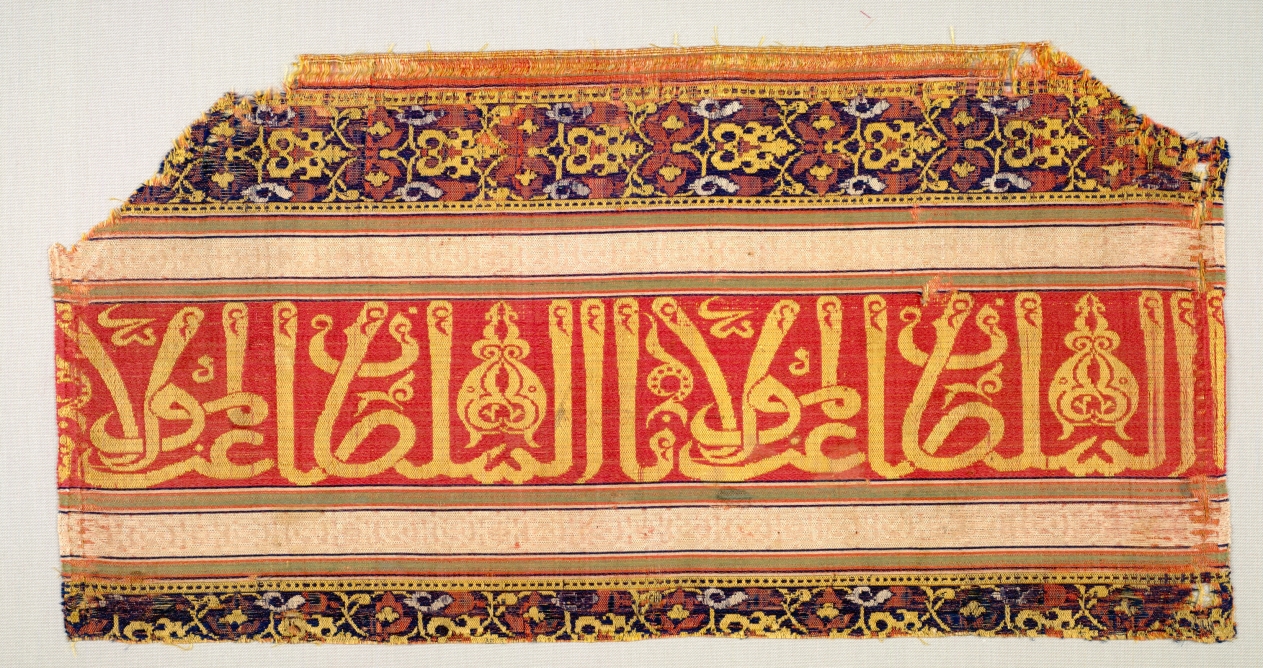
A Consideration of the Striped Silk Fragment: On Imperial Legacy and the Grammar of Cloth
One does not merely examine a fragment of striped silk; one deciphers it. It is a text, a dense paragraph of encoded history, technical ambition, and social order, rendered not in ink but in the very fibre of the silkworm’s labour. The specimen before us, a remnant of a garment now lost to time, presents itself with a quiet authority. Its stripes, precise as a regimental tie, speak of a discipline imposed upon the most luxurious of foundations. The materiality is, of course, paramount: pure Bombyx mori silk, its proteins arranged through processes both biological and mechanical to achieve a surface that captures and refracts light with a soft, inner luminosity. To understand this fragment is to engage with the formidable legacy of imperial silk weaving—a legacy not of mere production, but of administered splendour.
The Loom as an Instrument of State
Imperial silk weaving was never a cottage industry scaled up; it was, from its inception in the great workshops of Byzantium, China, and later the sanctioned ateliers of Lyon, an arm of statecraft. The loom became an instrument of policy. To control the production of silk was to control a currency of prestige, a visual language of power that communicated hierarchy across a throne room or a continent. The very existence of this striped fragment implies this vast, bureaucratic machinery. The consistency of the thread, the unwavering parallelism of the stripes, the perfection of the dye saturation—these are not accidents of artisanry. They are the expected outcomes of a system where master weavers operated under imperial charter, where designs were approved by court officials, and where the raw material itself was often a state-controlled monopoly. The stripe, in this context, is far from a simple motif. It is a manifestation of order, a deliberate break from the fluid, organic patterns of earlier periods, announcing the rational, administered aesthetic of the imperial age.
A Grammar of Distinction: Reading the Stripe
Let us consider the stripe itself. Its width, its spacing, its chromatic interplay—this is a grammar with specific rules. In the context of a garment, likely a gentleman’s waistcoat or a lady’s formal gown in the 18th or early 19th century, these stripes would have performed a precise social function. They denoted not flamboyance, but a calibrated taste. A stripe too broad might verge on the theatrical; too narrow, on the merely fussy. The choice of colours—subdued, likely a deep indigo or madder against an ivory ground, or perhaps a sombre combination of olive and gold—suggests a wearer of established position, one who communicates status through subtlety and quality of material rather than through ostentatious display. The silk accepts the dye with a depth and clarity that lesser fibres cannot achieve, the colour seeming to reside within the thread rather than sit upon it. This is the hallmark of imperial-grade dyeing protocols, another tightly held secret of the state-sanctioned workshops. The wearer, adorned in this cloth, was thus enveloped in a narrative of technological mastery and global trade—the silkworms of Asia, the dyes of the New World or the Indies, all convened under European imperial logic and worn upon the body.
The Patina of Use: From Loom to Legacy
Close inspection of the fragment reveals further narrative. There is a gentle patina, a softening of the yarn’s z-twist in specific areas, indicating where the garment flexed with the body’s movement—across the shoulders, perhaps, or at the elbow. This is where history becomes intimate. The imperial project, for all its scale, was ultimately worn by individuals. The silk, for all its symbolic weight, accommodated the human form. There may be the faintest evidence of meticulous alteration, a hint of a seam allowance taken in by a skilled hand. This speaks to the value of the cloth; the garment was adjusted, preserved, its life extended far beyond a single season’s fashion. It was an asset, a piece of portable capital. The very fact that it survived as a fragment suggests it was carefully cannibalised—a cuff repurposed, a panel saved—its material worth recognised long after the original garment’s style had passed.
Conclusion: The Enduring Thread
This striped silk fragment, then, is a nexus of intersecting histories. It is a testament to biological wonder (the silkworm), to human ingenuity (the draw-loom, the dye vat), to political power (the imperial monopoly), and to personal biography (the wearer who moved within it). The legacy of imperial silk weaving is precisely this: the imposition of a magnificent, standardised order upon a natural miracle, creating a language of cloth so potent that its fragments continue to speak. In our contemporary pursuit of luxury, where novelty is so often prized above nuance, this fragment instructs us. It reminds us that true distinction lies in depth of story, in integrity of material, and in the quiet, confident assertion of a grammar understood by those qualified to read it. The stripe endures not as a mere pattern, but as a lineage—a direct thread, one might say, from the imperial loom to the canons of enduring style. It is a legacy woven not just in silk, but in authority.