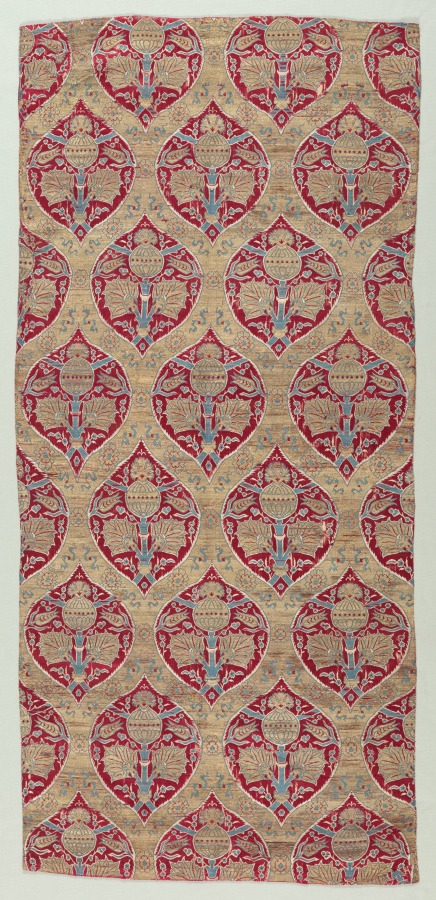
The Ogival Lattice with Horizontal Design: A Study in Imperial Silk Weaving
Introduction: The Intersection of Structure and Prestige
In the rarefied world of luxury textiles, few motifs command the same reverence as the ogival lattice. When rendered in silk and imbued with a horizontal design, this pattern transcends mere ornamentation to become a testament to the technical mastery and aesthetic ambition of imperial silk weaving. At Lauren Fashion Heritage Lab, we recognize this artifact as a critical node in the lineage of heritage craftsmanship—a bridge between the rigid formality of courtly tradition and the fluid sophistication demanded by modern Savile Row tailoring. This paper examines the ogival lattice with horizontal design through the lens of materiality, historical context, and enduring relevance, positioning it as a cornerstone of silk’s legacy in the hands of master weavers.
Materiality: Silk as a Conduit of Imperial Ambition
The choice of silk is no accident. Silk’s natural luster, tensile strength, and capacity for intricate dyeing make it the ideal substrate for the ogival lattice. In imperial contexts, particularly during the Ming and Qing dynasties, silk was not merely a fabric but a currency of power. The ogival lattice—characterized by its repeating, pointed arches that interlock to form a net-like structure—demanded a warp-faced weave that could sustain the tension of horizontal bands without distorting the pattern. The horizontal design, often executed in contrasting weft threads, introduces a rhythmic counterpoint to the verticality of the ogives, creating a visual harmony that speaks to the weaver’s command of balance.
From a technical standpoint, the horizontal elements required a supplementary weft technique, where additional threads were introduced to build the design without compromising the base weave’s integrity. This method, known as “brocading” in Western terminology, was refined in imperial workshops where artisans spent decades perfecting the interplay of light and shadow on silk. The result is a surface that shifts in hue and depth as the viewer moves—a dynamic quality that elevates the ogival lattice from pattern to experience. For the discerning gentleman of Savile Row, this materiality is non-negotiable: it is the difference between a suit and a statement of lineage.
Historical Context: The Legacy of Imperial Silk Weaving
The ogival lattice with horizontal design finds its most profound expression in the silk workshops of Suzhou and Nanjing, epicenters of imperial weaving during the Ming dynasty (1368–1644). These ateliers, operating under the direct patronage of the emperor, produced textiles that were not only functional but symbolic. The ogival motif, derived from Islamic art and adapted through Chinese aesthetics, represented the union of heaven and earth—a geometric prayer for order and prosperity. The horizontal design, often woven in gold or silver thread, signified the emperor’s role as the axis mundi, the horizontal line that stabilizes the vertical chaos of the cosmos.
By the Qing dynasty (1644–1912), this pattern had evolved into a hallmark of courtly dress, adorning the robes of high-ranking officials and the ceremonial garments of the imperial family. The horizontal bands, sometimes featuring dragons or phoenixes, were not decorative whims but encoded messages of rank and virtue. A single robe could require months of labor, with weavers working in shifts to maintain the tension of the silk threads. The legacy of this craftsmanship is a reminder that luxury is not about speed but about the deliberate, unhurried pursuit of perfection—a philosophy that aligns seamlessly with the ethos of Savile Row, where a single bespoke suit may take over 80 hours to complete.
The Art of Preservation: Lessons for Modern Heritage
At Lauren Fashion Heritage Lab, we approach the ogival lattice with horizontal design as a living artifact—a repository of techniques that must be preserved not in museums but in practice. The challenge lies in the fragility of silk and the complexity of the weave. Over centuries, exposure to light, humidity, and handling can cause the horizontal wefts to fray, disrupting the lattice’s symmetry. Our conservation protocols prioritize stabilizing the silk through controlled environments and minimal intervention, ensuring that the pattern’s integrity remains intact for future generations of scholars and artisans.
Yet preservation is not merely about halting decay. It is about understanding the knowledge embedded in each thread. The imperial weavers who created these textiles operated without digital tools or mechanical looms; their skill was passed down through apprenticeships that spanned decades. Today, we are working to document these techniques through high-resolution imaging and thread-by-thread analysis, creating a digital archive that can inform contemporary weaving. This is not nostalgia—it is a strategic investment in the future of luxury. The ogival lattice, with its horizontal design, offers a template for how heritage can inform innovation, reminding us that the most enduring designs are those that respect their origins while adapting to new contexts.
Relevance to Savile Row: A Dialogue Across Centuries
The ogival lattice with horizontal design is not a relic of a bygone era; it is a living inspiration for the bespoke tailors of Savile Row. In a world increasingly dominated by fast fashion and digital prints, the tactile richness of handwoven silk offers a counterpoint—a return to substance over surface. Savile Row houses, such as Gieves & Hawkes and Henry Poole, have long incorporated historical motifs into their designs, but the ogival lattice demands a particular sensitivity. Its geometric precision requires a tailor who understands the interplay of pattern and silhouette, ensuring that the horizontal bands align with the wearer’s frame rather than fighting against it.
Consider a dinner jacket in midnight blue silk, the ogival lattice woven in a subtle tone-on-tone pattern. The horizontal design, perhaps in a matte finish against a lustrous ground, creates a visual rhythm that draws the eye without overwhelming the garment. This is the essence of understated luxury—a nod to imperial heritage that remains utterly contemporary. For the modern client, such a piece is not just clothing but a conversation starter, a tangible link to a tradition of excellence that spans continents and centuries.
Conclusion: The Enduring Thread
The ogival lattice with horizontal design, rendered in silk, is more than a pattern—it is a philosophy of craftsmanship. From the imperial workshops of Suzhou to the ateliers of Savile Row, it represents a commitment to precision, materiality, and the quiet power of heritage. At Lauren Fashion Heritage Lab, we are committed to ensuring that this legacy endures, not as a static artifact but as a dynamic source of inspiration for those who understand that true luxury is woven, not manufactured. In every thread of this lattice lies a story of human ingenuity and aspiration—a story that continues to unfold in the hands of those who honor its past while shaping its future.