← BACK TO ARCHIVES
Heritage-Black
Heritage Synthesis: Terracotta fragment of a kylix (drinking cup)
Curated on Apr 24, 2026 // Node: LDN-01
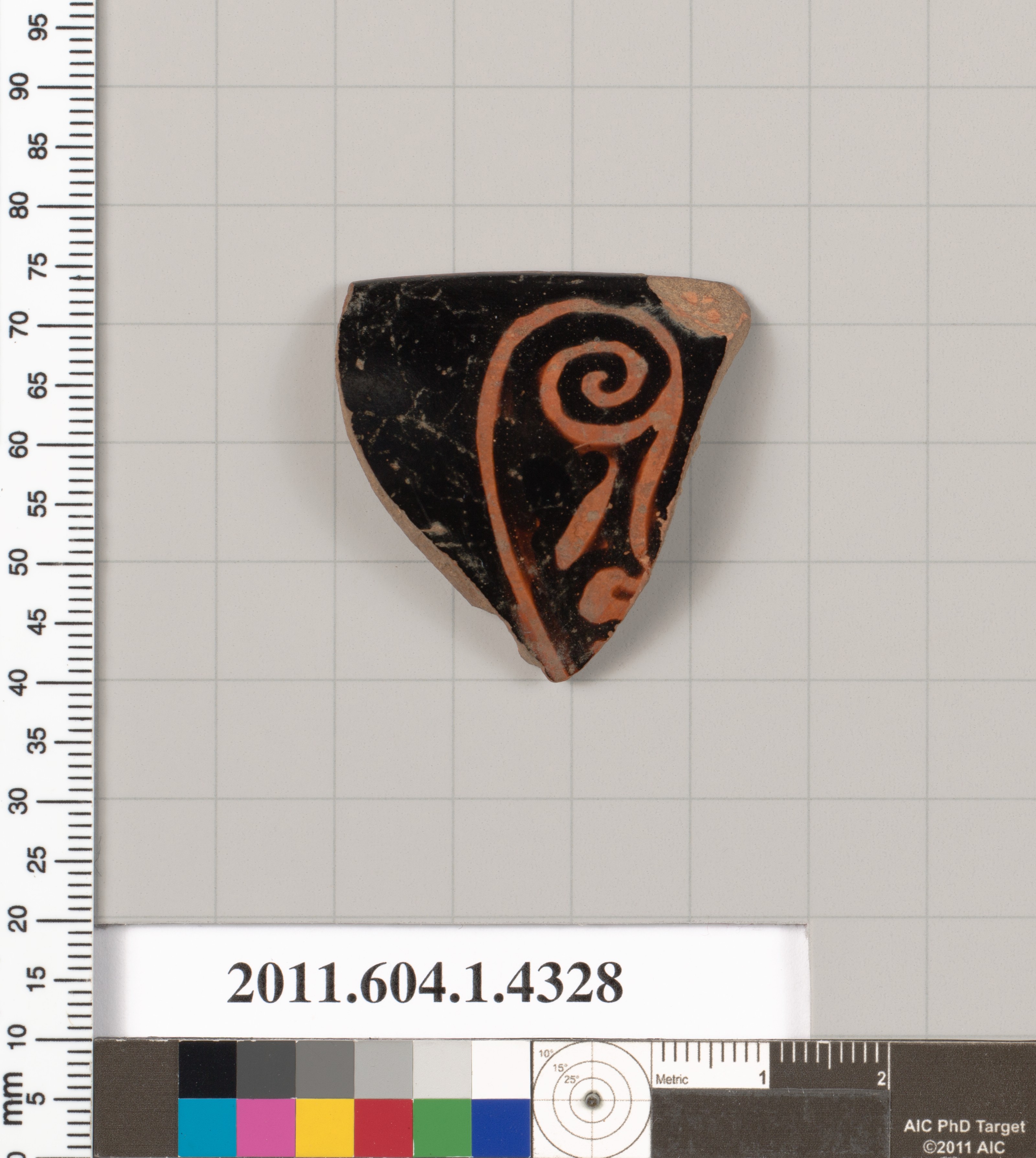
From Terracotta Fragment to Tailored Silhouette: The Greek Kylix as a Blueprint for 2026 Old Money Aesthetics
The Lauren Fashion Heritage Lab is tasked with a singular mission: to extract timeless principles from the global archive of material culture and translate them into the lexicon of modern luxury. The museum artifact under consideration—a terracotta fragment of a Greek Attic kylix (drinking cup)—appears, at first glance, to be a world removed from the silk-lined jackets and cashmere knits of the Old Money wardrobe. Yet, within this shard of fired clay, inscribed with the remnants of a symposium scene, lies a profound architectural logic that directly informs the silhouette strategies for the 2026 Old Money collection. This analysis will demonstrate how the kylix’s principles of *symmetria*, *periphery*, and *controlled volume* provide a formal counterpoint to the Eastern philosophy of “moving landscapes” and “still contemplation,” yielding a silhouette that is both grounded and transcendent.
The Kylix as Architectural Principle: Symmetria and the Controlled Volume
The kylix, a shallow, wide-mouthed drinking vessel with two horizontal handles, was the quintessential object of the Greek symposium—a ritual of social bonding, philosophical debate, and aesthetic pleasure. Its form is not arbitrary; it is a masterclass in functional geometry. The key to its design is the relationship between the broad, open *tondo* (the interior painting surface) and the stable, low-lying *stem* and *foot*. This is a study in controlled volume. The vessel expands outward, creating a generous interior space for the painted scene, yet it is anchored by a surprisingly compact base. The handles, set horizontally, do not disrupt the circular flow of the form but rather extend its perimeter, defining a boundary between the intimate interior and the external world.
For the 2026 Old Money silhouette, this translates into a fundamental shift away from the aggressive, body-hugging lines of contemporary fashion. Instead, we propose a “kylix shoulder”—a sculpted, slightly extended shoulder line in tailored jackets and coats. This is not the exaggerated power shoulder of the 1980s, but a subtle, architectural projection. The fabric (cashmere, wool, or a heavy silk) is cut to create a clean, horizontal line from the neck to the shoulder point, then falls in a controlled, vertical drop. This mimics the kylix’s rim, creating a “tondo” of the upper torso—a defined, framed space for the face and neck. The silhouette is generous but not bulky; it is a volume that is *measured* and *contained*. The jacket’s waist is then gently suppressed, not cinched, creating a subtle “stem” that anchors the volume above, just as the kylix’s foot anchors its bowl.
Periphery and the Art of the Gesture: The Handle as Silhouette Detail
The kylix’s handles are its most distinctive feature. They are not merely functional; they are a statement of peripheral design. In Greek pottery, the handles often echo the curves of the vessel’s body, creating a visual rhyme. They define the *gesture* of the object—how it is held, how it is seen, how it interacts with the hand. This concept of the periphery is critical for the 2026 Old Money collection. The modern luxury consumer does not seek ostentation; they seek *presence*. This presence is often expressed not in the central garment, but in the details that frame it.
We propose a “kylix handle” detail in sleeve and pocket construction. For a women’s blazer, the sleeve head might be cut with a slight, sculpted curve that extends just beyond the natural shoulder, then drops into a clean, straight arm. This creates a visual “handle”—a defined line that frames the arm’s movement. For men’s trousers, a similar principle can be applied to the side pocket. Instead of a simple slit, the pocket is cut as a distinct, horizontal panel that extends slightly beyond the hip, creating a subtle, architectural “handle” that defines the silhouette’s outer boundary. This is not about adding bulk; it is about *defining the edge*. The gesture of the hand in the pocket becomes a conscious, deliberate act, echoing the symposium gesture of holding the kylix by its handle.
The Tondo and the Still Point: Integrating the Eastern Gaze
The internal genetic code of the Lauren Fashion Heritage Lab, drawn from the Qing dynasty porcelain and the *Flowering Crab Apple* painting, emphasizes a dialectic between the macrocosmic “moving landscape” and the microcosmic “still contemplation.” The kylix offers a perfect synthesis. The *tondo*—the circular interior painting—is a space of intimate, narrative focus. It is a “still point” within the dynamic form of the vessel. The viewer’s gaze is drawn into this circle, where a scene of gods, heroes, or everyday life unfolds. This is the Greek equivalent of the Chinese “静观” (silent contemplation)—a focused, deep engagement with a finite space.
For the 2026 silhouette, this translates into the “tondo detail”—a circular, meditative element placed at a strategic point on the garment. This could be a circular, hand-embroidered motif on the back of a cashmere coat (a hidden, intimate detail), a circular cut-out at the nape of a silk blouse, or a circular, sculpted button on a tailored jacket. This is not a logo or a pattern; it is a *void* or a *point of focus*. It is a space where the eye can rest, where the mind can enter a state of “still contemplation” even within the dynamic silhouette of the kylix-inspired shoulder. The tondo detail becomes the “flowering crab apple” of the garment—a microcosm of life and attention within the macrocosm of the tailored form.
Heritage-Black as the Ground of Being
The chosen category for this artifact is Heritage-Black. This is not merely a color; it is a philosophical position. The terracotta fragment, fired in a kiln, is a product of earth and fire—a material that has been transformed but retains its essential, grounded nature. Heritage-Black, as a material concept, is the same. It is the black of deep soil, of ancient ink, of the void from which form emerges. In the 2026 collection, Heritage-Black will be the primary ground for these kylix-inspired silhouettes. It is the color that allows the architectural lines to speak without distraction. The black cashmere of the jacket becomes the “terracotta” of the garment—a humble, rich, and deeply resonant material that serves as the foundation for the sculpted shoulder, the kylix handle, and the tondo detail. It is the color of the symposium at dusk, the color of the wine in the cup, the color of the deep, silent space between the painted figures on the fragment.
Conclusion: The Enduring Dialogue
The terracotta fragment of the Greek kylix is not a relic of a dead past; it is a living blueprint for a future of refined, architectural luxury. By extracting its principles of *symmetria*, *periphery*, and the *tondo*, and by integrating them with the Eastern philosophy of “观物取象” (observing things to capture their essence), we arrive at a silhouette for 2026 that is both ancient and radically new. It is a silhouette that values volume over tightness, gesture over ornament, and contemplation over display. The Old Money aesthetic, in this iteration, is not about inherited wealth; it is about inherited *wisdom*—the wisdom of the potter, the painter, and the philosopher, all encoded in the cut of a sleeve and the weight of a fabric. The kylix, once a vessel for wine, becomes a vessel for a new kind of presence: quiet, grounded, and endlessly compelling.
Heritage Lab Insight
Genetic Bridge: Archive node focusing on Heritage-Black craftsmanship.