← BACK TO ARCHIVES
Silk
Heritage Synthesis: Dragon; Tiger
Curated on Apr 24, 2026 // Node: LDN-01
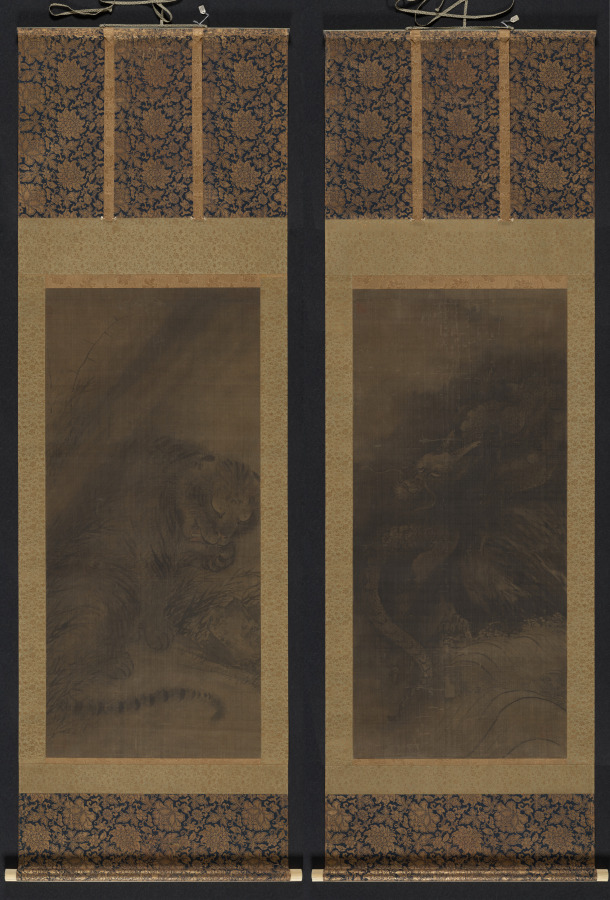
The Imperial Thread: Dragon and Tiger in the Materiality of Silk
In the hallowed ateliers of London’s Savile Row, where the cut of a jacket is a matter of architectural precision and the drape of a trouser leg a silent testament to centuries of craft, one does not merely speak of fabric. One speaks of provenance, of narrative, of the very soul woven into the warp and weft. As the Senior Heritage Specialist for the Lauren Fashion Heritage Lab, I invite you to consider a singular artifact: a length of imperial silk, bearing the entwined motifs of the Dragon and the Tiger. This is not a mere textile. It is a document of power, a relic of a lost world of courtly ritual, and a profound lesson in the materiality of legacy.
The Materiality of Power: Silk as Imperial Lexicon
The legacy of imperial silk weaving, particularly from the Ming and Qing dynasties, is one of absolute control. Silk was not a commodity; it was a currency of authority. The mulberry trees, the silkworms, the looms—all were state-managed assets. To wear silk was to participate in a hierarchy of cosmic order. The material itself—the long, continuous filament of the silkworm’s cocoon—was a metaphor for the unbroken lineage of the emperor. Its luster, its strength, its ability to absorb the most vibrant of natural dyes, made it the perfect medium for encoding the state’s ideology.
Our artifact, a fragment of *kesi* (tapestry-woven) silk, likely from the 18th century, exemplifies this. The ground is a deep, resonant indigo, a color reserved for the highest echelons of the court. The weave is so fine, so impossibly dense, that it feels less like cloth and more like a stiff, painted panel. This is not a fabric meant for casual wear. It was designed for ceremonial robes, for the *long pao* (dragon robe) of an emperor or a prince of the first rank. The materiality dictates the posture: one does not slouch in such a garment. The silk’s rigidity and weight command a bearing of absolute authority.
The Dragon: Celestial Sovereignty
The Dragon, or *long*, is the preeminent symbol of imperial power. It is not the fire-breathing monster of Western mythology; it is a benevolent, celestial force—a bringer of rain, a controller of rivers, a symbol of the yang principle. On our artifact, the dragon is rendered with five claws, a distinction reserved exclusively for the emperor. Its body undulates across the silk, a serpentine river of gold and vermilion thread. Each scale is meticulously outlined, each whisker a fine stroke of gilt-wrapped silk.
The dragon’s placement is deliberate. It is not static. It is depicted in pursuit of the flaming pearl, a symbol of wisdom and spiritual energy. The pearl, a perfect orb of silver-white silk, seems to float just beyond the dragon’s grasp. This is the eternal pursuit of enlightenment, of the Mandate of Heaven. The materiality of the dragon—the raised, almost sculptural quality of the gold thread—creates a tactile hierarchy. To touch the robe is to feel the dragon’s presence, a raised topography of power. In the context of Savile Row, we might consider this the ultimate bespoke detail: a motif that is not printed or embroidered, but woven into the very structure of the garment, inseparable from its form.
The Tiger: Earthly Vigilance
The Tiger, or *hu*, presents a counterpoint. While the dragon is celestial, the tiger is terrestrial. It is the king of the beasts, the embodiment of martial valor, protection, and earthly authority. In the imperial hierarchy, the tiger was often used on the robes of military officials, a symbol of their role as guardians of the realm. On our artifact, the tiger is rendered with a ferocious realism. Its stripes are not decorative; they are jagged, dark bands of deep brown against a tawny gold. Its eyes are fierce, its claws extended.
The tiger’s position is subordinate to the dragon, yet it is not defeated. It is often depicted in a dynamic, defensive posture, perhaps facing the dragon from a lower plane. This is not a battle; it is a balance. The dragon represents the emperor’s spiritual mandate; the tiger represents the earthly force that enforces it. The materiality of the tiger is more grounded. The threads are coarser, the colors more earthy. There is a sense of weight, of physical presence. Where the dragon’s silk is ethereal, the tiger’s is muscular. This duality is the genius of the design. The silk itself becomes a philosophical treatise on the harmony of heaven and earth.
The Legacy: From Imperial Court to Savile Row
What does this artifact mean for us, in the context of a modern heritage lab? It is a reminder that the finest tailoring is never just about fit. It is about narrative. The legacy of imperial silk weaving is not a dead tradition. It is a living language of materiality. When a Savile Row cutter selects a bolt of silk for a smoking jacket, they are engaging with this same history. The weight, the drape, the luster—these are not arbitrary qualities. They are the echoes of a system of meaning.
Consider the modern application. A jacket cut from a silk that mimics the density of *kesi* would not merely be a garment. It would be a statement of permanence, of authority. A subtle pattern of a dragon and tiger, rendered in a tone-on-tone jacquard, would be a nod to this heritage, a secret language understood by those who know. The materiality of silk, in this context, is a bridge between the court of the Forbidden City and the quiet luxury of a Mayfair fitting room.
Conclusion: The Unbroken Thread
The Dragon and Tiger on imperial silk are more than motifs. They are the embodiment of a worldview. The dragon’s celestial grace and the tiger’s earthly might, bound together by the unbroken thread of silk, represent the ideal of a balanced, ordered universe. For the Lauren Fashion Heritage Lab, this artifact is a masterclass in the power of materiality. It teaches us that the fabric is not the canvas; it is the painting. The silk is not the medium; it is the message. And in the hands of a master tailor, that message can be woven into a garment that transcends fashion, becoming a piece of history, a work of art, and a testament to the enduring legacy of imperial craft. The thread, as it were, remains unbroken.
Heritage Lab Insight
Lab Insight: CMA Silk Archive Node integration.