← BACK TO ARCHIVES
Heritage-Black
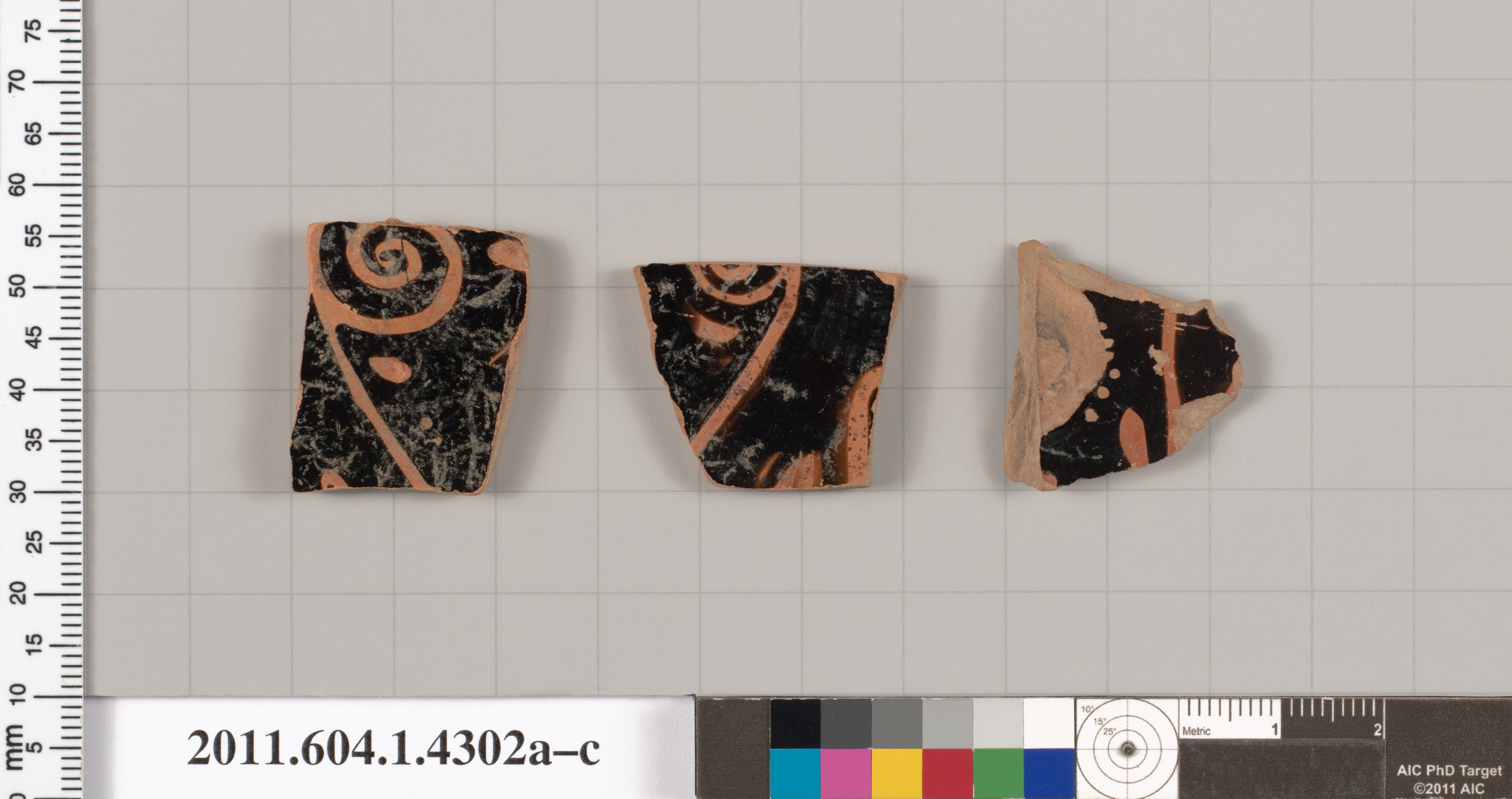
Heritage Synthesis: Terracotta fragments of kylikes (drinking cups)
Curated on Apr 24, 2026 // Node: LDN-01
The Terracotta Kylix and the Architecture of Restraint: Informing 2026 Old Money Silhouettes through the Vessel of Antiquity
The Lauren Fashion Heritage Lab’s internal genetic code posits a profound dialogue between the *Saint Philip Neri* portrait and the Shang dynasty ritual wine vessel, both conceived as “containers” of spirit and meaning. This framework, centered on the transcendent concept of the vessel—whether for divine grace or cosmic order—finds an unexpected yet illuminating parallel in the museum artifact under consideration: the terracotta fragments of Attic kylikes (drinking cups) from ancient Greece. These shards, remnants of symposiastic culture, are not mere functional objects; they are the material vestiges of a civilization that perfected the art of *measure*. For the 2026 Old Money silhouette, the kylix offers a masterclass in the aesthetics of containment, proportion, and the quiet power of negative space—a direct counterpoint to the era’s prevailing maximalism. This paper argues that the kylix’s formal principles—its balanced geometry, its emphasis on the rim and foot as structural anchors, and its celebration of the void within—provide a foundational grammar for a new sartorial architecture of understated luxury.
The Kylix as a System of Proportion: The Shoulder, the Rim, and the Foot
The Attic kylix, in its canonical form, is a study in resolved tension. Its shallow bowl, supported by a slender stem and a broad, flared foot, creates a visual equation of stability and levitation. The bowl is not a cavernous receptacle but a shallow dish, designed to hold a precise measure of wine. This restraint is critical. For the 2026 Old Money silhouette, this translates directly into the architecture of the jacket shoulder and the trouser hem. The kylix’s shoulder—the point where the bowl meets the stem—is not a dramatic drop but a clean, engineered transition. Similarly, the 2026 silhouette rejects the exaggerated, padded shoulder of the 1980s power suit in favor of a “kylix shoulder”: a natural, slightly extended line that provides structure without bulk, a quiet assertion of form. The “rim” of the kylix, often painted with a delicate black-figure band, becomes the lapel or the collar—a precise, unbroken line that frames the face and the torso. The “foot” of the kylix, broad and stable, informs the trouser hem: a clean, weighted finish that grounds the entire ensemble, preventing the silhouette from floating into the realm of the ephemeral.
The Void as Virtue: The Symposiastic Space and the Unseen
The kylix’s most profound lesson for the 2026 Old Money silhouette lies not in its form but in its emptiness. The vessel is defined by the space it contains—the *symposiastic void* where wine was once mixed with water, where philosophical discourse flowed, where the *kylix* itself became a conduit for social bonding. This is the aesthetic of the “container” as articulated in the internal code: the kylix is a *civilization vessel*, its emptiness a testament to the ritual of *measure*. In fashion, this translates to a radical embrace of negative space. The 2026 silhouette is not about covering the body but about *framing* it. A high-waisted, wide-leg trouser creates a void between the fabric and the leg; a deep V-neckline on a cashmere sweater creates a void at the décolletage; a single, unbuttoned cuff creates a void at the wrist. These are not absences but presences—deliberate, architectural pauses that allow the wearer’s own physicality to become the “spirit” contained within the garment. The kylix’s void is the space of *symposion*; the 2026 garment’s void is the space of *individuality*.
Materiality and Patina: The Terracotta Ethos of the 2026 Palette
The terracotta fragments themselves—their porous, earthen texture, their faded black-figure decoration, their chipped edges—offer a material philosophy for the 2026 Old Money wardrobe. Unlike the polished, high-gloss surfaces of contemporary luxury, the kylix shards speak of *patina*: the accumulation of time, use, and history. This is the “heritage-black” of the internal code, not as a color but as a condition. The 2026 silhouette will favor fabrics that *age* gracefully: a heavy, unlined wool that develops a soft drape over years; a linen that creases with the memory of a summer day; a cashmere that pills slightly, a sign of natural fiber, not defect. The terracotta’s warm, ochre tones—the color of fired earth—inform a palette of *grounded neutrals*: clay, rust, taupe, and a deep, matte black that absorbs light rather than reflecting it. This is the antithesis of the “new money” flash of metallic threads or synthetic sheen. It is the aesthetic of the *kylix* after the symposium: the cup is empty, but its form retains the memory of the wine.
The Kylix and the Shang Vessel: A Dialogue of Containment
The internal code’s juxtaposition of the Shang *wine vessel* and the *Saint Philip Neri* portrait finds a third term in the kylix. The Shang vessel is a *ritual container* for cosmic order, its surface a dense network of *taotie* and *kui* dragons that symbolize divine power. The kylix, by contrast, is a *social container* for human order, its surface often depicting scenes of *symposion* or athletic competition. The Shang vessel’s ornamentation is *inward-facing*, a code for the initiated; the kylix’s decoration is *outward-facing*, a celebration of civic life. For the 2026 Old Money silhouette, this suggests a *layered* approach to ornamentation. The garment’s “exterior”—the visible surface—may be as restrained as the kylix’s plain terracotta, but its “interior”—the lining, the stitching, the hidden details—can carry the symbolic density of the Shang vessel. A herringbone weave becomes a subtle *taotie*; a hand-stitched buttonhole becomes a ritual mark. The wearer knows; the world sees only the elegant void.
Conclusion: The Vessel as Silhouette
The terracotta kylix, in its fragmented state, is a perfect metaphor for the 2026 Old Money silhouette. It is not a complete, static object but a *fragment* of a larger whole—a suggestion of form, a memory of function. The 2026 silhouette must be *incomplete* in this sense: it must leave room for the wearer to complete it. The kylix’s shallow bowl, its slender stem, its broad foot—these are not arbitrary forms but the result of a civilization’s long meditation on *measure*. The 2026 Old Money silhouette, informed by this ancient vessel, will be a meditation on *restraint*: a shoulder that suggests strength without aggression, a trouser that suggests movement without chaos, a void that suggests presence without noise. The kylix is a vessel for wine; the 2026 garment is a vessel for the self. Both are most beautiful when they are empty, waiting to be filled by the spirit of the age.
Heritage Lab Insight
Genetic Bridge: Archive node focusing on Heritage-Black craftsmanship.