The Fragment as Archive: Deconstructing Materiality in a Silk Brocade Artifact
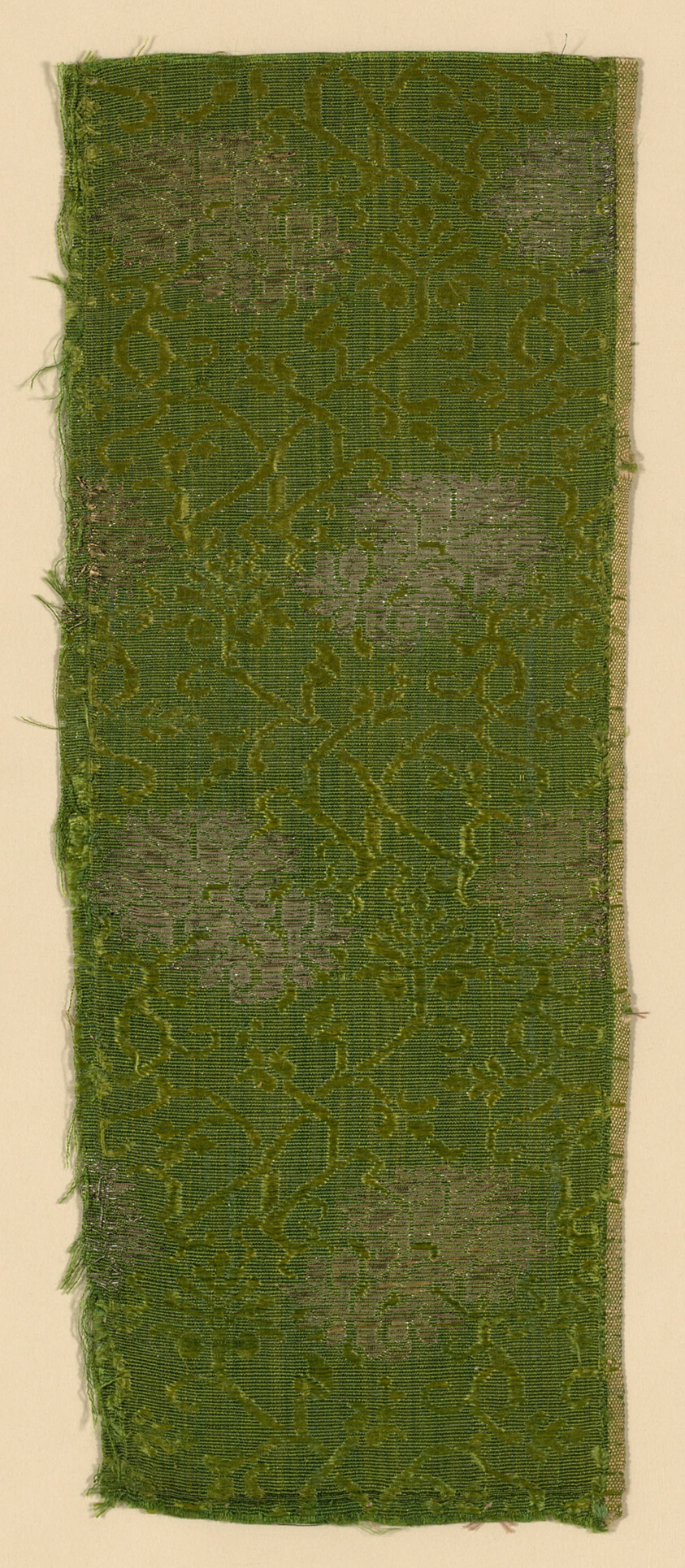
In the hallowed ateliers of London’s Savile Row, where tailoring is elevated to an art form, the smallest remnant often holds the most profound narrative. A fragment—a mere swatch of fabric, measuring perhaps no more than a hand’s span—can serve as a concentrated archive of technique, taste, and temporal context. The artifact under examination here is a textile fragment composed of silk, silver gilt strips, and silver gilt strips wound around a silk fiber core, executed in a plain weave with supplementary patterning and supplementary brocading wefts. This is not merely a decorative scrap; it is a testament to the pinnacle of classic silk craftsmanship and the fluid elegance that defined the most sophisticated dress of a bygone era.
Materiality as a Lexicon of Luxury
The material composition of this fragment is a lexicon of luxury, each element chosen for its ability to capture and reflect light, thereby animating the wearer. The silk ground, a plain weave of exceptional fineness, provides a matte, fluid base. Silk, derived from the cocoon of the Bombyx mori silkworm, has been the gold standard of textile luxury for millennia, prized for its tensile strength, natural luster, and remarkable drape. In this context, the plain weave structure—the simplest and most fundamental of interlacings—serves a deliberate purpose: it creates a stable, unadorned canvas that does not compete with the opulent supplementary elements. The silk’s inherent fluidity allows the fabric to fall in soft, sculptural folds, a quality that would have been essential for garments requiring movement, such as evening gowns, court mantles, or ecclesiastical vestments.
The inclusion of silver gilt strips elevates the artifact from the merely luxurious to the truly regal. Silver gilt, or vermeil, involves a thin layer of gold applied to a silver substrate. This technique was historically employed to achieve the visual opulence of pure gold at a reduced material cost, while also benefiting from silver’s superior malleability. These strips, cut with extraordinary precision, were likely produced by hammering the metal into a foil and then slicing it into narrow filaments. Their presence introduces a metallic, reflective quality that catches ambient light, creating a shimmering, almost liquid effect against the silk ground. However, the most sophisticated application of metal in this fragment is the silver gilt strips wound around a silk fiber core. This composite thread, known as “filé” or “passing,” represents a pinnacle of textile engineering. By wrapping the metal strip around a silk core, the thread gains the flexibility necessary for weaving while retaining the metallic sheen. The silk core prevents the metal from kinking or breaking under the tension of the loom, allowing for intricate patterning without compromising the fabric’s structural integrity. This technique, perfected in the great weaving centers of Lyon and Venice during the 17th and 18th centuries, demonstrates a profound understanding of material behavior.
Structural Complexity: Plain Weave and Supplementary Brocading
The weave structure of this fragment is deceptively complex. The plain weave ground, with its simple over-one-under-one interlacing, provides a disciplined foundation. It is the supplementary patterning and supplementary brocading wefts that introduce the artifact’s ornamental richness. Supplementary wefts are additional threads that are not integral to the ground weave; they float across the surface to create pattern, often bound down by the ground warp at regular intervals. In this fragment, the supplementary wefts are the silver gilt strips and the filé threads. The term “brocading” specifically refers to a technique where these supplementary wefts are inserted only in areas where the pattern requires them, rather than across the entire width of the fabric. This “brocading” approach is a hallmark of high-end craftsmanship, as it conserves precious materials—silver and gold—and allows for a more sculptural, three-dimensional effect. The pattern itself, though only partially preserved in this fragment, likely featured stylized floral motifs, arabesques, or geometric interlaces, typical of classic silk design from the Baroque or Rococo periods. The interplay between the matte silk ground and the lustrous, raised metallic brocading creates a dynamic visual texture, a dialogue between restraint and exuberance.
Fluid Elegance and Craftsmanship in Context
This fragment is not an isolated curiosity; it is a physical record of a specific moment in the history of dress and textile production. The use of silver gilt and filé threads places it within a tradition of “cloth of silver” and “cloth of gold,” fabrics that were historically reserved for royalty, the clergy, and the highest echelons of the aristocracy. In the context of Savile Row, where bespoke tailoring is synonymous with precision and heritage, such a fabric would have been sourced from specialized weavers—perhaps from the silk mills of Spitalfields in London or the grand fabriques of Lyon. The fluid elegance of the silk, combined with the structured opulence of the metal threads, suggests a garment designed for formal occasions: a court dress, a ceremonial robe, or a sumptuous evening ensemble. The fragment’s survival is itself a story; it may have been cut from a larger garment for repair, repurposing, or as a sample for a client’s approval.
The craftsmanship evident in this artifact is a testament to the collaborative artistry of the weaver, the dyer, and the metalworker. The precision required to weave such fine metal threads without breakage, the skill to create intricate brocaded patterns without distorting the ground weave, and the knowledge of how to balance the weight of the metal with the fluidity of the silk—all speak to a level of expertise that is increasingly rare in the modern era of mass production. For the contemporary designer or heritage specialist, this fragment offers a tangible link to the past, a source of inspiration for color, texture, and technique. It reminds us that true luxury is not merely about expense, but about the mastery of material and the pursuit of an ideal of beauty that transcends time.
Conclusion: The Fragment as a Living Document
In the rarefied world of Savile Row, where every stitch is a statement, this silk fragment stands as a living document. It is a microcosm of the technical innovation, aesthetic ambition, and material reverence that defined classic silk craftsmanship. The interplay of silk, silver gilt, and filé threads, rendered through plain weave and supplementary brocading, captures a moment of fluid elegance that continues to inform our understanding of heritage and luxury. As we study this fragment, we are not merely examining a piece of cloth; we are decoding a language of artistry, one that speaks of the enduring human desire to adorn, to celebrate, and to create objects of transcendent beauty.