The Dialectics of Presence and Absence: Terracotta Fragments and the Architecture of Old Money Silence
Introduction: The Fragment as a Philosophical Artifact
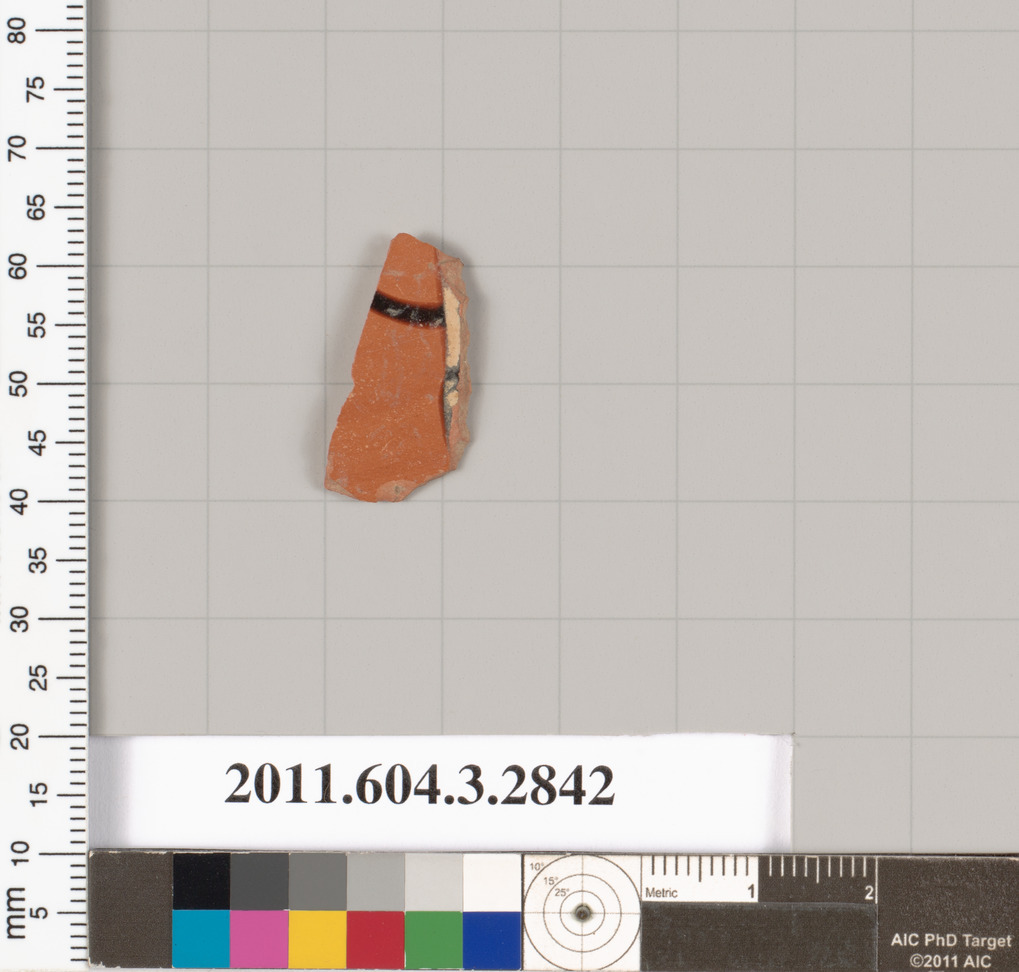
The terracotta fragment of a closed Greek Attic shape—a shard of what was once a vessel for oil, wine, or ritual offering—arrives in the Lauren Fashion Heritage Lab not as an archaeological curiosity, but as a philosophical cipher. Its broken edges, its faded slip, its stubborn refusal to reveal the whole from which it was torn, constitute a visual paradox that resonates deeply with the internal genetic code of the House: the dialectic between the violent immediacy of Western presence and the contemplative void of Eastern absence. This fragment, like the Hunting fresco and the Udumbara Temple Plaque, forces a confrontation with existence itself. For the 2026 Old Money silhouette, this confrontation demands a radical rethinking of surface, structure, and silence.
From the Kill to the Shard: Translating Violence into Texture
The Attic fragment is a record of a completed act—a potter’s wheel, a kiln’s fire, a user’s hand—but its meaning is now defined by its incompleteness. It is the aftermath of a break, a fall, a collision. In this, it mirrors the Hunting scene’s frozen moment of the kill: the arrow piercing the deer, the taut bowstring, the dust suspended in air. Both are artifacts of a critical instant, a point of no return. Yet where the fresco celebrates the muscular energy of the chase, the terracotta fragment mourns the vessel’s lost wholeness. The 2026 Old Money silhouette must embody this duality. It cannot be merely the triumphant, athletic form of the hunter; it must also carry the fragmented memory of what has been broken.
Practically, this translates into a silhouette that is deliberately incomplete. A tailored jacket whose shoulder seam is left raw, not as a deconstructionist gimmick, but as a philosophical statement: the garment acknowledges its own history of construction and potential destruction. The lapel is cut with a sharp, almost surgical precision—the hunter’s blade—but the interior lining is left exposed at the hem, a terracotta-colored silk that suggests the interior of a broken pot. The fabric itself, a Heritage-Black wool woven with a subtle, irregular rib, mimics the striations of fired clay. The color is not a flat black; it is a black that has been fired, a black that carries the memory of the kiln’s oxygen-starved atmosphere. This is not the black of mourning, but the black of existential density.
The Void as Structure: Embodying the Udumbara Principle
If the terracotta fragment speaks to the aftermath of violence, the Udumbara Temple Plaque speaks to the anticipation of a void. The plaque’s beauty lies in its absence: the flower that never blooms, the truth that cannot be fully inscribed. The fragment, too, is defined by what is missing. Its shape is a negative space, a silhouette of a former container. The 2026 Old Money silhouette must therefore be constructed not around the body’s presence, but around its absence. The garment becomes a negative mold—a shell that suggests the form it once held, but is now empty.
This is achieved through a radical rethinking of volume. The silhouette is expansive yet hollow. A long, single-breasted overcoat in the same Heritage-Black wool is cut with a generous back—a cape-like drape that falls from the shoulders without clinging to the spine. The front is severe, almost monastic, with a high closure that conceals the neck. The sleeves are wide, but the cuffs are narrow, creating a funnel effect that draws the eye inward, toward the empty space between fabric and body. This is the architecture of the plaque: a frame that points to the void it surrounds. The coat’s interior is lined with a raw silk in a shade of faded terracotta, a color that has been aged, washed, and exposed to light until it is almost a memory of itself. This lining is the Udumbara flower—the promise of color that never fully manifests, visible only in a fleeting glimpse when the coat is opened.
The Silhouette as a Dialectical Object
The 2026 Old Money silhouette is not a single garment; it is a system of tensions. The terracotta fragment teaches us that the most powerful forms are those that acknowledge their own fragility. The Hunting fresco teaches us that the moment of greatest energy is also the moment of greatest loss. The Udumbara Plaque teaches us that the most profound beauty is the beauty of the unattainable. The silhouette must hold all three truths simultaneously.
The trousers are cut with a wide, straight leg that falls to the floor, breaking slightly over the shoe. The waist is high, cinched with a leather belt whose buckle is a simple, oxidized brass disc—a nod to the Greek kylix, the drinking cup whose fragments we study. The belt is not a statement; it is a hinge, a point of articulation between the upper and lower body. The jacket is cropped, ending just above the hip, leaving a gap of bare shirt or skin. This gap is the void—the space between the hunter’s arrow and the deer’s heart, the space between the plaque’s inscription and the flower’s bloom. It is the critical interval where meaning resides.
The footwear is a lace-up boot in matte black calfskin, with a sole that is slightly thicker than expected—a terracotta platform that elevates the wearer without ostentation. The sole is not hidden; it is visible, a fragment of a foundation that grounds the entire silhouette in the earth from which the Attic clay was dug.
Conclusion: The Heritage of Silence
The Old Money aesthetic has long been associated with quiet luxury—the absence of logos, the preference for quality over quantity, the understated confidence of inherited wealth. But the 2026 iteration, informed by this terracotta fragment and the philosophical dialectic it represents, pushes beyond quiet into silence. This is not the silence of emptiness, but the silence of fullness held in reserve. It is the silence of the temple plaque before the flower, the silence of the hunter after the kill, the silence of the broken pot whose shards still hold the memory of wine.
The Heritage-Black wool, the terracotta lining, the raw edges, the hollow volumes—these are not design choices. They are philosophical positions. They declare that the wearer understands that presence is defined by absence, that strength is defined by the ability to hold a void, and that the most enduring legacy is the one that acknowledges its own fragility. In a world of relentless visual noise, the 2026 Old Money silhouette is a fragment of silence—a broken vessel that still holds the shape of meaning.