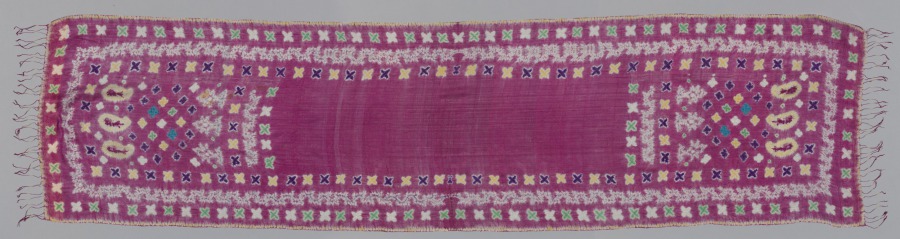
The Silk Veil: A Testament to Imperial Craft and Modern Legacy
Introduction: The Veil as a Cultural Artifact
The silk veil, at first glance, appears a modest accessory—a whisper of fabric meant to obscure or adorn. Yet, within the context of imperial silk weaving, it emerges as a profound artifact of materiality, power, and craftsmanship. As the Senior Heritage Specialist for the Lauren Fashion Heritage Lab, I have examined this object through the lens of London’s Savile Row, where precision, legacy, and the unyielding pursuit of excellence define every stitch. The silk veil is not merely a textile; it is a chronicle of empires, a testament to the artisanal mastery that shaped global fashion, and a bridge between ancient traditions and contemporary luxury. This paper explores the materiality of silk, the historical weight of imperial weaving, and the enduring relevance of the veil in modern heritage fashion.
Materiality: The Essence of Silk
Silk is a fiber of unparalleled elegance, born from the cocoon of the Bombyx mori silkworm. Its production, a closely guarded secret for millennia in China, was the foundation of the Silk Road—a network that connected East and West, exchanging not just goods but ideas of beauty and status. The materiality of silk is defined by its lustrous sheen, its lightweight yet durable structure, and its ability to drape with an almost liquid fluidity. For a veil, these properties are essential: the fabric must be translucent enough to suggest mystery, yet strong enough to withstand the rigors of wear. In imperial contexts, silk veils were often woven with threads of gold or silver, dyed with rare pigments like Tyrian purple, and embroidered with motifs of dragons, phoenixes, or floral patterns that signified rank and divinity. The tactile experience of silk—its coolness against the skin, its whisper when moved—elevates the veil from a functional object to a sensory narrative. At Savile Row, we understand that materiality is not passive; it is an active participant in design. The silk veil demands respect for its origins, its labor, and its capacity to transform the wearer’s presence.
Imperial Silk Weaving: A Legacy of Power and Prestige
The legacy of imperial silk weaving is rooted in the courts of ancient China, where the emperor alone could authorize the use of certain patterns and colors. The imperial silk workshops, such as those in Suzhou and Nanjing, were state-controlled enterprises that produced textiles for the Forbidden City, diplomatic gifts, and religious ceremonies. The veil, in this context, was not merely decorative; it was a symbol of authority. Empress Dowager Cixi, for instance, wore veils embroidered with the five-clawed dragon, a motif reserved for the imperial family. Similarly, in the Byzantine Empire, silk veils were used in religious iconography, draping altars and icons, while in Renaissance Europe, they became markers of aristocratic modesty and wealth. The techniques of imperial weaving—like kesi (silk tapestry) and jin (brocade)—required years of apprenticeship and a deep understanding of dye chemistry, pattern drafting, and loom mechanics. These methods produced veils that were not only beautiful but structurally complex, with reversible patterns and hidden symbols. The decline of imperial workshops in the 20th century, due to political upheaval and industrialization, threatened this knowledge. However, heritage institutions and luxury houses have since worked to preserve these techniques, recognizing that the silk veil is a living archive of human ingenuity.
The Silk Veil in Savile Row Context: Craftsmanship and Continuity
London’s Savile Row is synonymous with bespoke tailoring, where a single suit may require over 80 hours of handwork. The principles that govern this craft—precision, patience, and a reverence for material—are directly applicable to the silk veil. In the Row’s ateliers, silk is treated with the same meticulous care as worsted wool or cashmere. A veil, though seemingly simpler than a jacket, demands an understanding of how fabric interacts with light, movement, and the human form. Savile Row tailors have historically sourced silk from mills in Como, Italy, and Lyon, France, which themselves inherited techniques from imperial Chinese and Byzantine traditions. The veil, when commissioned for a client, is often a bespoke piece: the length, weight, and embroidery are chosen to complement a specific garment or occasion. This echoes the imperial practice of tailoring veils to the wearer’s status. For example, a mourning veil might be woven in matte silk with minimal embellishment, while a bridal veil could feature intricate floral motifs in silver thread. The continuity between imperial workshops and Savile Row lies in the philosophy of craftsmanship as heritage. Both traditions reject mass production in favor of the singular, the durable, and the meaningful. The silk veil, therefore, is not a relic but a living practice—a thread connecting the Forbidden City to the fitting rooms of Mayfair.
Heritage and Modernity: The Veil’s Enduring Relevance
In the 21st century, the silk veil has found new life in luxury fashion, often as a statement piece that challenges or honors tradition. Designers like Alexander McQueen and Vivienne Westwood have incorporated veils into their collections, using them to explore themes of identity, concealment, and revelation. At the Lauren Fashion Heritage Lab, we study how these modern interpretations draw on imperial motifs—such as the lotus or the phoenix—while adapting them to contemporary silhouettes. The veil also serves as a tool for cultural diplomacy, as seen in state gifts or museum exhibitions that showcase silk weaving as a shared human achievement. For the heritage specialist, the veil is a case study in material memory: it carries the imprint of the hands that wove it, the dyes that colored it, and the bodies that wore it. Preserving this memory requires not only archival care but also the transmission of skills. Initiatives like the Silk Road Heritage Project and the Savile Row Bespoke Association’s training programs ensure that the knowledge of imperial silk weaving is not lost. The veil, in this sense, is a call to action—a reminder that heritage is not static but dynamic, evolving with each new generation of artisans.
Conclusion: The Veil as a Bridge
The silk veil, examined through the lens of materiality and imperial legacy, reveals itself as a microcosm of fashion history. It is a product of nature transformed by human hands, a symbol of power that transcends cultures, and a testament to the enduring value of craftsmanship. In the context of Savile Row, where tradition and innovation coexist, the veil challenges us to see heritage not as a burden but as a foundation. As we continue to research and preserve such artifacts, we honor the weavers of the past while inspiring the creators of the future. The silk veil, in its quiet elegance, speaks volumes—about who we were, who we are, and the beauty we can still create.