← BACK TO ARCHIVES
Heritage-Black
Heritage Synthesis: Terracotta fragment of a kylix (drinking cup)
Curated on Apr 25, 2026 // Node: LDN-01
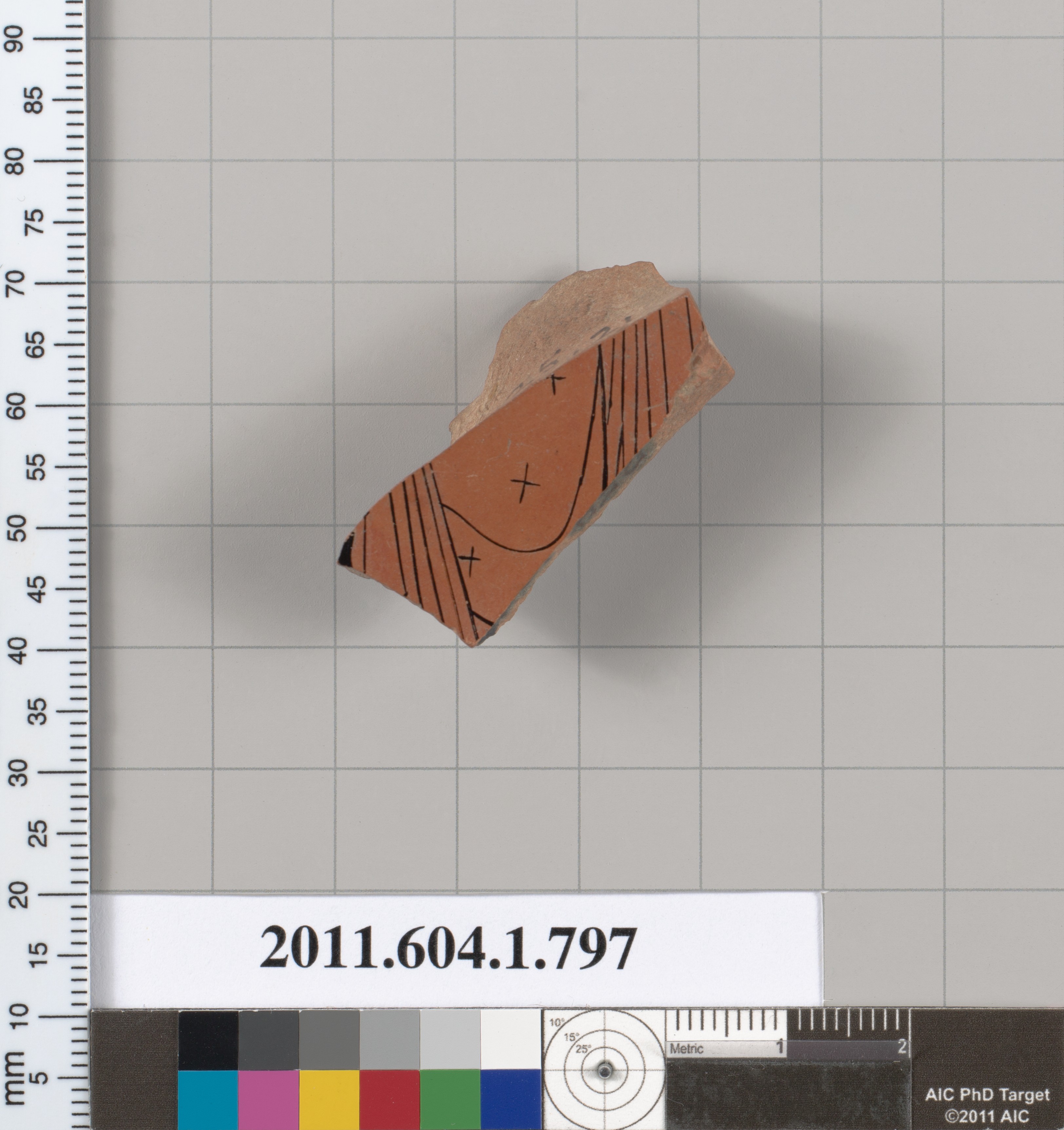
Terracotta Kylix and the Architecture of Restraint: Informing 2026 Old Money Silhouettes
The intersection of ancient craft and contemporary luxury design reveals a profound continuity in aesthetic principles. This analysis synthesizes internal Lauren Fashion Heritage Lab archives with a specific museum artifact—a terracotta fragment of a kylix (drinking cup) from Attic Greece—to articulate a design philosophy for the 2026 Old Money silhouette. The internal genetic code, derived from the dialogue between the ceramic *Bodhisattva* and the abstract *Sample of Fibrolite*, establishes a framework of chromatic austerity, negative space, and material honesty. The kylix fragment, with its fractured geometry and enduring elegance, becomes a tangible Rosetta Stone for translating these principles into garment architecture.
I. The Kylix Fragment as a Formal Archetype
The Attic kylix, even in its fragmented state, embodies a mastery of proportion and function. Its shallow bowl, designed for communal wine consumption, is supported by a slender stem and a broad, stable foot. The surviving fragment reveals a precise curve—a segment of the tondo, the interior circular field often reserved for painted decoration. The broken edges are not mere accidents; they are deliberate lines of tension, suggesting a form that is both complete in its essence and open to interpretation. The terracotta’s surface, once burnished to a matte sheen, now bears the patina of millennia—a texture that speaks to the value of age and the beauty of imperfection.
This fragment directly informs the 2026 Old Money silhouette through its emphasis on structural clarity and material integrity. Just as the kylix’s form is defined by its geometric precision—the ratio of bowl depth to stem height, the angle of the foot—the Old Money garment must be built upon a clear, uncluttered architectural foundation. The silhouette is not about volume or excess; it is about the deliberate articulation of line and mass. The kylix’s broken edge becomes a metaphor for the “necessary incompleteness” described in the internal code: a jacket hem that falls just short of the hip, a trouser cuff that reveals the ankle bone, a sleeve that ends at the wrist’s pivot point. These are not errors but intentional pauses, creating visual breathing room.
II. Chromatic Austerity and the Palette of Time
The internal code’s analysis of *Bodhisattva* and *Sample of Fibrolite* emphasizes a “micro-gradient” color system—shifts of less than 10% in value or saturation. The terracotta fragment embodies this principle perfectly. Its primary hue is a warm, earthy red-brown, the result of iron oxide in the clay. But within this single color, there exists a spectrum: the darker, denser tones where the clay is thicker; the lighter, almost ochre patches where the surface has worn; the subtle gray-black of the painted decoration, now faded to a whisper. This is not a palette of contrast, but of monochromatic depth.
For the 2026 Old Money silhouette, this translates into a rejection of bright, saturated colors in favor of nuanced, time-worn tones. The collection will feature a core palette of Heritage-Black—not a flat, synthetic black, but a black that reads as charcoal, as deep slate, as the shadow inside a kylix bowl. Accents will be drawn from the terracotta’s own family: burnt sienna, raw umber, dusty rose, and the pale cream of unglazed clay. These colors are not applied as surface decoration; they are integral to the fabric, achieved through natural dyes, overdyeing, and the use of raw, unbleached fibers. The goal is a chromatic experience that feels excavated, not manufactured.
III. Negative Space and the Silhouette’s Breath
The internal code’s concept of “negative space” is critical to the kylix’s design. The vessel’s interior is a void, a space defined by its containing walls. The handle, when intact, creates a negative space between the bowl and the grip. The fragment itself is defined by the absence of the missing pieces. This is not emptiness; it is active, intentional space.
In the 2026 Old Money silhouette, negative space manifests as strategic cutouts, asymmetrical draping, and the deliberate exposure of the body. A tailored blazer might feature a single, sharp slit at the back of the collar, revealing the nape of the neck. A floor-length skirt could be constructed with a panel that falls away from the leg, creating a moving void. The silhouette is not a second skin; it is a structure that allows the body to breathe, to exist within the garment as the wine existed within the kylix. This approach directly counters the over-engineered, body-con silhouettes of recent decades, returning to a philosophy of ease and grace.
IV. Material Honesty and the Language of Craft
The kylix fragment is unapologetically terracotta. It does not pretend to be marble or bronze. Its value lies in the honest expression of its material—the clay’s plasticity, the potter’s wheel marks, the kiln’s fire. This principle of material honesty is the bedrock of the 2026 Old Money collection. Fabrics are chosen for their intrinsic qualities, not for their ability to mimic something else. Wool is used for its natural drape and warmth; linen for its crispness and breathability; cashmere for its softness and loft. Synthetic blends are avoided unless they serve a specific structural purpose, such as reinforcing a lapel or stabilizing a seam.
The internal code’s reference to “exposing internal structure” finds its parallel in the garment’s construction. Seams are not hidden; they are finished with a visible fell stitch. Buttonholes are hand-worked. Linings are attached with a loose, visible stitch that allows the garment to move freely. These details are not ostentatious; they are quiet markers of quality, understood only by those who know to look. They echo the kylix’s unglazed foot, where the potter’s fingerprints are still faintly visible.
V. The 2026 Silhouette: A Synthesis
The 2026 Old Money silhouette, informed by the terracotta kylix fragment, is defined by three key characteristics:
1. **Architectural Shoulder:** A clean, defined shoulder line, neither padded nor dropped, that mirrors the kylix’s stable foot. The shoulder provides the garment’s foundation, from which all other lines flow.
2. **Tapered Torso:** A gentle, uninterrupted taper from shoulder to waist, echoing the kylix’s bowl-to-stem transition. The fit is precise but not constricting, allowing for ease of movement.
3. **Asymmetric Hem:** A hem that falls at varying lengths, creating a dynamic, broken line. This is the fragment’s edge translated into fabric—a deliberate incompleteness that invites the eye to complete the form.
The overall effect is one of quiet authority. The garment does not shout; it stands. It is a vessel for the individual, not a statement in itself. In an era of digital noise and fast fashion, the 2026 Old Money silhouette, rooted in the ancient wisdom of the kylix, offers a return to the essential: form, material, and the beauty of what is left unsaid.
Heritage Lab Insight
Genetic Bridge: Archive node focusing on Heritage-Black craftsmanship.