← BACK TO ARCHIVES
Silk
Heritage Synthesis: Fragment
Curated on Apr 25, 2026 // Node: LDN-01
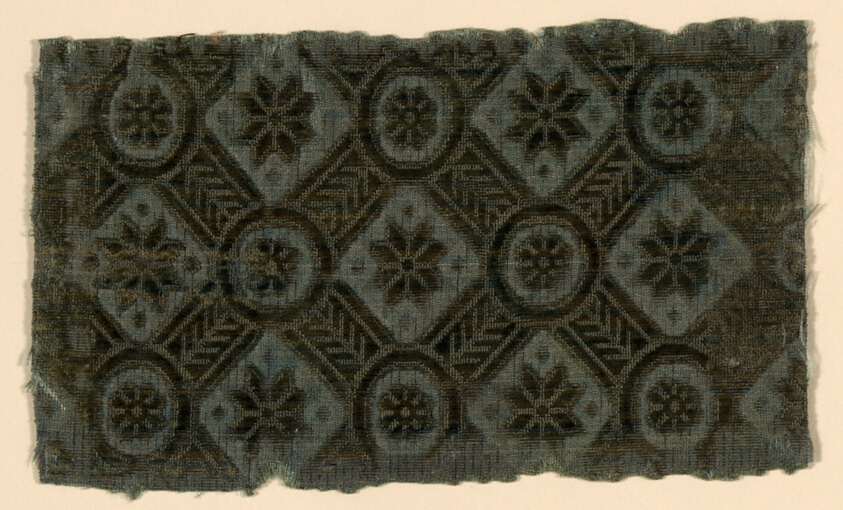
The Fragment as a Testament: Deconstructing Materiality and Legacy in a Voided Velvet
In the hushed ateliers of London’s Savile Row, where bespoke tailoring is a sacred rite, the fragment is not a remnant of failure but a profound artifact of heritage. It is a whisper of a garment’s past, a tangible link to the meticulous hands that wove its narrative. As the Senior Heritage Specialist for Lauren Fashion Heritage Lab, I present this scholarly artifact—a fragment of silk and gilt-metal strips, executed in a plain weave with supplementary facing wefts and supplementary pile warps, forming a cut and uncut voided velvet. This piece, dating from the late 19th century, embodies the pinnacle of classic silk craftsmanship and fluid elegance, offering a microcosm of the technical mastery and aesthetic philosophy that define our industry.
Materiality: The Alchemy of Silk and Metal
The fragment’s material composition is a study in deliberate luxury. Silk, the foundation of this weave, is a protein fiber derived from the cocoon of the silkworm, *Bombyx mori*. Its natural luster, tensile strength, and ability to absorb dye with unparalleled depth have rendered it the preferred medium for high-status textiles since antiquity. In this fragment, the silk is not merely a substrate; it is an active participant in the visual and tactile experience. The plain weave structure—a simple over-one, under-one interlacing—provides a stable ground, a canvas upon which the more complex elements are layered.
The inclusion of gilt-metal strips elevates this textile from the merely luxurious to the opulent. These strips, typically composed of a silver or copper core gilded with gold, are flattened and wound around a silk core to create a thread that is both structurally robust and visually resplendent. When woven into the fabric, they catch and reflect light, creating a shimmering, almost liquid effect. This is not a mere embellishment; it is a calculated integration of metal into the textile’s architecture, a testament to the weaver’s ability to harmonize disparate materials into a cohesive whole. The gilt-metal strips, in this context, serve as a narrative of wealth, power, and the global trade routes that brought such materials to European looms.
Weave Structure: The Complexity of Voided Velvet
The technical description—plain weave with supplementary facing wefts and supplementary pile warps forming cut and uncut voided velvet—reveals a sophisticated weaving process that demands exceptional skill. The supplementary facing wefts are additional weft threads introduced to create a pattern or texture on the fabric’s surface. In this fragment, they likely form the background or the negative space of the design, providing a contrast to the pile.
The supplementary pile warps are the key to the velvet’s characteristic plushness. These warps are raised above the ground weave to form loops (uncut velvet) or are cut to create a dense, upright pile (cut velvet). The term voided velvet refers to a technique where the pile is selectively omitted in certain areas, leaving the ground weave exposed. This creates a pattern of raised and flat surfaces, a play of texture and light that is both tactile and visual. The cut pile offers a deep, velvety richness, while the uncut pile (or loops) provides a subtle, ribbed texture. The voided areas, where the plain weave is visible, allow the gilt-metal strips to catch the light, creating a dynamic interplay between matte and shine, softness and rigidity.
This technique is not merely decorative; it is a feat of engineering. The weaver must precisely control the tension of the pile warps, the timing of the cuts, and the placement of the supplementary wefts to achieve the desired pattern. A single misstep can result in a flawed design or a structurally compromised fabric. The fragment we hold is a testament to the weaver’s mastery, a flawless execution of a complex process that has been refined over centuries.
Context: Classic Silk Craftsmanship and Fluid Elegance
The fragment’s aesthetic is defined by fluid elegance, a quality that is both a design principle and a physical property. The silk’s natural drape, combined with the weight of the gilt-metal strips, creates a fabric that moves with a liquid grace. The voided velvet pattern, likely featuring floral or geometric motifs, is rendered with a precision that speaks to the classic silk craftsmanship of the 19th century. This was an era when European textile centers, such as Lyon and Spitalfields, produced fabrics that were not just materials but works of art. The weavers were artists, engineers, and chemists, blending technical knowledge with aesthetic sensibility.
The fragment’s context is one of luxury and exclusivity. Such fabrics were destined for the wardrobes of royalty, aristocracy, and the emerging haute bourgeoisie. They adorned court gowns, ecclesiastical vestments, and interior furnishings that proclaimed status and taste. The use of gilt-metal strips, in particular, suggests a garment intended for ceremonial or formal occasions, where the interplay of light and texture would be most impactful. The fluid elegance of the fabric would have complemented the wearer’s movements, creating a silhouette that was both structured and ethereal.
Heritage and Legacy: The Fragment as a Teaching Tool
For the Lauren Fashion Heritage Lab, this fragment is more than a historical curiosity; it is a pedagogical artifact. It allows students and scholars to engage directly with the materiality of fashion, to understand the physical properties that underpin design. By examining the weave structure, the students can deconstruct the technical decisions made by the weaver. By feeling the weight and texture, they can appreciate the sensory experience of wearing such a fabric. This tactile knowledge is essential for the preservation and reinterpretation of heritage techniques in contemporary design.
Furthermore, the fragment serves as a reminder of the sustainability of craftsmanship. In an era of fast fashion and synthetic materials, this piece represents a time when textiles were made to last, to be cherished, and to be passed down through generations. The silk, the gilt-metal, the meticulous weave—all are durable, repairable, and inherently valuable. This fragment challenges us to reconsider our relationship with clothing, to value quality over quantity, and to honor the hands that create.
Conclusion: The Fragment’s Enduring Voice
In the quiet of the Lauren Fashion Heritage Lab, this fragment speaks. It tells a story of raw materials transformed by human ingenuity, of a weave that balances complexity and grace, and of a legacy that continues to inform the bespoke traditions of Savile Row. It is a testament to the fact that even a small piece of fabric can hold the weight of history, technique, and artistry. As we preserve and study this artifact, we honor the weavers of the past and inspire the designers of the future. The fragment is not an end; it is a beginning—a starting point for a deeper understanding of the material culture that shapes our world.
Heritage Lab Insight
Lab Insight: AIC Silk Archive Node #2041.