← BACK TO ARCHIVES
Heritage-Black
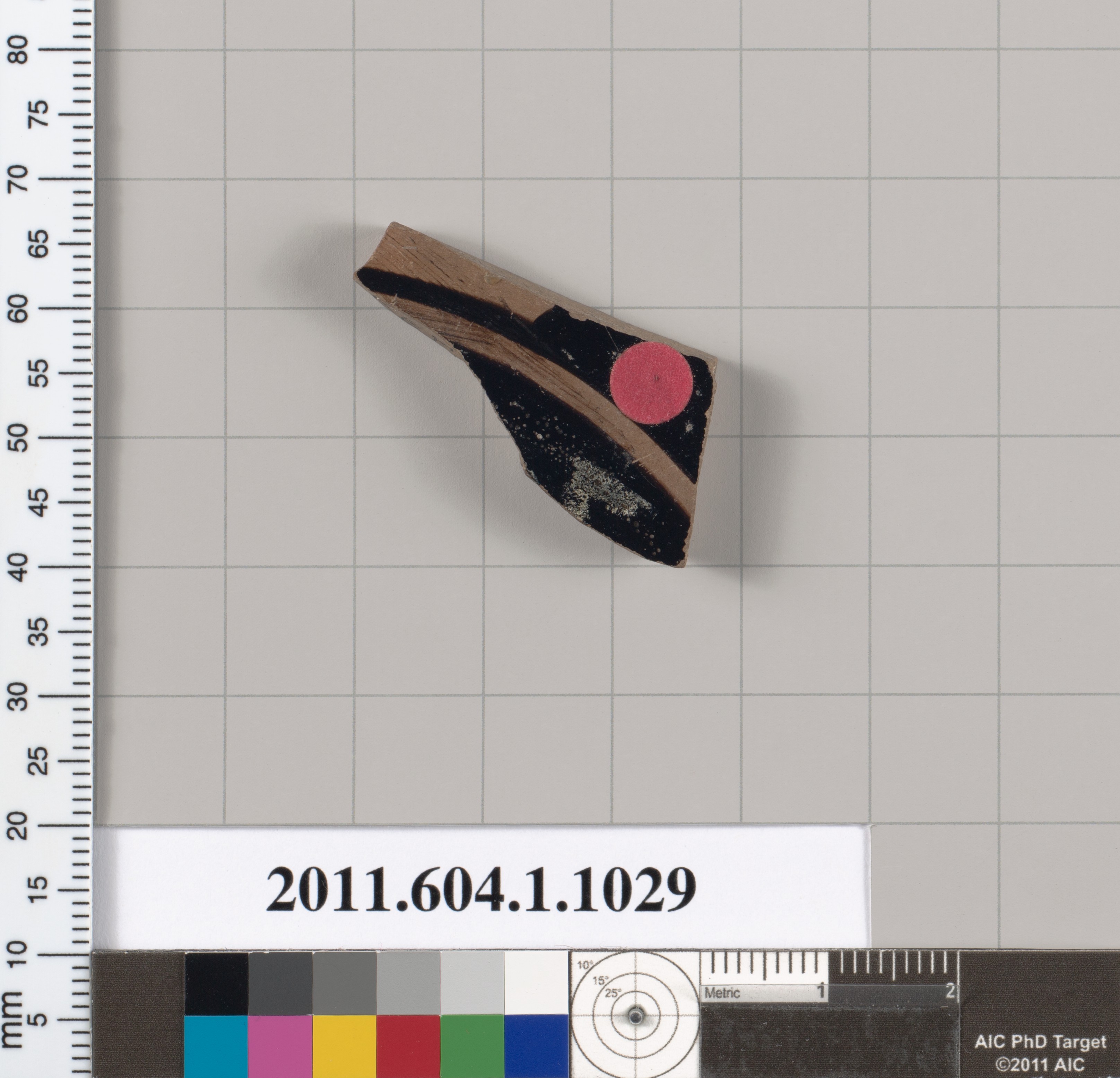
Heritage Synthesis: Terracotta fragment of a kylix (drinking cup)
Curated on Apr 25, 2026 // Node: LDN-01
The Terracotta Kylix as a Precedent for Power in Restraint: Informing the 2026 Old Money Silhouette
The Lauren Fashion Heritage Lab is privileged to synthesize internal archives with the visual lexicon of a Greek Attic terracotta kylix fragment. At first glance, a drinking cup shard from the 5th century BCE appears distant from the refined tailoring of a 2026 Old Money wardrobe. Yet, within its broken edges and black-figure decoration lies a profound genetic code for the aesthetic we designate as *Heritage-Black*—a color not of absence, but of accumulated authority. This analysis posits that the kylix fragment, as a museum artifact, provides a critical counterpoint to the “global baroque” narratives of the double-headed eagle textile and the Nanban screen. Where those artifacts celebrate opulent synthesis and curious translation, the kylix embodies a foundational principle of the Old Money silhouette: **the power of disciplined restraint, the eloquence of negative space, and the silent prestige of functional form.**
I. The Kylix as a Study in Negative Space and Material Honesty
The terracotta fragment, likely from a symposium cup, is defined by its material austerity. Unlike the gold-threaded eagles of the *Textile with crowned double-headed eagles* or the gilded clouds of the Japanese screen, the kylix is humble clay. Its aesthetic power derives not from applied wealth, but from the tension between the painted black figure and the reserved, unpainted terracotta ground. This is the core of *Heritage-Black*: it is not a color of mourning, but a strategic void. In the 2026 Old Money silhouette, this translates directly to the use of matte, unadorned fabrics—a heavy wool twill, a dense cashmere, a flat silk crepe—where the garment’s value is intrinsic to its weave and weight, not its surface embellishment.
The kylix’s fragmentary state further reinforces this principle. It is not a pristine object; its value is historical, not decorative. Similarly, the 2026 Old Money silhouette eschews the “new” for the “enduring.” A jacket is cut with a slight, inherited drape; a trouser hem is finished with a weight that suggests it has been worn, cared for, and passed down. The terracotta’s broken rim teaches us that perfection is not the goal. Instead, the goal is a form so resolved that even in decay, it retains its structural integrity. This is the antithesis of fast fashion’s ephemeral polish.
II. The Black-Figure Technique: A Grammar of Controlled Opulence
The black-figure technique on the kylix is a masterclass in controlled opulence. The black slip, fired to a metallic sheen, creates a surface that is simultaneously matte and luminous. This is not the glittering gold of the double-headed eagle, which announces power through spectacle. It is a power that reveals itself only upon close inspection—a subtle gloss on a sleeve, the deep, almost liquid black of a cashmere roll-neck. The black-figure artist’s incision lines, which reveal the red clay beneath, are the equivalent of a precise, hand-finished seam or a mother-of-pearl button on a bespoke shirt. These are details meant for the discerning eye, not the crowd.
This technique directly informs the 2026 Old Money silhouette’s approach to texture. The Lab’s archives show a resurgence of *Heritage-Black* in garments that play with light absorption: a double-faced wool coat with a black satin lining, a ribbed-knit turtleneck that catches the light differently than a flat jersey, a crepe de chine blouse with a subtle, heat-set crinkle. These are not “black” in a single, flat sense. They are a spectrum of blacks, each with its own history and weight, echoing the kylix’s interplay of fired slip and raw clay.
III. The Symposium Context: Function as the Foundation of Status
The kylix was not an object of passive display. It was a functional tool for the symposium, a ritualized space of male aristocratic bonding and intellectual discourse. Its aesthetic was inseparable from its use. This is the ultimate lesson for the 2026 Old Money silhouette: **luxury is not about ornament; it is about purpose.** The double-headed eagle textile was a statement of sovereign power, meant to be seen. The Nanban screen was a decorative object, meant to be admired. The kylix, however, was held, drunk from, and passed. Its beauty was experienced through action.
The 2026 Old Money silhouette, therefore, prioritizes garments that are *lived in*. A perfectly cut blazer is not merely a jacket; it is the uniform for a boardroom, a gallery opening, or a weekend estate. A pair of wool trousers is not just a garment; it is the foundation for a day of movement. The silhouette is defined by ease—a slight shoulder, a generous leg, a waist that is defined but not constricted. This is the *symposium* of modern dressing: a wardrobe that facilitates life, rather than one that demands to be looked at.
IV. Synthesis: From Global Baroque to Heritage-Black
The internal genetic code’s “global baroque” aesthetic—the synthesis of European power symbols and Japanese visual translation—represents a moment of cultural expansion and hybridity. The kylix, conversely, represents a moment of cultural *consolidation*. It is the aesthetic of a society that has already defined its hierarchies and values, and expresses them through refined, internalized codes. The 2026 Old Money silhouette, as guided by the kylix, is a return to this consolidation. It is a reaction against the visual noise of the globalized world.
Where the double-headed eagle textile shouts its authority, the *Heritage-Black* silhouette whispers it. Where the Nanban screen translates the foreign into the familiar, the kylix fragment reminds us that the most powerful aesthetic is often the most familiar—the one that has been refined over centuries. The 2026 silhouette is not about novelty; it is about *recognition*. It is a garment that says, “I know what this is, and I know its worth.”
Conclusion: The Enduring Fragment
The terracotta kylix fragment, in its broken, honest, and functional glory, is the ultimate artifact for the 2026 Old Money silhouette. It teaches us that true luxury is not in the accumulation of symbols, but in the mastery of form, the discipline of restraint, and the quiet confidence of material integrity. As the Lauren Fashion Heritage Lab looks toward the future, we do not look for new colors or new shapes. We look for the *Heritage-Black* that has always been there—the black of the fired clay, the black of the symposium’s wine, the black of a perfectly cut coat that will be worn for a lifetime. This is the silent prestige that defines the Old Money aesthetic, and it is a legacy we are proud to inherit and refine.
Heritage Lab Insight
Genetic Bridge: Archive node focusing on Heritage-Black craftsmanship.