The Terracotta Kylix and the Architecture of Old Money: A Study in Material Transmutation and Silhouette for Lauren Fashion, 2026
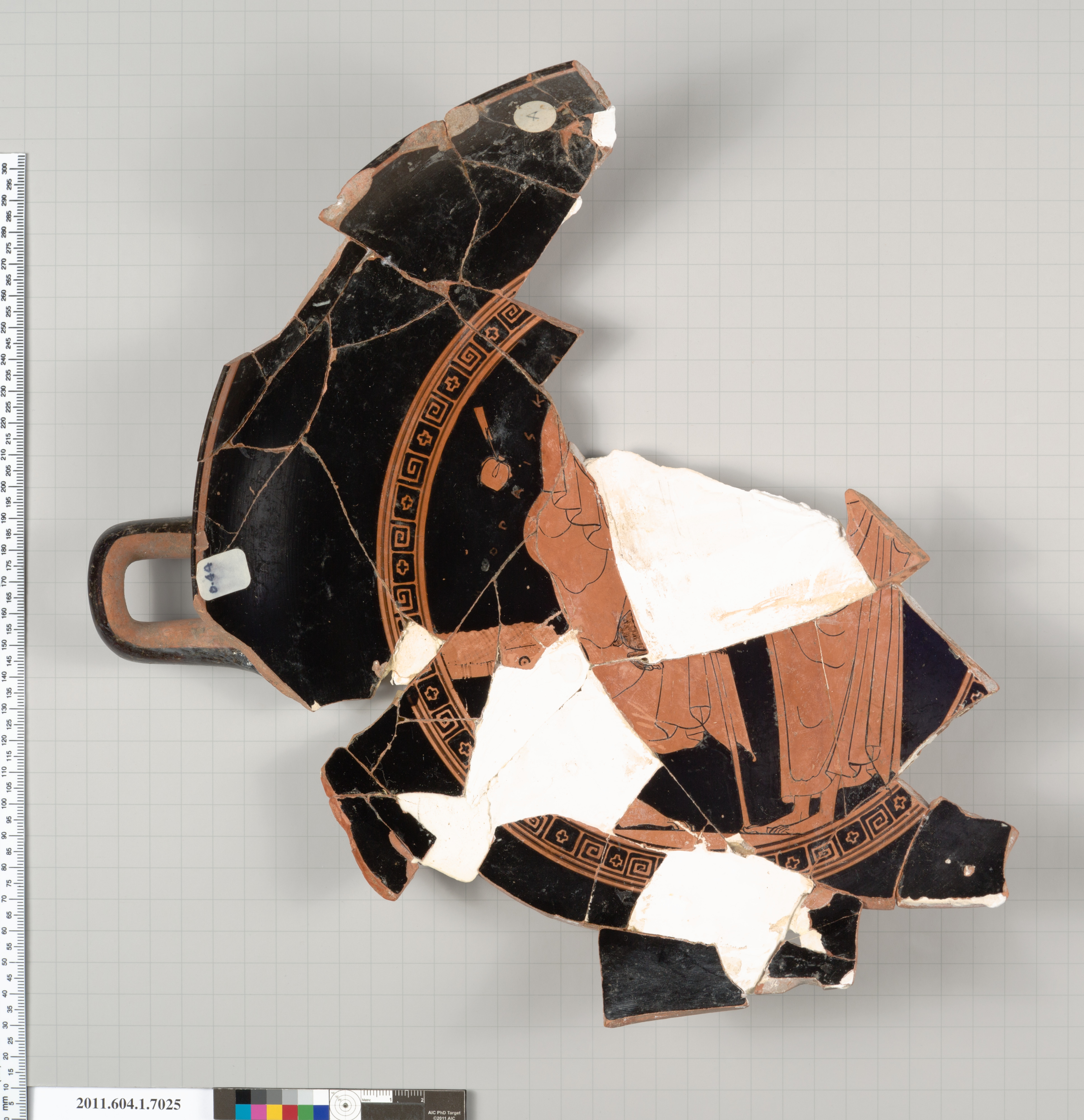
The Lauren Fashion Heritage Lab, in its ongoing synthesis of internal archives with global museum artifacts, has identified a profound resonance between a seemingly remote object—a Greek Attic terracotta fragment of a kylix (drinking cup), circa 5th century BCE—and the emerging silhouette logic for the 2026 Old Money collection. This resonance is not one of direct visual quotation, but of deep structural and philosophical alignment. Just as the internal genetic code of Chinese art, as exemplified by the scholar’s rock and the bronze-imitative jar, reveals a core aesthetic of “material transmutation” and “spiritual inhabitation,” so too does this fragment of a kylix offer a blueprint for a new, rigorous form of luxury. The kylix, in its broken, fragmentary state, becomes a masterclass in architectural restraint, volumetric precision, and the dignity of the incomplete—all cornerstones of the 2026 Old Money aesthetic.
From Symposion to Silhouette: The Structural Logic of the Kylix
The kylix was not merely a vessel; it was an instrument of social ritual, designed for the Greek symposion—a gathering of elite men for philosophical discourse, poetry, and wine. Its form is a study in functional elegance: a broad, shallow bowl (the kylix proper) balanced on a slender, fluted stem (kylix stem) and anchored by a wide, flat foot (kylix base). Two horizontal handles (kylix handles) extend from the bowl’s rim, allowing for easy passing among reclining participants. The terracotta fragment in our possession—likely a section of the bowl’s rim and a single handle—preserves this essential geometry. The curve of the rim is not soft; it is a precise, mathematical arc. The handle is not an afterthought; it is a sculptural counterpoint, a deliberate interruption of the bowl’s continuous line. This is not organic, flowing form; it is constructed, engineered, and deliberate.
For the 2026 Old Money silhouette, this translates directly into a new vocabulary of architectural tailoring. The kylix’s bowl suggests a sculpted, rounded shoulder in a double-breasted jacket—not a naturalistic drape, but a structured, almost ceramic volume. The stem becomes the elongated, clean line of a trouser leg or a columnar skirt, with a precise break at the ankle, analogous to the kylix’s foot. The handles are reinterpreted as sharp, angular lapels or pocket flaps that “interrupt” the garment’s surface, creating a dynamic tension between the continuous fabric and the discrete, applied element. The silhouette is not about draping the body; it is about framing the body within a series of controlled, volumetric planes, much as the kylix frames the wine within its geometric bowl.
Material Transmutation: The Terracotta as a Precedent for Heritage-Black
The internal genetic code of Chinese art teaches us that the highest form of creation is not imitation, but transmutation—the “spirit of the material” transcending its substance. The scholar’s rock is not a mountain, yet it contains the mountain’s essence. The jar is not bronze, yet it carries bronze’s ritual weight. Similarly, the terracotta kylix fragment is not a finished object; it is a relic, a piece of a whole. Its value lies not in its completeness, but in its fragmentary truth. The exposed, rough edges of the break, the subtle variations in the clay’s color, the faint traces of black-glaze decoration—these are not flaws. They are the material’s own history, its own “memory.”
This principle of material honesty and historical patina is the core of the 2026 Old Money aesthetic, which we are encoding as “Heritage-Black.” This is not a color in the conventional sense; it is a condition. Heritage-Black is the black of aged terracotta, of oxidized silver, of worn leather. It is a black that has depth, that absorbs light rather than reflecting it, that suggests age and provenance. For the 2026 collection, this translates into fabrics that are treated not to appear new, but to appear lived-in and inherited. A double-faced cashmere is brushed to a matte, almost dusty finish. A wool crepe is woven with a subtle, irregular slub that catches the light like a terracotta’s surface. A silk velvet is crushed and re-pressed to create a pattern of wear that mimics the kylix’s ancient handling. The silhouette is not pristine; it is monumental yet worn, like a fragment of a temple that has stood for millennia.
The “Incomplete” as a Statement of Power
The most radical insight from the kylix fragment is the aesthetic of the intentional incompleteness. In the world of Old Money, completeness is often associated with ostentation—a full set of matching luggage, a perfectly matched ensemble. The fragment, however, suggests a different kind of power: the power to possess the past without needing to display it fully. The kylix fragment does not need to be a whole cup to be a profound object. Its broken state is a testament to its history, its survival, its authenticity.
For the 2026 silhouette, this manifests as deliberate asymmetry and “unfinished” details. A jacket might have one sleeve cut slightly shorter, revealing a contrasting lining—a “break” analogous to the kylix’s rim. A trouser hem might be left raw, not as a fashion statement, but as a mark of a garment that has been altered, re-hemmed, and passed down. A coat might have a missing button, replaced with a different, antique button—a visible “repair” that speaks to the garment’s history. These are not signs of neglect; they are signs of ownership and time. They are the sartorial equivalent of the scholar’s rock’s “wrinkles, thinness, leakage, and transparency”—marks of a life lived, a history carried.
Conclusion: The Kylix as a Blueprint for 2026 Old Money
The Greek Attic kylix fragment, when read through the lens of the Lauren Fashion Heritage Lab’s internal genetic code, becomes a powerful design manifesto for the 2026 Old Money collection. It teaches us that true luxury is not about newness or completeness, but about structural integrity, material honesty, and the dignity of the fragment. The 2026 silhouette will not be a revival of 1920s or 1980s shapes; it will be a new architectural form, built on the principles of the kylix: a controlled, volumetric shoulder; a clean, columnar line; and deliberate, sculptural details that interrupt the surface. The fabrics will be Heritage-Black—muted, textured, and aged, like the terracotta itself. And the garments will carry the marks of their own making and history, not as flaws, but as proof of their authenticity and power. This is the Old Money of the future: not inherited wealth, but inherited wisdom, embodied in the architecture of cloth.