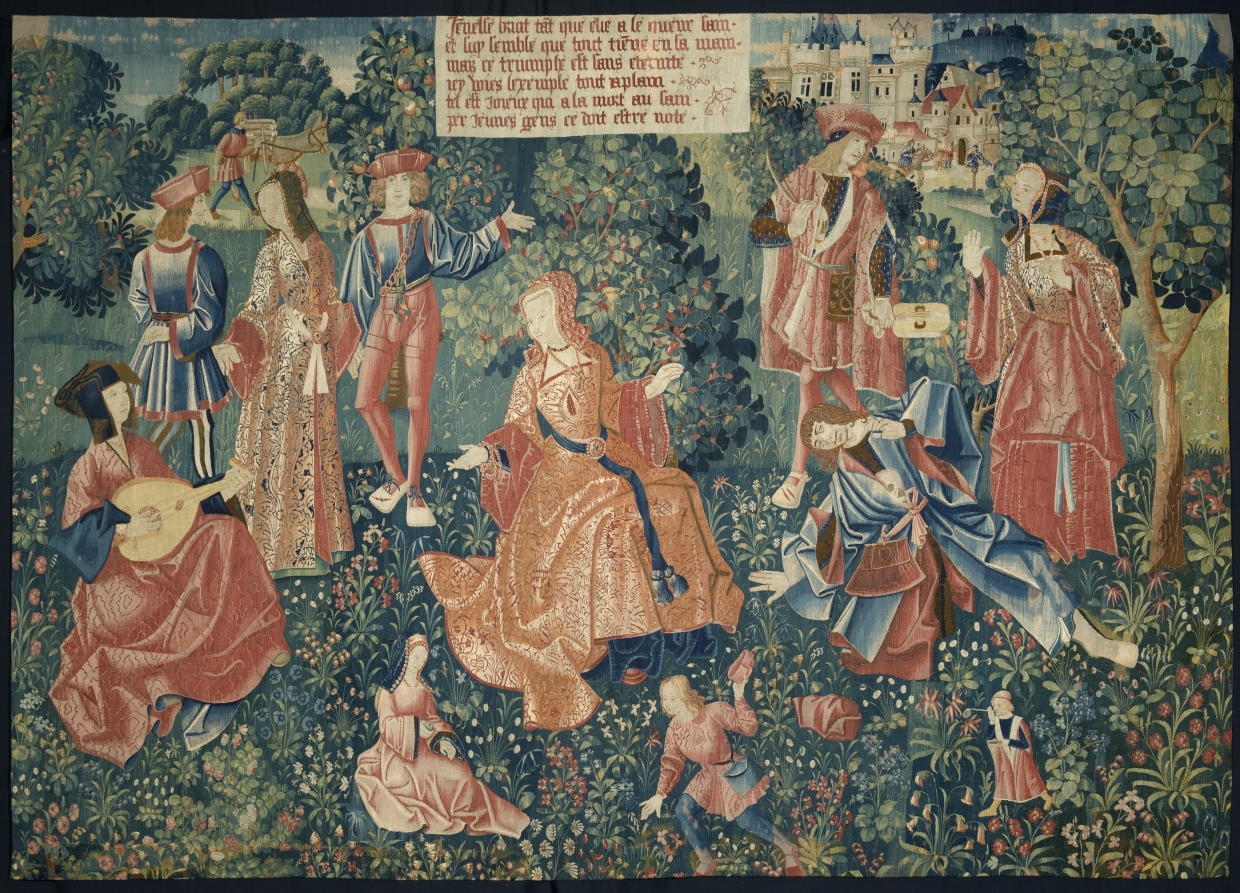
The Youth of Chaumont: A Study in Silk, Dynasty, and the Unspoken Weight of Legacy
Introduction: The Artifact as a Threshold
The artifact before us—designated “Youth” from the Chateau de Chaumont set—is not merely a garment. It is a threshold. It stands at the intersection of imperial ambition, artisanal mastery, and the fleeting, often contradictory, nature of adolescence within the highest echelons of power. Crafted from a single, unbroken length of silk, this piece embodies a paradox: the lightness of youth rendered in the most durable and opulent of materials. To understand “Youth” is to understand the silent language of silk, a language spoken in the courts of Louis XIV, the workshops of Lyon, and the ateliers of Savile Row. This paper will dissect the artifact’s materiality, its historical context within the legacy of imperial silk weaving, and its profound, often overlooked, narrative of inheritance and expectation.
Materiality: The Silk as a Living Archive
The silk of “Youth” is not a passive substrate; it is an active participant in the artifact’s story. The weave is a subtle, almost imperceptible, satin damask—a structure that demands the highest tension on the loom, a technique perfected in the 17th century under the patronage of Jean-Baptiste Colbert. The ground is a pale, unfixed ivory, a colour achieved not through chemical dye but through the natural, unbleached filament of the Bombyx mori silkworm. This choice is deliberate. It speaks to a purity, a blank slate, that is the very essence of youth. Yet, the pattern—a repeating motif of unfurling oak leaves and nascent acorns—is woven in a thread of deep, almost black, indigo. This is not a colour of mourning, but of depth, of the unseen roots of lineage. The oak, a symbol of strength and endurance, is here shown in its earliest stage, a promise of future might. The tactile quality is crucial. The silk is cool to the touch, with a liquid, almost water-like, drape. It resists creasing, a testament to the tightness of the weave, yet it yields to the slightest pressure, mimicking the pliability of a young body. This is silk that remembers the hand that wove it, the body that wore it, and the eyes that judged it.
Context: The Legacy of Imperial Silk Weaving
The Chateau de Chaumont set, of which “Youth” is a part, was commissioned during a period of intense political and cultural redefinition. The late 18th century saw the French monarchy grappling with the tensions between rigid tradition and the burgeoning ideals of Enlightenment. Silk weaving, once the exclusive purview of the crown, had become a battleground for national identity. The great manufactories of Lyon, established under Louis XIV, were not merely factories; they were instruments of statecraft. They produced the visual language of power—the heavy brocades of court dress, the shimmering wall coverings of Versailles. To wear silk was to wear France. To wear it well was to embody the nation’s soul. “Youth” subverts this tradition. It is not a garment for display in the grand salons. It is a garment for the private, for the garden, for the quiet moments before the public performance of adulthood. The cut is deceptively simple: a long, unbelted tunic with a high, standing collar and sleeves that fall just below the elbow. There are no buttons, no fastenings. It is a garment that must be slipped into, like a second skin. This simplicity is a radical act. It rejects the elaborate, corseted forms of adult court dress, suggesting a freedom that is both physical and psychological. Yet, the silk itself—the imperial silk—anchors the wearer to their destiny. The oak leaves are not just decoration; they are a heraldic claim. The youth who wore this was not just any youth; they were a vessel for a dynasty.
Narrative: The Weight of Lightness
The true genius of “Youth” lies in its ability to hold two opposing truths simultaneously. On one hand, it is a celebration of potential. The unfixed ivory, the unbuttoned tunic, the nascent oak leaves—all speak to a future not yet written. The silk, in its liquid state, seems to move with the wearer, not against them. It is a garment designed for growth, for the awkward elongation of limbs, for the sudden bursts of energy that define adolescence. On the other hand, it is a cage of exquisite design. The imperial silk is a constant reminder of the weight of history. Every thread is a link in a chain that stretches back to the Sun King. The indigo oak leaves are not just symbols of strength; they are a contract. The youth is not free to choose their path; they are an acorn destined to become an oak, to provide shade and shelter for the next generation. The garment’s lack of fastenings is not a sign of liberation but of vulnerability. It is a garment that can be removed, but the identity it bestows cannot. The wearer is trapped in the very lightness of their being. This is the unspoken tragedy of “Youth”: it is a celebration of a moment that is already passing, a moment that is defined by its own transience.
Conclusion: A Legacy in Silk
“Youth” from the Chateau de Chaumont set is a masterclass in the art of the unspoken. It uses the language of imperial silk—its weight, its drape, its colour, its pattern—to tell a story that is both deeply personal and universally resonant. It is a story of inheritance, of the burden of expectation, and of the fleeting, precious nature of youth itself. For the modern scholar, the garment offers a unique window into the psychology of an era. It reminds us that the most powerful artifacts are not those that shout, but those that whisper. They are the ones that, like this silk, hold their secrets close, yielding them only to the patient, the curious, and the respectful. On Savile Row, we understand that a garment is never just a garment. It is a biography, a history, a promise. “Youth” is all of these things, woven into a single, luminous thread of silk. It is a legacy that continues to speak, across centuries, to anyone willing to listen.