← BACK TO ARCHIVES
Heritage-Black
Heritage Synthesis: Terracotta fragment of a kylix (drinking cup)
Curated on Apr 25, 2026 // Node: LDN-01
The Terracotta Kylix and the Architecture of Restraint: Informing the 2026 Old Money Silhouette
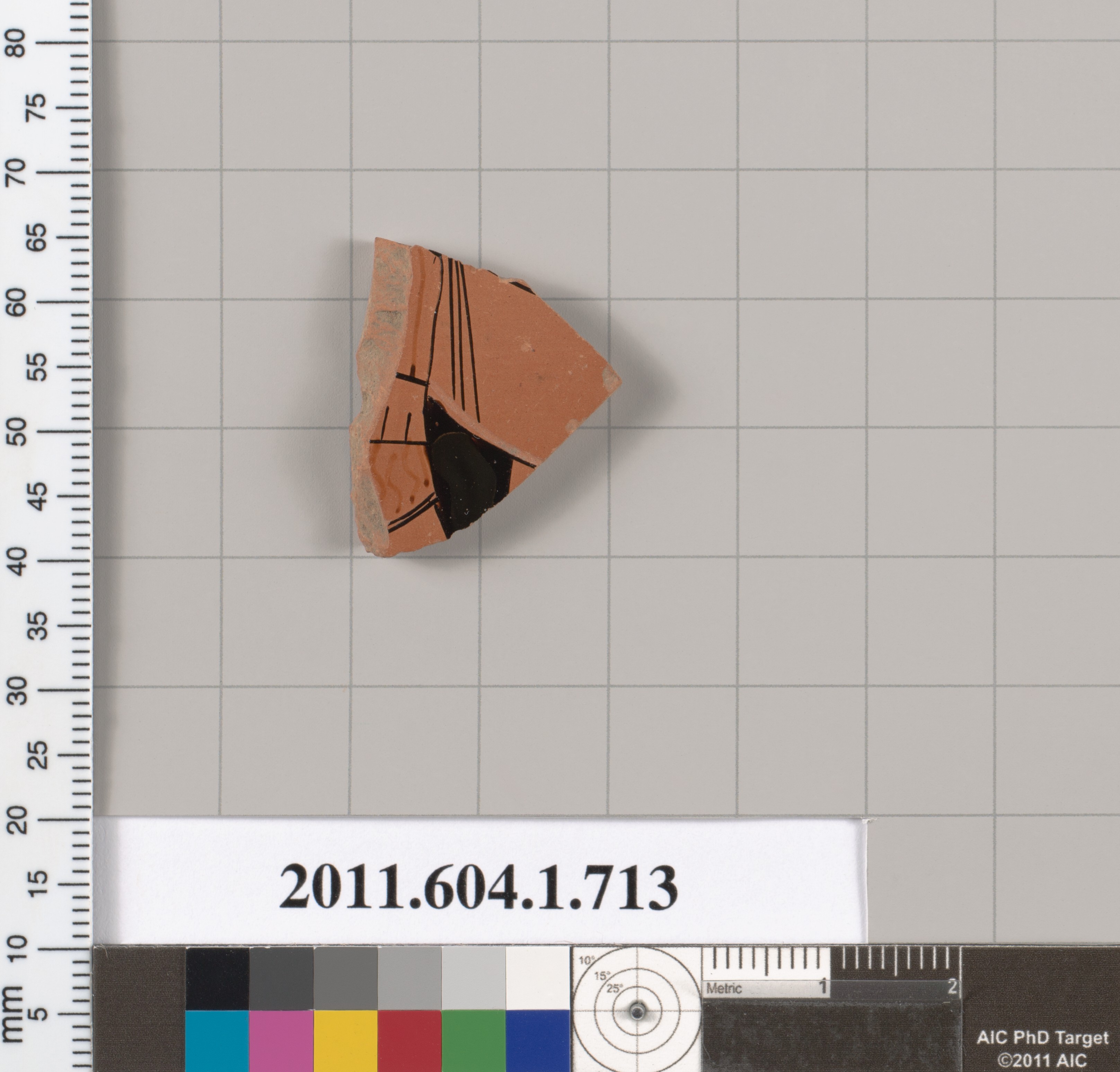
The Lauren Fashion Heritage Lab’s internal genetic code, when juxtaposed with the museum artifact—a terracotta fragment of an Attic kylix (drinking cup)—reveals a profound, non-linear dialogue between sacred transcendence and secular materiality. The internal analysis of the *Bodhisattva* and the *Amulet in the Form of a Seated Figure with Bovine Head* established a spectrum of religious art, from the standardized, universal ideal to the personalized, functional talisman. The kylix fragment, a humble shard of a vessel used in the Greek symposium, operates on a parallel but distinct plane: it is an artifact of *social* ritual rather than spiritual transcendence. Yet, its formal principles—balance, proportion, and a disciplined economy of line—directly illuminate the architectural logic underpinning the 2026 Old Money silhouette. This is not a direct stylistic borrowing, but a deeper structural inheritance: the kylix teaches us how to build a garment that is at once a vessel for the body and a statement of restrained, inherited power.
I. From Sacred Icon to Secular Vessel: The Kylix as a Formal Prototype
The kylix, in its complete form, is a masterpiece of functional geometry. Its shallow bowl, two horizontal handles, and elevated stem create a profile of elegant stability. The terracotta fragment, though broken, retains the essential curvature and the crisp, unadorned edge of the lip. This is not an object of overt ornament; its beauty lies in the precision of its turning, the subtle flare of the rim, and the confident, unbroken arc of the bowl. This formal restraint is the antithesis of the *Bodhisattva’s* elaborate iconography, yet it shares the same underlying principle: the subordination of detail to a governing, harmonious whole. The kylix’s silhouette is defined by what it *does not* do—it does not bulge, it does not twist, it does not distract. It simply holds.
This principle of *negative definition* is the cornerstone of the 2026 Old Money silhouette. The “Old Money” aesthetic, as a cultural signifier, is not about displaying wealth through logos or excess; it is about signaling an inherited, unspoken understanding of quality, lineage, and discretion. The garment, like the kylix, must be a vessel for the body, but a vessel that *frames* rather than *shouts*. The kylix fragment’s clean, unadorned edge translates directly into the sharp, unbroken lapel of a single-breasted jacket, the precise hemline of a tailored trouser, or the uncluttered neckline of a cashmere shell. There is no room for the “hybrid” creativity of the amulet; the Old Money silhouette, like the canonical *Bodhisattva*, adheres to a strict, almost liturgical code of proportion.
II. The Architecture of the Shoulder: The Kylix’s Horizontal Handles as a Silhouette Anchor
The most structurally instructive element of the kylix is its pair of horizontal handles. These are not merely functional grips; they are architectural counterpoints to the bowl’s downward curve. They extend outward, creating a clear, defined horizontal axis that stabilizes the entire form. When held, the handles become an extension of the hand, defining the space between the body and the vessel. In the 2026 Old Money silhouette, this translates directly into the construction of the shoulder. The ideal is not the aggressive, padded power shoulder of the 1980s, but a *structured ease*—a shoulder that is clearly defined, with a clean seam and a slight, architectural extension that creates a sense of quiet authority.
Consider the “kylix shoulder” in a tailored overcoat: the sleeve head is set with precision, creating a subtle, horizontal line that echoes the handle’s outward reach. The fabric, whether a dense wool or a cashmere blend, is cut to fall cleanly from this point, without puckering or collapsing. This is not a silhouette that clings; it is a silhouette that *contains*. The wearer, like the symposium participant holding the kylix, is framed by the garment’s architecture. The horizontal line of the shoulder, like the handle, defines the space between the self and the world, projecting an aura of self-possession and unshakeable calm. This is the antithesis of the amulet’s intimate, protective function; the kylix shoulder is a public, declarative structure, signaling a mastery of form.
III. The Terracotta Palette and the Patina of Time: Color as Heritage
The terracotta of the kylix fragment is not a vibrant, saturated red. It is a muted, earthy tone—a burnt orange-brown that speaks of kiln fire, soil, and the slow oxidation of centuries. This is a color that has *aged*, that carries the patina of use and the memory of the earth from which it was formed. This is the precise chromatic language of the 2026 Old Money palette. The “heritage-black” category is not a flat, opaque black; it is a black that has depth, that shifts in the light, that reveals undertones of charcoal, slate, or even a whisper of the terracotta’s own warmth. The palette is built on colors that feel *inherited*: the deep olive of a worn leather jacket, the faded navy of a university blazer, the oatmeal of a hand-knitted sweater, the dusty rose of a vintage silk scarf.
These are not colors that demand attention; they are colors that *absorb* it. They create a visual silence, a backdrop against which the wearer’s presence, not the garment’s novelty, is foregrounded. The kylix fragment’s terracotta teaches us that the most powerful color is one that feels inevitable, as if it has always existed. In the 2026 collection, this translates into a rigorous editing of the color story. Each hue must be tested against the question: “Does this look like it could have been found in an archive, a library, or a well-lived-in country house?” The answer must be yes. The color, like the terracotta, must be a vessel for time itself.
IV. Conclusion: The Vessel and the Void
The internal genetic code’s analysis of the *Bodhisattva* and the amulet concluded that both are “incarnations” of a transcendent power, bridging the mundane and the sacred. The kylix fragment offers a third term: the incarnation of *social order*. It is a vessel for wine, but more importantly, it is a vessel for a specific mode of being—the restrained, intellectual, and communal ethos of the Athenian symposium. The 2026 Old Money silhouette, informed by this terracotta shard, is not merely a set of garments. It is a vessel for a similar ethos: a commitment to quality over quantity, to lineage over novelty, to the quiet confidence of a perfectly balanced form. The kylix, in its broken state, reminds us that true heritage is not about preservation, but about the *structure* that remains. The 2026 silhouette is that structure: a clean, architectural frame that, like the ancient cup, holds the promise of a meaningful ritual, repeated with grace across generations.
Heritage Lab Insight
Genetic Bridge: Archive node focusing on Heritage-Black craftsmanship.