The Materiality of Myth: King Yu Moving a Mountain to Control the Floods as a Heritage Artifact
Introduction: The Convergence of Craft and Narrative
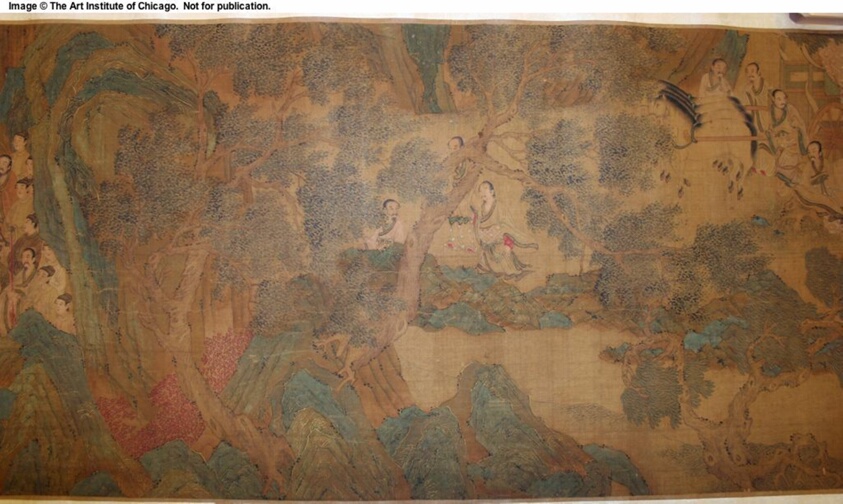
In the hallowed corridors of Lauren Fashion Heritage Lab, where the threads of history are woven into the fabric of contemporary luxury, we encounter a singular artifact: a handscroll executed in ink and color on silk, depicting the ancient Chinese legend of King Yu moving a mountain to control the floods. This is not merely a pictorial representation; it is a testament to the symbiotic relationship between materiality and myth. The choice of silk as the substrate—a material synonymous with refinement, durability, and cultural prestige—elevates the narrative from folklore to a statement of heritage. The handscroll format, with its fluid, horizontal unfolding, mirrors the very movement of water and earth that King Yu commands. This paper examines the artifact through the lens of materiality, craftsmanship, and narrative resonance, drawing parallels to the exacting standards of Savile Row tailoring: where every stitch, every fold, and every hue is deliberate, purposeful, and timeless.
The Silk Substrate: A Foundation of Elegance and Endurance
Silk is not a passive canvas; it is an active participant in the storytelling. The handscroll’s silk base, likely a fine kesi or damask weave, demonstrates the pinnacle of Chinese textile artistry. The warp and weft are not merely structural; they are rhythmic, creating a surface that catches light with a soft, almost liquid sheen. This luminosity is essential to the narrative: the floods, rendered in ink washes and mineral pigments, appear to shimmer and recede as the viewer scrolls through the composition. The silk’s natural absorbency allows the ink to bleed with controlled precision, evoking the unpredictable yet managed flow of water. In the context of heritage, silk represents a lineage of craftsmanship that spans millennia. It is a material that demands respect, patience, and mastery—qualities that King Yu himself embodies in his legendary labor.
The handscroll’s dimensions—typically around 30 centimeters in height and several meters in length—require the viewer to engage in a physical act of unrolling, a tactile dialogue that mirrors the slow, deliberate process of flood control. This is not a static image; it is a journey. The silk’s flexibility allows the scroll to be stored, transported, and displayed with a grace that rigid materials cannot replicate. For the fashion heritage specialist, this materiality echoes the draping of a bespoke suit: the fabric must move with the body, not against it. Similarly, the silk handscroll moves with the narrative, accommodating the epic scale of King Yu’s task while retaining an intimate, almost personal quality.
Ink and Color: The Palette of Power and Perseverance
The use of ink and color on silk is a discipline that requires both technical skill and philosophical depth. The ink, derived from pine soot and animal glue, is applied in layers to create depth and texture. In this artifact, the ink is used to delineate the mountain—a monolithic, jagged form that King Yu is depicted as moving, perhaps with the aid of divine tools or sheer human will. The mountain is rendered in cun (texture strokes), a technique that mimics the ruggedness of stone. The ink’s blackness is not absolute; it varies from pale gray to deep obsidian, suggesting the shifting shadows of dawn and dusk as the labor progresses. This gradation is a metaphor for the passage of time, a central theme in the legend.
Color is applied sparingly but with intention. Mineral pigments—azurite for the sky, malachite for the vegetation, and cinnabar for the accents—are ground and mixed with a binding medium to adhere to the silk. These colors are not merely decorative; they are symbolic. Azurite, a deep blue, represents the heavens and the cosmic order that King Yu seeks to restore. Malachite, a vibrant green, signifies the renewal of the land after the floods recede. Cinnabar, a red often reserved for seals or imperial motifs, marks the moments of triumph—perhaps the final breach of the mountain or the first glimpse of dry earth. The palette is restrained, echoing the austerity of King Yu’s mission. There is no excess, no frivolity. Every pigment is a statement of purpose.
This restraint is reminiscent of the Savile Row ethos: a bespoke suit in charcoal flannel, with a subtle check or a single pocket square of silk. The power lies in the details, not in the ostentation. Similarly, the artifact’s colors are chosen to support the narrative, not to overwhelm it. The viewer’s eye is drawn to the mountain, the water, and the figure of King Yu—a small but resolute presence against the vast landscape. This scale is deliberate: it emphasizes the monumental nature of the task while celebrating the individual’s agency.
Narrative and Craft: The Legend of King Yu as a Blueprint for Heritage
The legend of King Yu, or Yu the Great, is a foundational myth in Chinese culture. It tells of a ruler who, rather than building walls to contain the floods, dug channels to redirect the water. The mountain—often identified as Mount Longmen or a similar geological feature—was moved to create a passage for the floodwaters. This is not a story of brute force but of intelligence, perseverance, and harmony with nature. The handscroll captures this ethos through its composition: the mountain is depicted as both obstacle and opportunity, the water as both destructive and life-giving. The narrative unfolds in a continuous line, much like the flow of a river, with no clear beginning or end. This cyclical structure mirrors the seasons, the cycles of flood and drought, and the eternal rhythm of labor and renewal.
From a heritage perspective, King Yu’s story is a metaphor for the preservation and transmission of craft. The artisan who created this handscroll—likely a master of the gongbi (meticulous) style—spent months, perhaps years, perfecting each brushstroke. The silk was prepared, the pigments ground, the composition sketched and refined. This is the same dedication required to maintain a heritage brand: the knowledge of materials, the patience for process, and the vision to see beyond the immediate. The handscroll is not just an object; it is a repository of technique, a dialogue between the past and the present. For the Lauren Fashion Heritage Lab, this artifact serves as a reminder that heritage is not static. It is a living practice, constantly reinterpreted through new materials and contexts.
Conclusion: The Handscroll as a Bespoke Artifact
In the language of Savile Row, a bespoke garment is defined by its fit, its fabric, and its function. The handscroll of King Yu moving a mountain to control the floods adheres to these principles with remarkable precision. Its fit is the narrative itself—tailored to the legend, no more, no less. Its fabric is silk, a material that speaks of luxury and endurance. Its function is both aesthetic and didactic: to inspire, to educate, and to preserve. As a heritage artifact, it transcends its original context to become a universal symbol of human ingenuity and resilience. For the fashion heritage specialist, it offers a masterclass in the integration of materiality and meaning. The silk is not just a surface; it is a story. The ink and color are not just pigments; they are emotions. And the handscroll is not just an object; it is a legacy, waiting to be unrolled, studied, and worn.