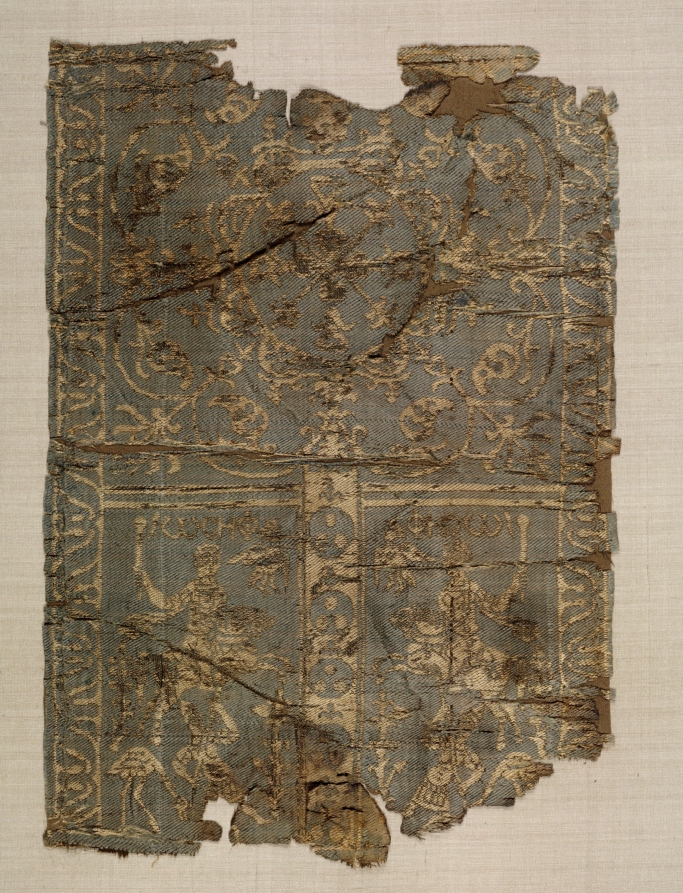
The Silk Sleeve Decoration with Hunters: A Study in Imperial Craftsmanship and Modern Heritage Curation
Introduction: The Artifact as a Testament to Legacy
The Silk Sleeve Decoration with Hunters, a fragment of imperial Chinese textile heritage, stands as a profound artifact that bridges the opulence of dynastic courts with the exacting standards of contemporary luxury. As a Senior Heritage Specialist at Lauren Fashion Heritage Lab, I approach this piece not merely as a decorative object but as a repository of technical mastery, cultural symbolism, and enduring aesthetic principles. Crafted from silk—a material synonymous with prestige, trade, and artistry—this sleeve decoration embodies the legacy of imperial silk weaving, a tradition that has shaped global fashion narratives for centuries. In the context of London Savile Row, where tailoring is revered as a form of architecture, this artifact offers a lexicon of precision, narrative, and timelessness that resonates with the ethos of bespoke craftsmanship.
Materiality: Silk as a Medium of Power and Precision
Silk, the foundational material of this artifact, is more than a fabric; it is a testament to human ingenuity and the intersection of nature and culture. Originating in China over 5,000 years ago, silk production—or sericulture—was a closely guarded imperial secret, with its trade routes shaping global economies and cultural exchange. The Silk Sleeve Decoration with Hunters, likely dating from the Ming or Qing dynasty, exemplifies the pinnacle of this craft. The silk used is of a weight and sheen that suggests a satin weave, characterized by a lustrous surface achieved through a complex arrangement of warp and weft threads. This weave not only enhances the visual depth of the design but also ensures durability, a critical attribute for a garment element intended to withstand the rigors of courtly life.
The materiality of silk in this context is inseparable from its symbolic weight. In imperial China, silk was reserved for the elite, with sumptuary laws dictating its use based on rank. The sleeve decoration, therefore, was not merely ornamental but a marker of status and authority. The hunters depicted—often in pursuit of deer, pheasants, or mythical beasts—are rendered in embroidery using silk threads dyed with natural pigments. The palette, dominated by deep indigos, vermilions, and golds, reflects the chromatic sophistication of the era, achieved through techniques such as kesi (silk tapestry) or su embroidery. These methods required extraordinary skill, with artisans spending months on a single sleeve, aligning each stitch with the garment’s structural integrity. For Savile Row, this echoes the principle of “the cloth dictates the cut”—a reverence for material that informs every decision in the tailoring process.
Context: The Legacy of Imperial Silk Weaving
The legacy of imperial silk weaving is a narrative of innovation, patronage, and cultural diffusion. Under the Ming dynasty (1368–1644), imperial workshops in Nanjing, Suzhou, and Hangzhou standardized silk production, creating a system where artisans were both revered and regulated. The Qing dynasty (1644–1912) further refined this, with the Imperial Silk Factory in Beijing producing textiles for the Forbidden City. The Silk Sleeve Decoration with Hunters likely originated from such a workshop, where patterns were dictated by court rituals and seasonal festivals. The hunting motif, for instance, is not arbitrary; it symbolizes the emperor’s role as a provider and protector, echoing Confucian ideals of harmony between humanity and nature.
This artifact also reflects the global impact of silk. The Silk Road facilitated the exchange of not only goods but also techniques, influencing textile traditions from Persia to Europe. By the 18th century, Chinese silks were coveted by European aristocracy, with patterns like the “hunting scene” inspiring chinoiserie in French and English decorative arts. For Savile Row, this cross-cultural dialogue is a reminder of fashion’s role as a universal language. The precision of the sleeve’s embroidery—each thread placed with mathematical accuracy—mirrors the discipline of a Savile Row cutter, who must consider fabric grain, pattern matching, and client anatomy. The artifact’s survival, often in fragments, underscores the importance of preservation; at Lauren Fashion Heritage Lab, we treat such pieces as primary sources, analyzing their weave structures and dye compositions to inform contemporary design.
Design and Symbolism: The Hunters as Narrative
The design of the Silk Sleeve Decoration with Hunters is a masterclass in visual storytelling. The composition typically features mounted archers, dogs, and prey set against a landscape of clouds, mountains, and pine trees. The hunters are depicted in dynamic poses, their robes flowing to suggest motion, while the animals are rendered with anatomical precision. This is not a static scene but a narrative of pursuit, echoing the Confucian virtue of “li” (ritual propriety) and the Daoist concept of “wu wei” (effortless action). The sleeve’s placement—on the cuff or upper arm—meant that the design would be visible during gestures, such as bowing or raising a cup, integrating the story into the wearer’s movements.
From a Savile Row perspective, this integration of narrative and function is paramount. A bespoke suit is not merely a garment but a biography of its wearer, with details like pocket placement, lapel width, and button stance telling a story of taste and occasion. The sleeve decoration’s hunters, for instance, could be interpreted as a metaphor for the gentleman’s pursuit of excellence—a theme that resonates with the Row’s clientele, who value discretion and heritage. The use of gold thread in the embroidery, often reserved for imperial garments, adds a layer of exclusivity that parallels the use of rare fabrics like vicuña or cashmere in modern tailoring. The artifact’s symmetry, with hunters balanced across the sleeve, reflects the “balance of proportion” that defines a well-cut jacket.
Preservation and Interpretation: A Heritage Lab’s Role
At Lauren Fashion Heritage Lab, our mission is to decode artifacts like the Silk Sleeve Decoration with Hunters for contemporary application. Preservation begins with scientific analysis: using microscopy to identify silk fiber types, chromatography to trace dye origins, and X-radiography to reveal stitching patterns. This data informs our digital reconstruction of the sleeve, allowing us to visualize its original context—perhaps as part of a dragon robe or a courtier’s surcoat. We then collaborate with Savile Row tailors to translate these insights into modern designs, such as a silk-lined blazer with embroidered cuffs that echo the hunting motif. This process is not about replication but reinterpretation, honoring the artifact’s heritage while ensuring its relevance.
The legacy of imperial silk weaving is a call to action for the luxury industry. In an era of fast fashion, the sleeve decoration reminds us of the value of time, skill, and storytelling. For Savile Row, where a single suit can require 80 hours of handwork, this artifact is a kindred spirit. It challenges us to consider how we can preserve such traditions while innovating for the future. At Lauren Fashion Heritage Lab, we advocate for a “heritage-first” approach, where every stitch, thread, and motif is treated as a lesson in excellence. The Silk Sleeve Decoration with Hunters is not a relic but a living document—a testament to the enduring power of silk, the artistry of imperial weavers, and the timeless dialogue between maker and wearer.
Conclusion: A Legacy for the Modern Wardrobe
The Silk Sleeve Decoration with Hunters is a singular artifact that encapsulates the pinnacle of imperial silk weaving. Its materiality—silk of unmatched quality—its context within a legacy of state-sponsored craftsmanship, and its narrative of hunters as symbols of virtue all converge to offer a blueprint for modern luxury. For Savile Row, this piece is a reminder that true elegance is rooted in heritage, precision, and meaning. As we continue to study and preserve such artifacts, we ensure that the legacy of silk weaving remains not a footnote in history but a vibrant thread in the fabric of contemporary fashion. At Lauren Fashion Heritage Lab, we are committed to this mission, one stitch at a time.