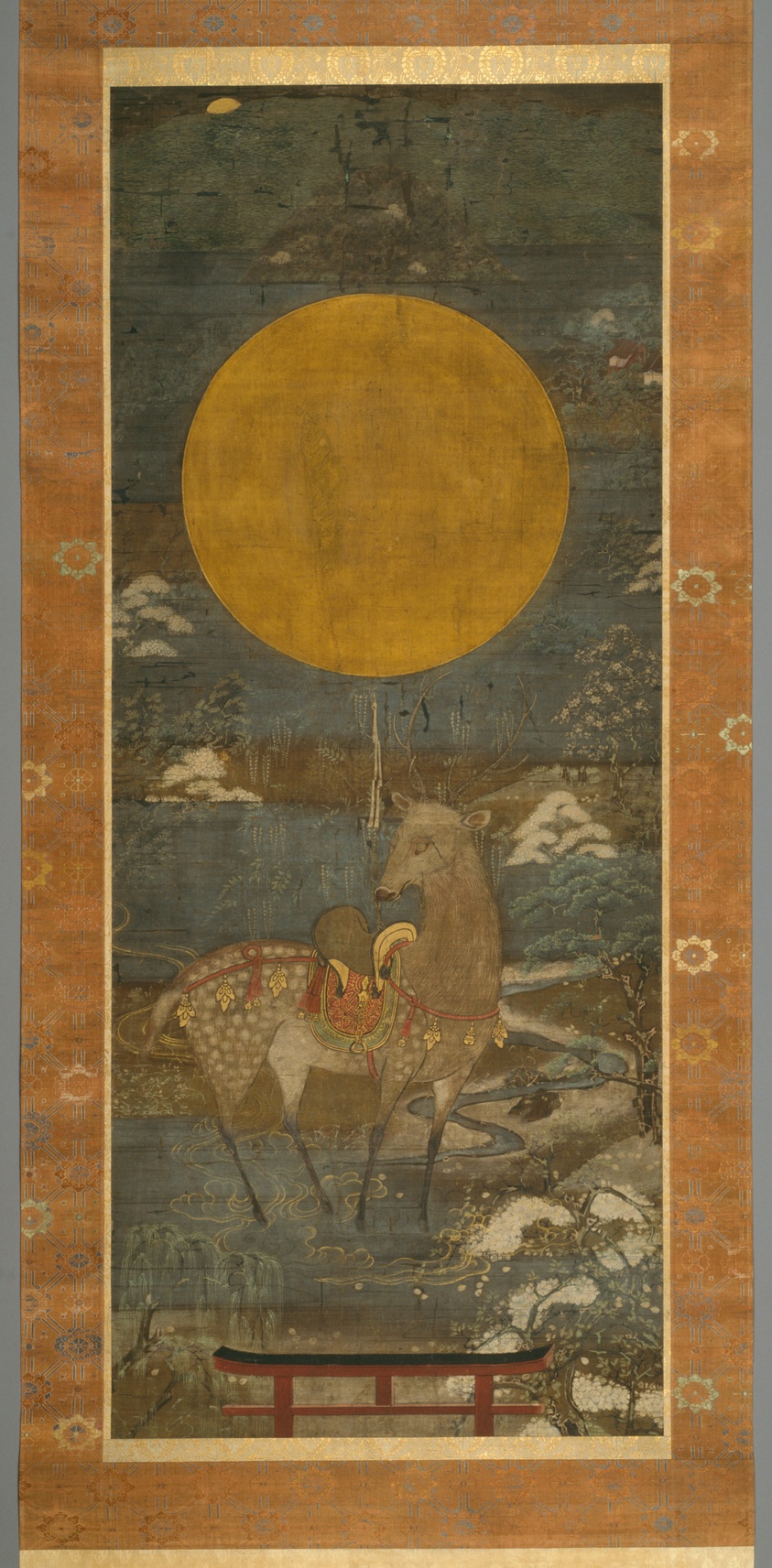
The Kasuga Deer Mandala: A Study in Materiality and Spiritual Craftsmanship
In the hallowed corridors of heritage scholarship, few artifacts embody the confluence of material mastery and metaphysical intent as profoundly as the Kasuga Deer Mandala. Executed in ink, colors, and gold on silk, this 14th-century Japanese treasure transcends mere artistic expression to become a testament to the disciplined elegance that defines classic silk craftsmanship. As a Senior Heritage Specialist at the Lauren Fashion Heritage Lab, I approach this artifact not only as a relic of religious devotion but as a pinnacle of textile-based artistry—one that resonates with the principles of fluidity, precision, and understated luxury that Savile Row tailors have long championed.
The Silk Substrate: A Foundation of Refined Elegance
Silk, as a material, has historically been reserved for the most sacred and prestigious creations. In the Kasuga Deer Mandala, the choice of silk is no accident. The fabric’s inherent luminosity and drape provide a surface that both absorbs and reflects light, creating a dynamic interplay between the painted imagery and the viewer’s gaze. The silk’s fine weave—likely a plain or twill structure—offers a smooth, almost liquid canvas, allowing the ink and pigments to settle with a precision that mimics the controlled flow of a master tailor’s hand. This is not a coarse linen or a rigid paper; it is a material that breathes, moves, and responds to its environment, much like the finest bespoke suiting.
The gold leaf applied to the silk further elevates the mandala’s materiality. Gold, in its purest form, is a symbol of imperishable value and divine light. When layered onto silk, it creates a lustrous sheen that shifts with the angle of illumination—a quality that Savile Row artisans seek in their use of silk linings and metallic threads. The gold does not overpower the silk; rather, it complements the fabric’s natural elegance, much as a perfectly cut lapel frames a tailored jacket. This synergy of material and embellishment underscores the mandala’s role as a spiritual tool, where every element—from the deer’s antlers to the celestial halos—is rendered with a reverence for craftsmanship.
Ink and Colors: The Palette of Devotion
The ink used in the Kasuga Deer Mandala is a carbon-based sumi, applied with brushstrokes that exhibit both controlled tension and flowing grace. The deer, central to the composition, is delineated with fine, unbroken lines that suggest movement and vitality. This technique mirrors the Savile Row approach to pattern cutting: every stroke is deliberate, every curve intentional, leaving no room for error. The colors—vermilion, azurite, malachite, and orpiment—are derived from mineral and organic sources, ground to a fine powder and mixed with animal glue to adhere to the silk. These pigments are not merely decorative; they are symbolic. Vermilion represents life and protection, azurite evokes the heavens, and malachite grounds the earthly realm. The palette is restrained yet potent, a lesson in chromatic discipline that any heritage tailor would admire.
The application of these colors on silk requires a technique known as nikawa, where the pigment is bound with a gelatinous adhesive to prevent bleeding. This process demands a steady hand and an intimate understanding of the fabric’s absorbency—qualities that parallel the bespoke tailor’s mastery of wool, cashmere, and silk. The result is a surface where colors remain vibrant yet soft, never harsh, echoing the fluid elegance of a well-draped garment.
Composition and Symbolism: The Deer as a Tailored Motif
The deer in the Kasuga Deer Mandala is not merely an animal; it is a divine messenger, a symbol of the Kasuga Shrine’s connection to the Shinto and Buddhist traditions. The deer’s posture—poised, alert, yet serene—evokes the balance of form and function that defines Savile Row tailoring. Its antlers are rendered with a precision that suggests the careful shaping of a collar or a sleeve head, while its body flows into the surrounding mandala circles with a seamlessness that mirrors the construction of a bespoke jacket. The mandala itself is a geometric framework, a structured silhouette within which the deer exists. This interplay of organic form and rigid geometry is a hallmark of both Japanese art and British tailoring: the deer’s natural grace is contained within the mandala’s ordered circles, much as a tailored garment shapes the human body without constraining it.
The gold halos and lotus petals that surround the deer are rendered with a meticulous attention to detail that would satisfy the most exacting cutter on Savile Row. Each petal is a study in repetition and variation, a rhythm that echoes the stitching of a hand-finished buttonhole or the alignment of a pinstripe. The gold leaf, applied in thin sheets, is burnished to a smooth finish, creating a surface that is both reflective and tactile—a quality that invites touch, much like the finest silk lining of a dinner jacket.
Heritage and Preservation: Lessons for Modern Craftsmanship
As a heritage artifact, the Kasuga Deer Mandala offers profound insights for contemporary practitioners of luxury craftsmanship. Its preservation requires a deep understanding of silk’s fragility—its susceptibility to light, humidity, and handling. This mirrors the care that Savile Row tailors bestow upon their creations, ensuring that each garment is not only constructed to last but also maintained with reverence. The mandala’s survival over centuries is a testament to the enduring value of material integrity. The ink and pigments, though aged, retain their vibrancy because they were applied with a respect for the silk’s properties. Similarly, a well-tailored suit, if crafted with proper technique and materials, can endure for decades, its fabric and stitching aging gracefully.
In the context of the Lauren Fashion Heritage Lab, the Kasuga Deer Mandala serves as a case study in how materiality informs meaning. The silk, ink, colors, and gold are not mere components; they are the language through which the mandala communicates its spiritual message. For the heritage specialist, this artifact reinforces the principle that craftsmanship is a dialogue between maker and material. The fluid elegance of the silk, the precision of the brushwork, and the luminosity of the gold all converge to create an object that is both timeless and immediate—a quality that Savile Row has pursued for over two centuries.
Conclusion: The Mandala as a Masterclass in Materiality
The Kasuga Deer Mandala is more than a religious icon; it is a masterclass in the art of working with silk. Its ink, colors, and gold are orchestrated with a discipline that rivals the finest tailoring traditions. As we at the Lauren Fashion Heritage Lab continue to explore the intersections of heritage, materiality, and design, this artifact stands as a beacon—a reminder that true elegance lies in the harmony of substance and spirit. In the language of Savile Row, the mandala is a bespoke creation, tailored not to a body but to the soul, and its legacy endures as a benchmark for all who seek to elevate craft to art.