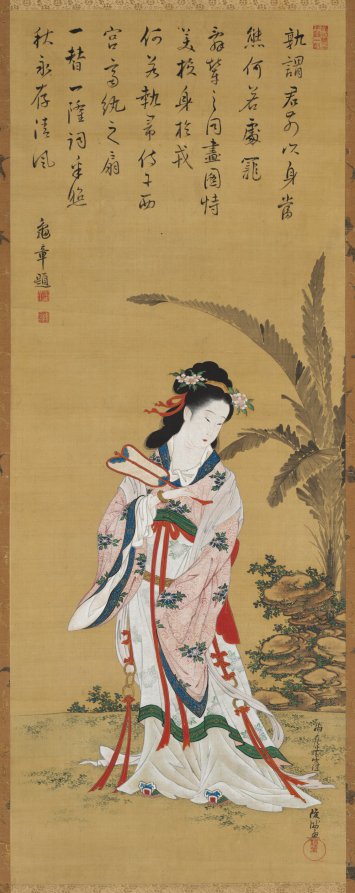
The Enduring Thread: Chinese Beauty and the Legacy of Imperial Silk Weaving
In the hushed, wood-paneled ateliers of Savile Row, where the scent of beeswax and fine wool lingers, one might not immediately conjure the shimmering, ethereal world of Chinese imperial silk. Yet, the very principles that define the Row’s bespoke excellence—uncompromising materiality, generational mastery, and a reverence for heritage—find a profound parallel in the legacy of Chinese silk weaving. This artifact, a study in materiality, examines silk not merely as a textile, but as a vessel for Chinese beauty, a philosophy of refinement that has shaped aesthetics for millennia. From the looms of the Forbidden City to the modern luxury market, the thread of imperial silk remains unbroken, a testament to a civilization’s pursuit of perfection.
The Materiality of Silk: A Philosophy of Light and Touch
To understand Chinese beauty through silk is to first appreciate its materiality. Unlike the robust worsted wools of a Huntsman jacket or the dense cashmere of a Loro Piana overcoat, silk possesses a paradoxical nature: it is at once supremely strong and exquisitely delicate. Its protein structure, derived from the silkworm’s cocoon, allows for a unique interplay of light. A silk garment does not simply reflect; it absorbs, refracts, and diffuses, creating a subtle, living luminosity. This is not the brash shine of a synthetic fabric, but a deep, internal glow—a quality the Chinese have long described as wen (温), meaning warmth and refinement. In imperial contexts, this luminosity was not merely decorative; it was a moral and cosmological statement. The emperor’s dragon robes, woven with gold and peacock feathers, were not just clothing; they were embodiments of cosmic order, where the shimmer of silk mirrored the harmony of heaven and earth. The materiality of silk, therefore, is a study in controlled opulence—a lesson Savile Row understands intimately: true luxury whispers, it does not shout.
The Imperial Legacy: The Suzhou and Nanjing Looms
The legacy of imperial silk weaving is inextricably linked to two cities: Suzhou and Nanjing. During the Ming (1368–1644) and Qing (1644–1912) dynasties, these centers housed the Imperial Silk Workshops, state-run manufactories that operated with the precision of a modern luxury house. The kesi (cut silk) technique, for instance, is a tapestry weave of such complexity that a single robe could take years to complete. Unlike embroidered silk, where thread is added to a ground fabric, kesi is woven entirely on a loom, with each color thread inserted by hand, creating a seamless, double-sided image. This technique demanded a master weaver’s eye for color gradation and a patience that borders on the monastic. The result was a fabric of unparalleled depth and tactility—a textile that, like a bespoke suit, was engineered to drape, move, and breathe with the wearer. The imperial workshops also pioneered the use of satin-weave silk, a structure that produces a smooth, lustrous surface ideal for intricate patterns. These patterns were not arbitrary; they were a visual language of power and virtue. The dragon symbolized imperial authority; the phoenix, grace and beauty; the peony, wealth and honor. Each motif was a coded message, woven into the very fabric of the garment, a practice that mirrors the discreet insignia of a bespoke tailor’s label—a mark of provenance and quality.
Beauty as Discipline: The Art of the Weave
Chinese beauty, as articulated through silk, is not a spontaneous expression but a disciplined art. This is a crucial distinction from Western romanticism. In the imperial context, beauty was achieved through rigorous adherence to technique and tradition. The weaver’s hands, guided by a pattern that might be centuries old, were not free to improvise. Instead, they submitted to a system of rules—the density of the warp, the tension of the weft, the sequence of colors—that had been perfected over generations. This discipline is akin to the Savile Row cutter’s mastery of pattern drafting, where a single millimeter of error can ruin the fall of a lapel. The result is a beauty that is both predictable and sublime, a harmony born of constraint. Consider the cloud collar (yunjian) of a Ming dynasty robe, a layered, scalloped adornment that frames the neck and shoulders. Its construction required not only exquisite weaving but also a deep understanding of geometry and proportion. The collar was not an afterthought; it was the focal point of the garment, a microcosm of the universe in silk. This fusion of art and mathematics is the essence of Chinese beauty—a beauty that is intellectual, not merely sensual.
Modern Resonance: Silk in the Age of Luxury
Today, the legacy of imperial silk weaving faces both challenges and opportunities. The rise of machine-made silk, particularly in the 20th century, threatened to commoditize a material once reserved for emperors. Yet, a revival is underway, driven by a new generation of artisans and luxury houses who recognize the irreplaceable value of hand-weaving. In Suzhou, workshops still operate on foot-powered looms, producing kesi for a niche market of collectors and high-fashion houses. Brands like Shang Xia, a joint venture between Hermès and Chinese designer Jiang Qiong’er, have explicitly sought to revive these techniques, creating modern objects—scarves, jackets, and home goods—that honor the materiality of silk while embracing contemporary design. For the Savile Row clientele, this presents a unique opportunity. A bespoke suit lined with a hand-woven kesi silk from Suzhou is not merely a garment; it is a piece of cultural heritage, a conversation between two traditions of excellence. It speaks to a discerning eye that values provenance as much as cut, and craftsmanship as much as cloth.
Conclusion: The Unbroken Thread
The legacy of imperial silk weaving is not a relic of a bygone era; it is a living tradition that continues to inform the definition of Chinese beauty. Its materiality—the luminous touch, the disciplined weave, the coded symbolism—offers a counterpoint to the fast-fashion ethos of our time. In a world of disposable luxury, silk demands patience, respect, and an understanding of the hand that made it. For the gentleman or woman of taste, a garment of Chinese imperial silk is a quiet statement: an acknowledgment that true beauty is not found in novelty, but in the enduring thread of heritage. As the sun sets over the looms of Suzhou, the shuttle still flies, weaving a story that began in the Forbidden City and continues, thread by thread, in the ateliers of the world.