An Examination of the Fragment: Materiality, Method, and the Grammar of Elegance
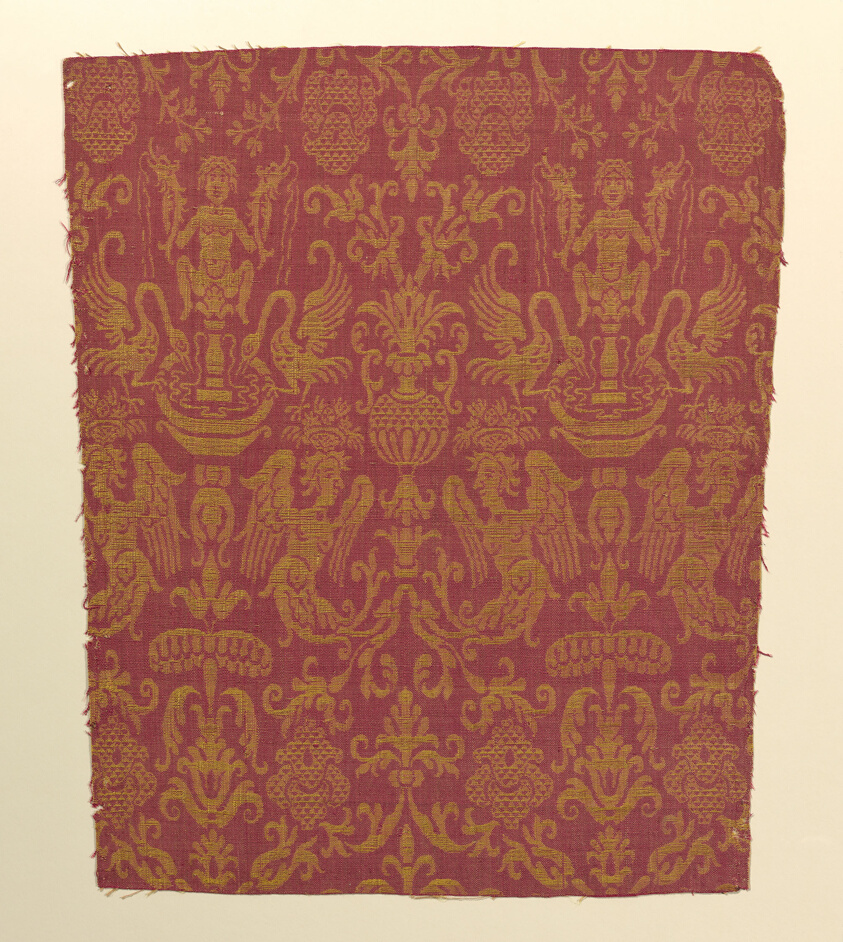
In the considered appraisal of sartorial heritage, it is often the incomplete artifact—the Fragment—that offers the most profound and unvarnished narrative. Stripped of the distracting totality of a finished garment, the fragment presents a pure, unadulterated text for the connoisseur’s eye. It is a primer in the fundamental grammar of luxury, where thread, weave, and hand converge to articulate a philosophy of dress long before the shears meet the cloth. The specimen under examination—a composite of silk and linen, executed in a plain weave foundation with supplementary patterning wefts bound by secondary binding warps—serves as a singularly eloquent testament to this principle.
The Foundation: A Study in Structural Integrity
The foundational cloth, a plain weave of silk and linen, is not merely a substrate; it is a calculated statement of character. The marriage of these two fibres is one of strategic complementarity. Silk, the undisputed aristocrat of textiles, provides the luminous surface, the inherent strength, and that singular capacity to capture and refract light with a subdued brilliance. Linen, the stalwart, introduces a note of tensile resilience and a matte, architectural quality that prevents the whole from succumbing to mere opulence. This union in a plain, or tabby, weave—the most elementary of interlacings—is a deliberate exercise in understatement. It establishes a ground of impeccable stability and quiet authority, the sartorial equivalent of a perfectly tailored canvas waistcoat: unadorned, essential, and speaking volumes through its integrity alone. It is upon this sober, virtuous ground that the narrative of ornament unfolds.
The Ornament: A Discourse in Disciplined Opulence
The true distinction of the fragment, and the source of its fluid elegance, lies in its patterning technique: the deployment of supplementary patterning wefts, bound by secondary binding warps in plain interlacings. This is not embroidery, an additive art; it is weaving of a higher calculus. The pattern is born *within* the loom’s action, integrated into the very body of the cloth.
Consider the mechanics: the foundational warps and wefts proceed, creating the neutral ground. Simultaneously, additional, decorative weft threads—likely of a finer, perhaps differently coloured silk—are introduced across the width. These are not structural; they float, awaiting their moment. Their integration is governed by a separate set, a secondary system of binding warps, whose sole purpose is to "catch" these decorative threads at precise, pre-determined intervals, tethering them to the ground cloth in a plain weave interlace. The result is a pattern that is at once perfectly integrated and yet perceptibly distinct, possessing a subtle relief and a visual depth that flat printing or later application could never achieve.
This method represents a pinnacle of classic silk craftsmanship. It demands not only technical mastery of the loom but also a pre-visualisation of the finished design that borders on the clairvoyant. Each pass of the shuttle, each lift of a heddle, must be meticulously sequenced. The discipline is absolute, for an error in the binding sequence unravels the logic of the entire pattern. The elegance derived from this technique is inherently fluid because the pattern shares the very same drape and substance as the ground; it moves *with* the cloth, an inherent quality rather than an applied afterthought.
The Philosophy: Fluidity as the Ultimate Expression of Bespoke Principle
This inherent fluidity is the fragment’s most significant bequest to our understanding of heritage. In the lexicon of Savile Row, fluidity in cloth is not mere physical property; it is an ethical stance. It speaks of a garment that conforms to the individual, that moves with the wearer’s body and life, rather than imposing a rigid, preconceived shape. The crafted pattern in this silk fragment embodies this principle perfectly. Its decoration does not stiffen; it flows. It is elegance as a verb, not a noun.
Furthermore, the fragment’s composition instructs us on the proper relationship between substance and ornament. The ornament here is disciplined, subordinate to the whole. It enhances the ground but never overwhelms it. This mirrors the foundational bespoke philosophy: that cut, fit, and fabric are paramount; that subtlety trumps statement; that the finest details serve the greater integrity of the whole. The secondary binding warps perform their duty with quiet assurance, never seeking to dominate the primary structure, yet without their precise function, the entire enterprise of beauty would falter.
Conclusion: The Fragment as a Permanent Reference
In final analysis, this silk and linen fragment transcends its physical boundaries. It is a concise treatise on material intelligence, technical mastery, and philosophical depth. It demonstrates that true luxury resides in the unseen labour, the hidden structure, and the profound understanding of how materials behave in concert. The plain weave foundation establishes trust. The supplementary wefts introduce narrative. The secondary binding warps provide the discreet, essential discipline that binds the vision together.
For the modern practitioner of heritage, this fragment serves as a permanent reference—a reminder that before one considers silhouette, seam, or style, one must first comprehend the grammar of the cloth itself. It champions an elegance that is fluid, integrated, and born of immutable standards. In its silent, frayed edges lies a louder proclamation of quality than any finished garment could ever shout: that enduring style is always, and ultimately, a matter of foundational integrity.