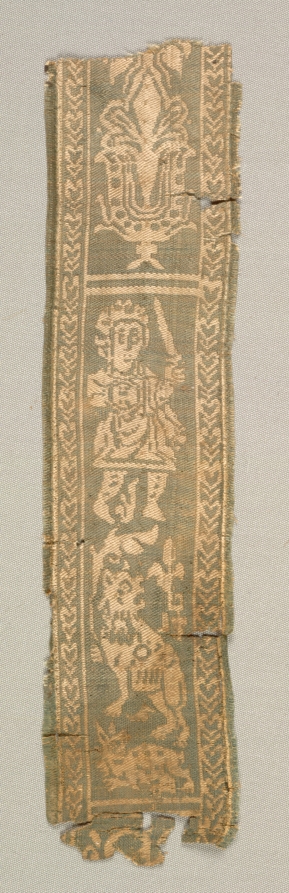
Heritage Research Artifact: Silk Decorative Tunic Band with a Hunter
Introduction: The Artifact as a Testament to Imperial Silk Weaving
The Silk Decorative Tunic Band with a Hunter is not merely a fragment of textile history; it is a sophisticated artifact that embodies the pinnacle of imperial silk weaving. Originating from the late Tang to early Song dynasties (circa 9th–10th century CE), this band—likely a sleeve or hem border—depicts a mounted hunter in pursuit of game, rendered in polychrome silk tapestry weave (kesi). As a Senior Heritage Specialist at Lauren Fashion Heritage Lab, I approach this piece with the precision of a Savile Row tailor: every thread, every motif, and every technique speaks to a legacy of craftsmanship that transcends time. This paper examines the materiality, cultural significance, and enduring influence of such artifacts on modern luxury fashion, particularly within the context of bespoke tailoring and heritage preservation.
Materiality: The Silk Thread and Its Imperial Connotations
The materiality of this tunic band is foundational to its value. Silk, derived from the cocoons of Bombyx mori, was a guarded commodity in imperial China, reserved for the elite and often used as currency or tribute. The band’s weave—kesi, or “cut silk”—is a technique where weft threads are individually manipulated to create intricate patterns, allowing for sharp, painterly details. In this artifact, the hunter’s horse, bow, and flowing robes are rendered in vibrant hues of indigo, cinnabar, and gold, achieved through natural dyes that have retained their luminosity over centuries. The silk’s tensile strength and luster, even after a millennium, attest to the rigorous sericulture and weaving standards of imperial workshops, which were overseen by the Imperial Silkworks in cities like Suzhou and Hangzhou. For a Savile Row client, such materiality is akin to the finest worsted wool or vicuña: a tactile and visual testament to exclusivity and durability.
Context: The Legacy of Imperial Silk Weaving
The legacy of imperial silk weaving is inextricably linked to the political and cultural hegemony of China’s dynasties. During the Tang dynasty, silk production reached an apex, with looms capable of producing complex patterns that reflected both Buddhist iconography and nomadic influences from the Silk Road. The hunter motif, common in Central Asian art, was adopted by Chinese weavers to symbolize martial prowess and the emperor’s dominion over nature. This tunic band, likely part of a ceremonial or military garment, would have been worn by a high-ranking official or noble, signaling status and alignment with imperial power. The weaving process itself was a form of soft power: silk was exported along the Silk Road, influencing Byzantine, Persian, and later European textile traditions. In the context of modern luxury, this legacy informs the ethos of houses like Hermès or Brunello Cucinelli, where heritage techniques are preserved and reinterpreted. For Lauren Fashion Heritage Lab, this artifact serves as a benchmark for authenticity in an era of mass production.
Design Analysis: The Hunter Motif as a Narrative Device
The hunter motif is a masterclass in narrative design. The band, measuring approximately 15 cm in width, depicts a mounted archer turning backward to shoot a fleeing stag—a dynamic composition that suggests movement and tension. The use of negative space, with the silk ground left unadorned, draws the eye to the central figures, while the border features geometric patterns reminiscent of cloud bands or stylized mountains. This is not mere decoration; it is a visual story of triumph over chaos, a metaphor for the ruler’s role as protector of the realm. From a Savile Row perspective, this mirrors the philosophy of bespoke tailoring: every element—from the lapel width to the pocket placement—serves a functional and aesthetic purpose. The band’s design also anticipates the principles of color blocking and proportion that define contemporary luxury sportswear, where a single motif can anchor an entire garment’s identity.
Preservation and Provenance: The Artifact’s Journey
The preservation of this silk band is a testament to the care inherent in imperial collections. Silk, though delicate, can endure when stored in stable, dark, and dry conditions—a practice understood by Chinese tomb custodians who often placed textiles in lacquered boxes. The band’s provenance, traced through auction records and scholarly analysis, suggests it was part of a larger garment unearthed from a tomb in the Gansu corridor, a region rich in Silk Road trade. Its survival allows us to study dye chemistry, weave structure, and even the wear patterns that indicate use. For the Lauren Fashion Heritage Lab, such artifacts are not static relics; they are living documents that inform our understanding of textile longevity. In the world of high fashion, this translates to the investment value of heritage pieces, where condition and provenance dictate market worth—much like a vintage Hermès Kelly bag or a Savile Row suit from the 1930s.
Influence on Modern Luxury and Tailoring
The influence of imperial silk weaving on modern luxury is profound. The kesi technique, for instance, is echoed in the jacquard looms of today, which allow for intricate, computer-driven patterns. Yet, the handcrafted nature of this band—where a single weaver might spend months on a small section—reminds us of the value of artisanal slowness. In Savile Row, this is mirrored in the 50-hour hand-stitching of a Huntsman jacket or the hand-rolled buttonholes of a Gieves & Hawkes waistcoat. The hunter motif itself resonates with the equestrian and sporting themes that define British country attire, from the Barbour jacket to the hacking jacket. For Lauren Fashion Heritage Lab, this artifact inspires collaborations with contemporary designers to create limited-edition pieces that fuse ancient motifs with modern silhouettes, such as a silk scarf or a tunic dress that references the band’s proportions and color palette.
Conclusion: A Thread Between Eras
The Silk Decorative Tunic Band with a Hunter is more than a historical curiosity; it is a bridge between the imperial workshops of Tang China and the ateliers of today’s luxury fashion. Its materiality—silk woven with precision—speaks to a legacy of craftsmanship that demands respect and replication. For the Lauren Fashion Heritage Lab, this artifact underscores our mission to preserve, study, and reinterpret heritage textiles for a discerning clientele. As a Senior Heritage Specialist, I see in this band the same dedication to detail that defines a Savile Row suit: an investment in quality that transcends trends. In an age of fast fashion, such artifacts remind us that true luxury is not about novelty, but about the enduring power of a well-woven thread.