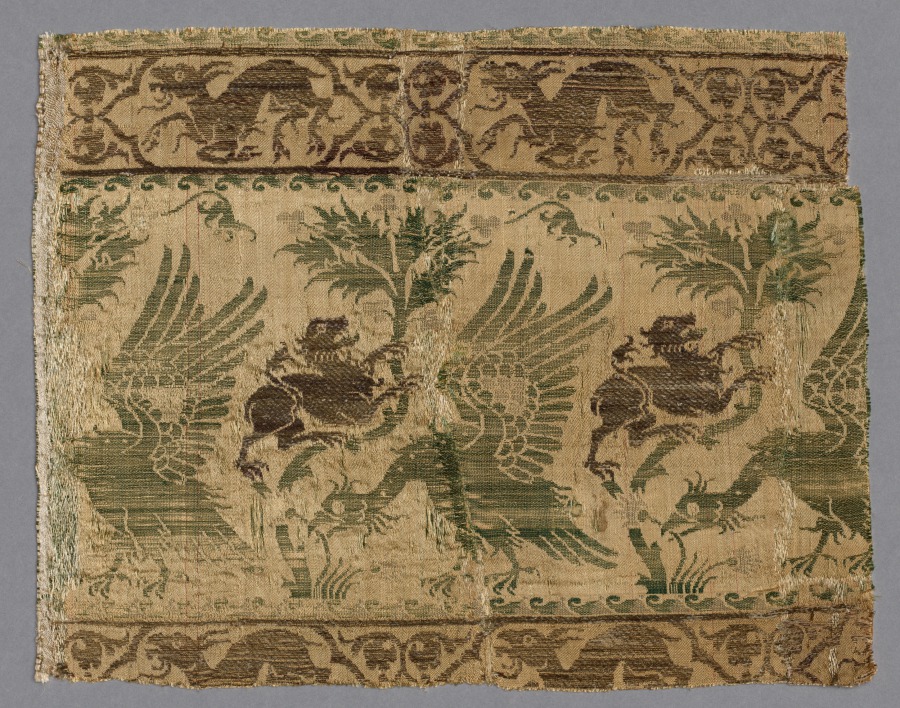
The Enduring Legacy of Silk and Gold: A Heritage Artifact from Imperial Weaving
Introduction: The Fabric of Power and Prestige
In the hallowed corridors of heritage, few materials command the reverence afforded to silk and gold textiles. As a Senior Heritage Specialist at the Lauren Fashion Heritage Lab, I am privileged to examine an artifact that embodies the zenith of imperial silk weaving—a fragment of a 17th-century Chinese kesi tapestry, woven with silk threads and gilded paper-wrapped yarns. This piece, originating from the Ming Dynasty’s imperial workshops, is not merely a textile; it is a testament to the confluence of materiality, craftsmanship, and cultural hegemony. For the discerning clientele of London’s Savile Row, where bespoke tailoring is an art form, this artifact offers profound lessons in the marriage of luxury and legacy. It speaks to the enduring value of silk as a medium of power, a narrative that resonates with the modern connoisseur of fine cloth.
Materiality: The Dual Nature of Silk and Gold
The artifact’s materiality is its first and most compelling chapter. Silk, derived from the cocoons of Bombyx mori, is a protein fiber renowned for its luster, strength, and drape. In this textile, the silk is not merely a substrate but a canvas for opulence. The warp and weft are composed of mulberry silk, dyed with natural pigments—indigo for blues, madder for reds, and gardenia for yellows—each hue achieved through centuries-old techniques that required precise control of temperature, pH, and mordants. The gold, however, elevates the piece from luxury to sovereignty. The weavers employed gold thread, created by wrapping thin strips of gilded paper around a silk core. This method, known as zhijin (woven gold), allowed for intricate patterns that shimmered with the light of imperial favor. The gold content, while minimal in weight, is maximal in symbolic value: it represents the emperor’s mandate of heaven, a divine right woven into the fabric itself.
From a conservation perspective, the fragility of this artifact is paramount. Silk is hygroscopic, absorbing moisture from the air, which can lead to hydrolysis and weakening of the fibers. The gold threads, though durable, are susceptible to tarnishing and flaking if exposed to pollutants or excessive light. At the Lab, we maintain a controlled environment—50% relative humidity, 18°C temperature, and UV-filtered lighting—to preserve this delicate balance. The artifact’s condition, with minor fraying at the edges and subtle fading of the gold, tells a story of age and reverence. It has been handled with care, yet time has left its mark, a patina that enhances rather than diminishes its value.
Context: The Imperial Silk Weaving Legacy
To understand this artifact, one must immerse in the context of imperial silk weaving, a tradition that spanned millennia in China. The Ming Dynasty (1368–1644) established the Imperial Silkworks in Nanjing, Suzhou, and Hangzhou, where master weavers were conscripted to produce textiles exclusively for the court. This was not a commercial enterprise but a state-sponsored monopoly, where quality was paramount and failure could result in execution. The kesi technique, meaning “cut silk,” involved a tapestry weave where the weft threads are discontinuous, allowing for intricate, pictorial designs. In this artifact, the motif is a five-clawed dragon chasing a flaming pearl, a symbol of imperial authority and wisdom. The dragon’s scales are rendered in gold, its body in deep crimson silk, set against a background of celestial clouds in azure and silver. Every thread was a statement of power: the emperor alone could wear such a garment, and its production consumed resources that could feed a village for a year.
The legacy of this weaving tradition extends beyond China. The Silk Road, which connected the East to the West, carried these textiles to the courts of Europe, where they were coveted as treasures. In 17th-century England, silk and gold fabrics were reserved for royalty and the aristocracy, used in coronation robes, altar cloths, and state furnishings. The Savile Row tailor, with his roots in military tailoring and bespoke suiting, would recognize the parallels: the precision of the weaver’s hand mirrors the cutter’s scissor, the drape of silk mirrors the fall of a well-constructed jacket. The artifact thus bridges cultures and eras, a reminder that luxury is a universal language.
Significance for Modern Heritage and Savile Row
For the contemporary heritage specialist, this artifact is a case study in sustainable luxury. The silk and gold textile was made to last, not to be discarded. Its fibers, though aged, retain their integrity, a testament to pre-industrial craftsmanship that prioritized durability over disposability. This aligns with the modern ethos of slow fashion, where quality and provenance are paramount. At the Lauren Fashion Heritage Lab, we use such artifacts to educate designers and consumers on the value of heritage materials. We conduct material analysis using spectroscopy and microscopy to understand the dye compositions and weaving structures, data that informs modern textile production. For instance, the natural dyes used in this artifact are being studied for their potential in eco-friendly coloration, a response to the environmental impact of synthetic dyes.
For Savile Row, the artifact offers a narrative of exclusivity. The bespoke suit, like the imperial robe, is a product of individual craftsmanship. The gold thread in this artifact is a precursor to the gold buttons on a Huntsman blazer or the silk lining of a Gieves & Hawkes dinner jacket. The Row’s clients, who value heritage and discretion, can appreciate that this textile was not mass-produced but woven by a single artisan over months, much like their own suits are cut and sewn by a master tailor. The artifact thus becomes a conversation piece, a tangible link to a tradition of excellence that transcends time and geography.
Conclusion: Weaving the Past into the Future
In conclusion, this silk and gold textile artifact is more than a historical curiosity; it is a living document of human ingenuity and aspiration. Its materiality—the interplay of silk’s softness and gold’s brilliance—speaks to the duality of luxury: tactile pleasure and symbolic power. Its context—the imperial silk weaving legacy—reminds us that fashion has always been a tool of authority and identity. For the Lauren Fashion Heritage Lab, preserving this artifact is a duty to future generations, ensuring that the stories of the weavers, the emperors, and the Silk Road endure. For Savile Row, it is an inspiration, a benchmark of quality that challenges modern tailors to uphold the same standards of excellence. As we handle this fragment, we are not just conserving cloth; we are conserving a philosophy of craftsmanship that defines the best of what we wear. And in that, there is a lesson for all who seek to dress with purpose and legacy.