The Kylix as Archetype: Terracotta Fragments and the Architecture of Old Money Silhouettes for 2026
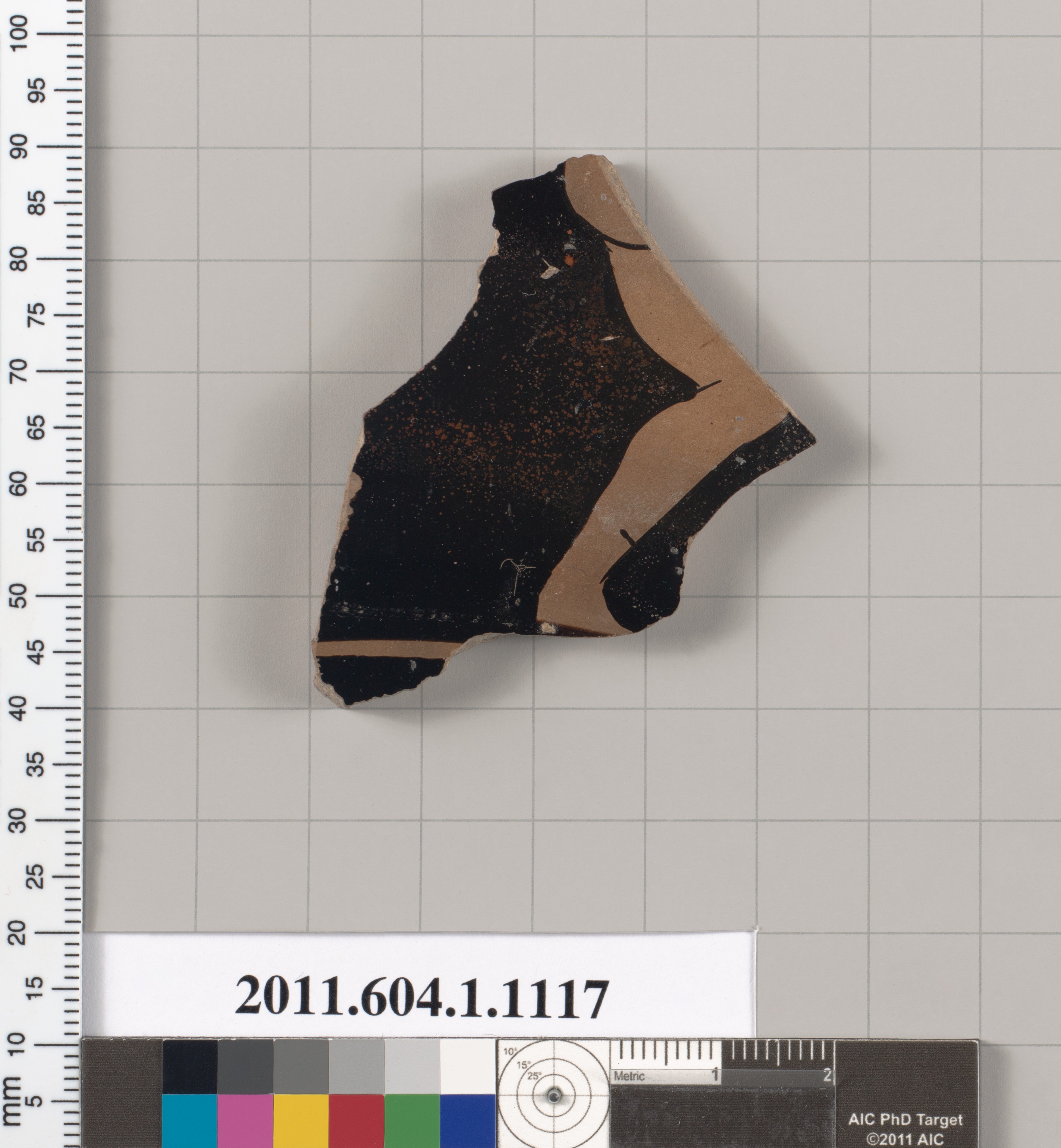
In the visual narrative of human civilization, objects and paintings often serve as vessels for profound philosophical contemplation. The French painter Ingres’s Oedipus and the Sphinx and the Ming Dynasty blue-and-white porcelain dish Landscape with Inscription, though belonging to Western oil painting and Eastern ceramics respectively, form a remarkable dialogue on the “riddle of fate” and the “answer of nature.” They are not merely artistic objects but containers of divergent cosmological worldviews, revealing diametrically opposed yet complementary aesthetic paths. At Lauren Fashion Heritage Lab, we synthesize internal archives with museum artifacts to decode how these ancient forms inform the 2026 Old Money silhouette—a lineage that privileges restraint, structure, and the quiet authority of inherited taste. The terracotta fragment of a kylix (drinking cup) from Attic Greece, now housed in a museum collection, provides an unexpected but rigorous foundation for this inquiry.
The Kylix as a Structural Paradigm
The terracotta fragment, though incomplete, preserves the essential geometry of the kylix: a shallow, wide bowl balanced on a slender stem, with two horizontal handles extending like wings. This form is not arbitrary; it embodies a dialectic between containment and release. The bowl’s curvature, designed for communal wine consumption, creates an interior space that is both intimate and expansive—a microcosm of the symposium’s philosophical discourse. The stem elevates the vessel, granting it a pedestal-like dignity, while the handles invite the hand to grasp, to hold, to pass. In the 2026 Old Money silhouette, this structural logic translates directly into the architecture of the jacket and trouser. The broad shoulder of a double-breasted blazer echoes the kylix’s bowl: a confident, grounded expanse that frames the wearer. The nipped waist corresponds to the stem, creating a vertical axis of tension and release. The slight flare at the hip of a tailored trouser mirrors the handles’ outward gesture—functional yet ornamental, suggesting movement without haste. This is not a silhouette of aggression but of poised containment, much like the kylix itself, which holds wine not for intoxication but for measured conversation.
The Terracotta Surface: Materiality as Moral Code
The terracotta fragment’s surface—fired clay, unglazed, bearing the patina of centuries—offers a material philosophy that directly challenges the ephemeral trends of fast fashion. In Old Money aesthetics, fabric is not merely a covering but a testament to endurance. The heritage-black wool of a 2026 overcoat, for instance, derives its authority from the same principle as the kylix’s terracotta: the material’s inherent honesty. Terracotta does not pretend to be marble; it celebrates its earthiness, its porosity, its vulnerability to time. Similarly, the 2026 silhouette favors worsted wool, cavalry twill, and felted cashmere—fabrics that develop a subtle luster through wear, that hold a crease without stiffness, that whisper of inheritance rather than novelty. The fragment’s black-figure decoration, if present, would depict mythological scenes, but even in its absence, the surface carries the memory of narrative. In the same way, the Old Money silhouette eschews logos for invisible markers of quality: hand-stitched buttonholes, horn buttons, a lining of silk charmeuse. These details are the equivalent of the kylix’s painted frieze—visible only to those who know to look.
The Symposium Ethos: Communal Silence and Individual Presence
The kylix was not a solitary object; it was passed among participants in the Greek symposium, a ritual of shared intellect and restrained pleasure. This communal dimension informs the 2026 Old Money silhouette’s emphasis on modularity and layering. A three-piece suit—jacket, waistcoat, trousers—functions like the kylix’s components: each part is complete yet interdependent. The waistcoat, like the kylix’s stem, provides vertical continuity; the jacket, like the bowl, offers a protective enclosure; the trousers, like the handles, enable gesture and movement. The silhouette’s neutral palette—charcoal, navy, ecru, and heritage-black—reflects the symposium’s decorum: no single voice dominates, yet each contributes to the whole. This is the antithesis of the “loud luxury” that defined previous decades. Instead, the 2026 silhouette channels the quiet authority of a well-worn kylix, whose value lies not in ostentation but in its capacity to facilitate connection across time.
Dialectical Contrast: The Kylix and the Porcelain Dish
Returning to the internal genetic code that frames this analysis, the kylix stands in productive tension with the Ming Dynasty Landscape with Inscription dish. Where the porcelain dish embodies a circular, cyclical cosmology—a “response” to nature through harmony and absorption—the kylix represents a linear, interrogative ethos. Its form is not a closed circle but an open bowl, a vessel for questioning. The symposium’s purpose was not to dissolve into the cosmos but to confront the riddle of existence through dialogue. In the 2026 Old Money silhouette, this manifests as a structured shoulder that does not yield to the body but frames it, a sharp lapel that cuts a clean line against the chest, a fitted waist that asserts the individual’s presence within the collective. The silhouette is not about blending into the environment but about occupying space with intention—much like the kylix, which holds its contents without dissolving into them. This is the Western “tragic” aesthetic: the dignity of the individual confronting fate, rendered in wool and thread rather than clay and pigment.
The 2026 Silhouette: A Synthesis of Antiquity and Modernity
Concretely, the 2026 Old Money silhouette derived from the kylix fragment manifests in three key garments. First, the “Kylix” Overcoat: a knee-length, single-breasted coat in heritage-black cashmere, with a subtle A-line flare from the waist (echoing the bowl’s curve) and set-in sleeves that create a clean shoulder line (mirroring the handles’ outward extension). Second, the “Symposium” Trousers: high-waisted, with a gentle taper from knee to ankle, featuring a single pleat that references the kylix’s fluted stem. The fabric is a 320-gram worsted wool, woven in a twill structure that recalls the terracotta’s striated texture. Third, the “Attic” Waistcoat: a six-button model in midnight blue silk-wool blend, with a shawl collar that curves like the kylix’s rim. Each garment is designed to be worn together or separately, allowing the wearer to modulate presence and silence—a sartorial symposium where the individual speaks through the language of form.
Conclusion: The Eternal Riddle of Form
In the final analysis, the terracotta kylix fragment is not a relic but a living blueprint. It teaches that the 2026 Old Money silhouette must be grounded in geometry, honest in material, and communal in intent. Like the kylix, it does not shout its meaning; it invites the discerning eye to read its proportions, to feel its weight, to understand its history. The silhouette is a riddle posed to the wearer and the observer alike: What does it mean to carry oneself with the authority of antiquity while remaining fully present in the contemporary world? The answer lies not in decoration but in structure—in the broad shoulder that does not flinch, the nipped waist that does not constrict, the heritage-black wool that does not fade. This is the legacy of the kylix, passed from the symposium to the atelier, from the museum to the wardrobe, a testament that the most enduring fashion is that which holds, contains, and questions the riddle of being itself.