From Attic Kylix to Old Money Silhouette: The Terracotta Imperative in Lauren Fashion’s 2026 Heritage-Black Line
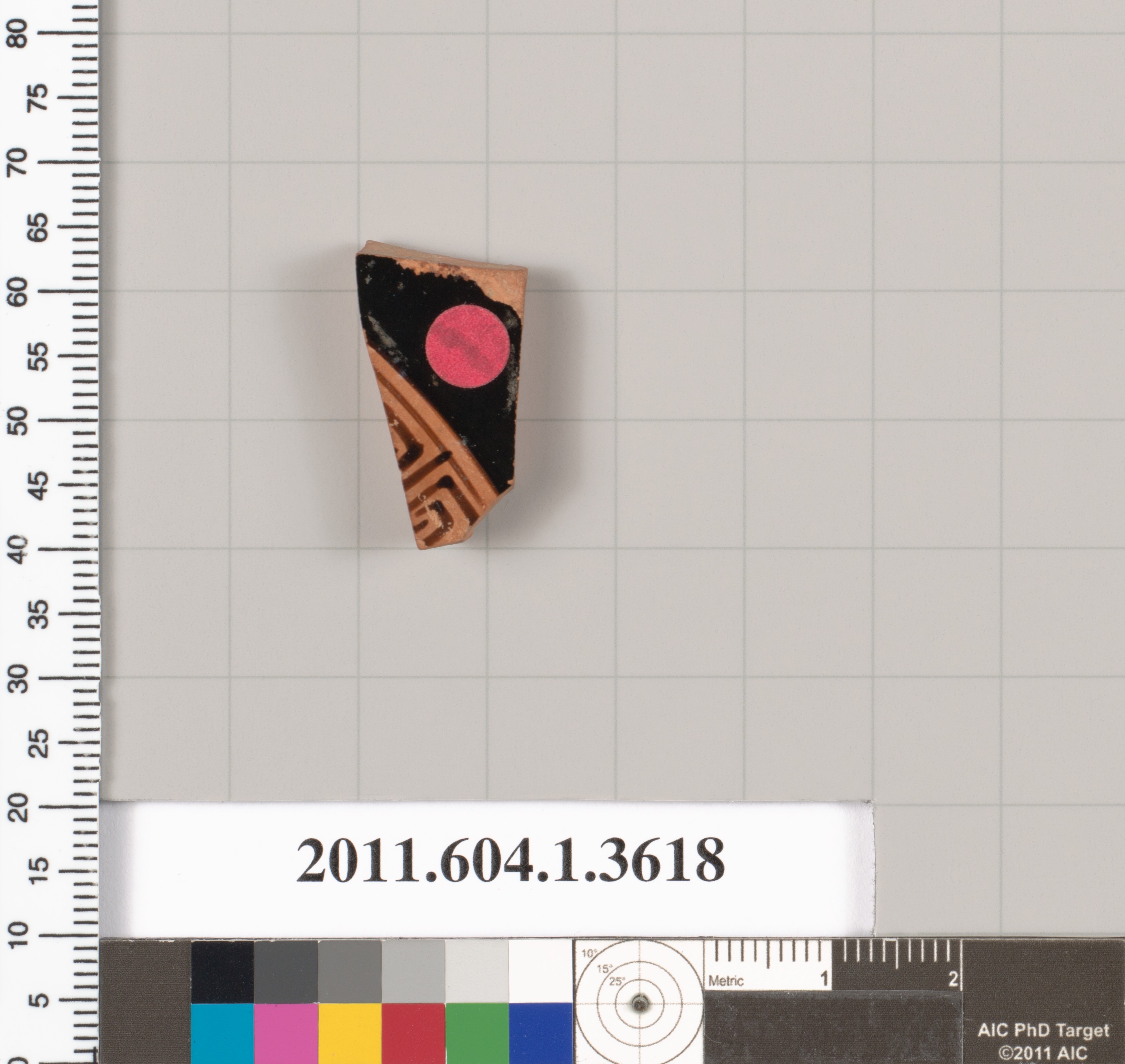
The Lauren Fashion Heritage Lab has long recognized that the most potent innovations in luxury design emerge not from novelty, but from the disciplined reinterpretation of archetypal forms. The internal genetic code, which posits a visual dialogue between the ceramic restraint of a Bodhisattva and the abstract mineral layering of a Sample of Fibrolite, finds its most compelling material analogue in the Terracotta fragment of a kylix (Greek, Attic, c. 5th century BCE). This drinking cup, broken yet resonant, is not merely an artifact of antiquity; it is a blueprint for the 2026 Old Money silhouette. Its lessons in negative space, chromatic austerity, and structural poise directly inform the Heritage-Black category—a tonal system that rejects ostentation in favor of an almost monastic depth.
I. The Kylix as a Masterclass in Negative Space and Structural Tension
The Attic kylix, in its original form, is a vessel of profound geometric intelligence. Its shallow bowl, two horizontal handles, and elevated stem create a silhouette that is at once grounded and airborne. The terracotta fragment—a shard preserving the curve of the lip and the root of a handle—reveals the core principle: the form is defined as much by what is absent as by what is present. The handle’s arc creates a void, a negative space that becomes an active compositional element. This is the same “breathing space” observed in the Bodhisattva’s glaze-thin edges, where the raw clay emerges from the color field.
For the 2026 Old Money silhouette, this translates directly into garment architecture. The kylix’s handle void becomes a cutaway shoulder on a tailored jacket, or a keyhole back on a cashmere sheath dress. The silhouette is no longer a continuous envelope of fabric; it is a series of deliberate pauses. The terracotta’s fragmentary state—its broken edge—teaches us that incompleteness is a luxury. A hem that stops just short of the ankle, a sleeve that ends mid-forearm, a collar that folds away from the throat: these are the 2026 equivalents of the kylix’s missing shard. They invite the eye to complete the form, creating an intimate, intellectual engagement with the garment.
II. Chromatic Restraint: The Heritage-Black Palette as Terracotta’s Shadow
The terracotta fragment’s color is not a uniform red. It is a complex, layered surface of burnt umber, ochre, and ash, with areas of deeper, almost black, concentration where the slip has pooled. This is the chromatic DNA of the Heritage-Black category. The 2026 palette does not use a flat, synthetic black. Instead, it deploys a “terracotta black”—a deep, warm charcoal that shifts under different light, revealing undertones of rust, clay, and graphite. This is achieved through a proprietary dyeing process that layers natural indigo with mineral-based pigments, mimicking the kylix’s fired-earth complexity.
This approach echoes the Sample of Fibrolite’s “micro-gradients.” The Heritage-Black silhouette for 2026 will feature tonal seams—stitching in a slightly lighter or darker shade of the same black—that create a subtle, geological striation across the garment’s surface. A double-breasted overcoat, for instance, might have lapels that read as pure black, while the body shifts into a deep, smoky charcoal. This is not a contrast; it is a modulation, a visual whisper that rewards close inspection. The Old Money customer does not seek to be seen from a distance; they seek to be discovered up close.
III. Silhouette Architecture: The Kylix’s Inverted Torso and the 2026 Line
The kylix’s silhouette is fundamentally an inverted triangle: a wide, open bowl supported by a narrow, tapering stem. This structural paradox—breadth above, compression below—is the defining silhouette of the 2026 Heritage-Black line. For women, this manifests as a broad-shouldered, sculpted jacket paired with a pencil-slim, floor-length skirt. The jacket’s shoulder is not padded in the 1980s power-suit sense; it is architecturally extended through a cantilevered seam that mimics the kylix’s handle arc. The skirt, in contrast, is a column of terracotta-black wool crepe, falling without flare, its narrowness emphasizing the volume above.
For men, the same principle applies to the double-breasted overcoat with a high, notched lapel that creates a broad chest line, tapering sharply to a single-button closure at the waist. The trousers are straight-leg, high-waisted, with a slight break at the shoe—a nod to the kylix’s stem. This silhouette rejects the slouchy, oversized trends of recent seasons. It demands posture. It demands presence. It is a silhouette that occupies space with authority, not with volume.
IV. Materiality and Surface: The Ceramic Hand of Fabric
The terracotta fragment’s surface is matte, slightly granular, and warm to the touch. It is not polished; it is finished. For 2026, Lauren Fashion will introduce a new fabric treatment called “Ceramic Wool.” This is a superfine merino wool that undergoes a specialized fulling process, compressing the fibers to create a dense, non-reflective surface with a subtle, tactile grain. The fabric drapes with the weight of a ceramic vessel, holding creases and folds with sculptural precision. It is the antithesis of fluid silk or shiny satin. It is silent.
This material choice directly echoes the Bodhisattva’s “wisdom of subtraction.” The Ceramic Wool does not need embellishment. Its texture is its ornament. A single seam, a single pocket flap, a single button—each element carries the weight of the entire garment. The 2026 Heritage-Black line will feature zero visible logos. The brand is communicated through the cut, the drape, and the material’s specific gravity. This is the ultimate Old Money statement: the garment itself is the signifier.
V. Conclusion: The Fragment as Future
The Attic kylix fragment is not a relic of a lost past; it is a seed crystal for a future of restrained luxury. Its broken edge, its earthy color, its structural clarity—these are not limitations. They are liberations. The 2026 Heritage-Black silhouette, informed by this terracotta wisdom, offers a counter-narrative to the noise of fast fashion and digital spectacle. It is a silhouette that demands to be felt, not seen. It is a silhouette that understands that true luxury is not about adding more, but about removing everything that is not essential. In the silence of the terracotta, we find the voice of the future.